
If there is one disease that keeps garlic farmers awake at night, it is white rot. Caused by the soil-borne fungus Sclerotium cepivorum, white rot is arguably the most destructive disease of garlic and onions worldwide. For anyone serious about garlic farming in Kenya, understanding this disease is not optional it is the difference between a profitable harvest and a total loss. Unlike most crop diseases, once white rot establishes itself in your field, it can render the land unusable for garlic farming in Kenya for years, even decades. This guide covers everything you need to know: how to identify white rot, why it thrives in Kenyan conditions, and the integrated strategies that can save your crop and your livelihood.
What Exactly Is White Rot?
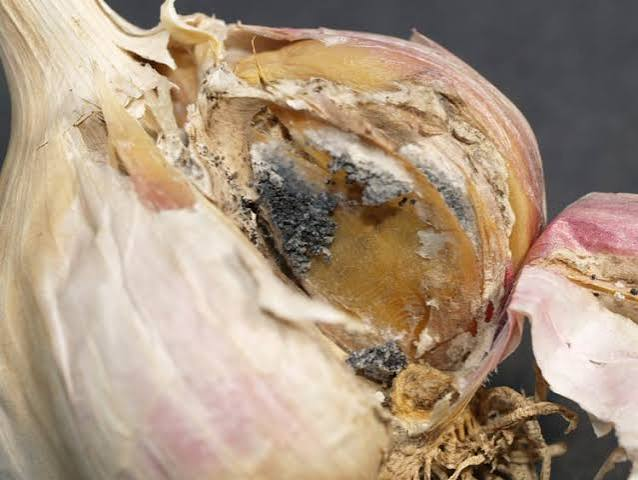
White rot is a fungal disease caused by Sclerotium cepivorum, a pathogen that survives in soil as tiny, hard, black resting structures called sclerotia about the size of poppy seeds or pinheads. These sclerotia are remarkably resilient. Research shows they can survive in soil for 20 to 30 years or more without a host plant, waiting patiently for the next Allium crop to be planted. What makes this fungus so diabolical is its host-triggered germination system. The sclerotia only germinate when they detect specific sulfur compounds released by the roots of Allium plants garlic, onion, leek, and shallot. In other words, the moment you plant garlic, you are sending a chemical invitation for the fungus to wake up and attack. This is why garlic farming in Kenya carries a unique risk: the disease lies invisible in the soil until your crop triggers it.
Signs and Symptoms: How to Spot White Rot in Your Field:
Early detection is your best defense. Here is what to look for:
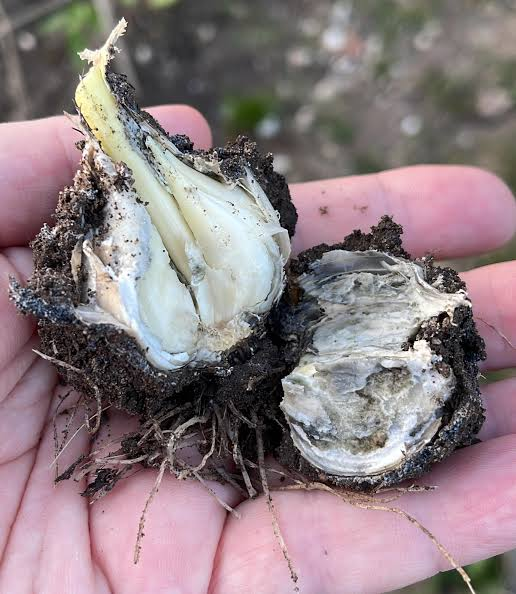
- Yellowing and wilting of outer leaves: the oldest leaves collapse first, starting at the tips and working downward.
- Stunted growth: infected plants lag behind healthy neighbors, often appearing in circular patches that expand as the season progresses.
- Easy-pull plants: the roots rot away completely, so infected plants can be lifted out of the soil with a gentle tug.
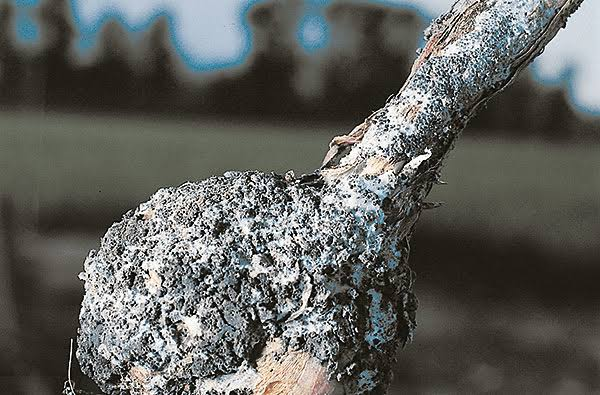
- White fluffy mycelium: the most diagnostic sign. Pull up a suspect plant and you will see a cottony white fungal growth around the bulb base, roots, and lower stem.
- Black sclerotia: as the disease advances, the white mycelium becomes dotted with tiny black poppy-seed-like bodies on the bulb surface and neck.
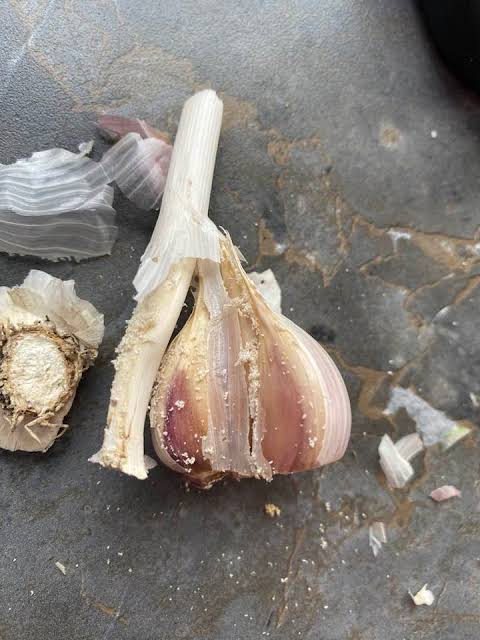
- Rotten bulbs: bulbs develop a semi-watery rot, and the outer scales crack as the bulb dries and shrinks. Infected bulbs are completely unmarketable.
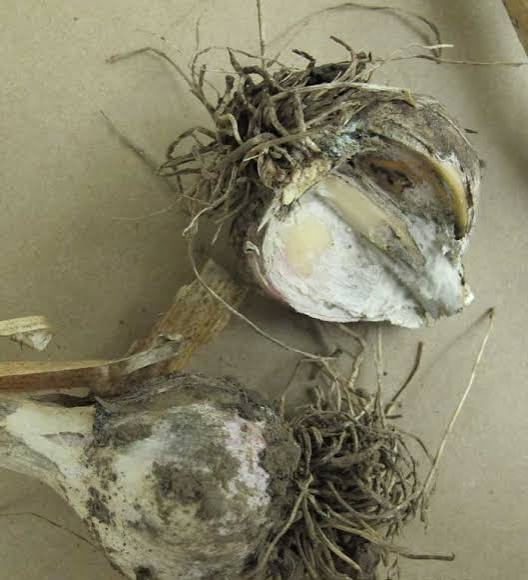
A critical detail for garlic farming in Kenya: symptoms typically appear from mid-season to harvest, meaning the damage is often discovered only when it is too late for the current crop. Scouting from early vegetative growth is essential, and it is a habit every serious practitioner of garlic farming in Kenya should build into their weekly routine.
Prevention: The Golden Rules of White Rot Management:
Prevention is the only truly effective strategy. Here are the non-negotiable rules for garlic farming in Kenya:
- Plant certified disease-free cloves: Source seed only from reputable suppliers like Onion Doctor, and inspect every batch. Never plant cloves from a field with any history of white rot.
- Know your field history: Before leasing or buying land, ask what crops were grown there. A field that hosted garlic, onion, or leek in recent years carries elevated risk.
- Quarantine and hygiene: Wash tools, boots, and equipment before moving between fields. Do not share machinery between known clean and suspect fields without thorough cleaning.
- Long crop rotations: Rotate away from Allium crops for as long as possible ideally 15 to 20 years if white rot has ever been detected.
- Soil drainage: The fungus favors cool, wet soils. Plant on raised beds in well-drained loamy soil with a pH of 5.5 to 7.0, and avoid waterlogged conditions at all costs.
- Community awareness: White rot does not respect fence lines. Talk to neighboring farmers, because coordinated action protects everyone’s garlic farming in Kenya.
- Hot water treatment: Treating seed cloves in hot water can kill sclerotia on clove surfaces, though it will not eliminate fungus deep within the clove. Use this as one layer of protection.

Cultural and Biological Control Options:
- Solarization. Covering moist soil with clear plastic during the hottest months raises soil temperatures enough to kill sclerotia near the surface. In the warm lowlands, solarization is a practical, low-cost tool for garlic farming in Kenya though it is less reliable in the cooler highlands where the fungus thrives.
- Sclerotial germination stimulants. This is one of the most exciting frontiers. Researchers have shown that applying garlic oil, onion oil, garlic powder, or Allium waste to soil before planting tricks sclerotia into germinating. Since the germinated fungus has no host plant to infect, it starves and dies. Field studies showed garlic oil and Allium waste reduced viable sclerotia by more than 90 percent and cut disease incidence by 78–80 percent. For forward-thinking garlic farming in Kenya, incorporating garlic or onion processing waste into the soil during a fallow season is a promising, affordable strategy Kenya’s growing garlic processing sector (garlic powder, oil extraction) could turn a waste product into a disease management tool.
- Biological control. Products based on beneficial microbes such as Bacillus subtilis (Serenade-type products) applied at regular intervals can suppress disease development and are approved for use close to harvest.
- Compost and organic matter. Incorporating well-decomposed compost and cruciferous crop residues (cabbage or kale waste, both abundant in Kenya) has shown moderate effectiveness in suppressing sclerotia.
Chemical Control: Use With Caution:
Fungicides are a last resort and have significant limitations. In-furrow applications at planting using products containing iprodione, boscalid, or tebuconazole can slow disease development in warmer conditions but white rot is restricted above about 24°C (75°F), which means in Kenya’s cooler highland zones, fungicides alone often fail. Fumigants like dazomet can work but are expensive and environmentally problematic.The key message for garlic farming in Kenya: chemicals can supplement an integrated program, but they cannot rescue a heavily infested field. Budget for prevention, not just cure.
Telling White Rot Apart from Look-Alike Diseases:
Misdiagnosis costs farmers valuable time. Several garlic problems mimic white rot, and correct identification is a core skill for garlic farming in Kenya:
- Fusarium basal rot: similar yellowing and bulb decay, but typically a brownish discoloration of the basal plate and hot-weather wilting, without white fluffy mycelium and black sclerotia.
- Pink root: roots turn pink, then red, then brown; roots are not completely rotted away as with white rot.
- Stem and bulb nematode: swollen, twisted leaves and soft, pale bulbs that separate into individual cloves.
The definitive white rot signature remains the combination of easily-pulled plants, cottony white mycelium, and pinhead-sized black sclerotia at the bulb base. When in doubt, take a sample to your county agricultural office or a plant pathology lab accurate diagnosis is the foundation of smart garlic farming in Kenya.
Are you in need of in-depth knowledge on onion and garlic production? If yes, we are a call away. Contact us for: Onion seedlings, Garlic seedlings, Germinated garlic cloves, Farm planning services, Soil testing, training on onion and garlic growing, Drip irrigation installation and maintenance, Agronomic support, Onion and Garlic value pack and Farm management. For free consultation, placing orders or booking a visit with an agronomist, please contact us via Call or what’s app +254703982228, Email: info@oniondoctor.co.ke You can also check out our social media handles for daily updates on TikTok: https://www.tiktok.com/@oniondoctorke0706252490?_r=1&_t=ZS-96UPUyx6ESL Instagram:https://www.instagram.com/oniondoctorke?igsh=MW5sZzJ6c3BnZ3Z0dw==Facebook:https://www.facebook.com/share/1HouRgLCwS/Twitter:https://x.com/OnionDoctorKe?s=20