
If you have ever wondered whether a small piece of land can generate serious income, onion farming in Kenya should be at the top of your list. Onions are one of the most consumed vegetables in the country, used daily in homes, restaurants, and food processing plants. Demand is constant, supply is often short, and prices can double within weeks. For a beginner with even a quarter acre, onion farming in Kenya offers one of the fastest paths from planting to cash in the pocket.In this guide, we walk you through everything you need to know about onion farming in Kenya: choosing varieties, preparing your land, planting, managing pests and diseases, harvesting, and selling at the best prices.
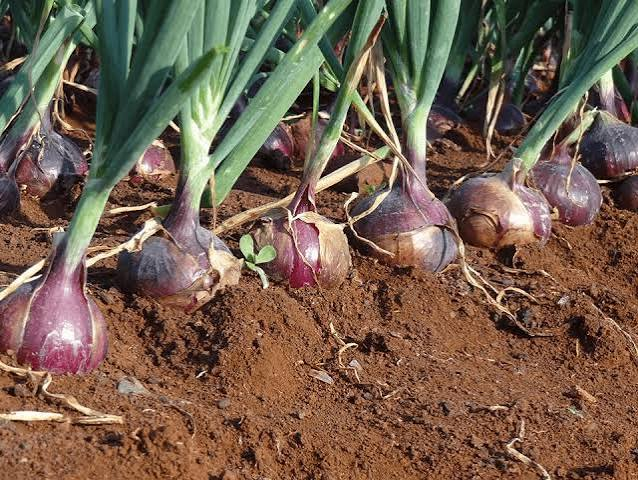
Why Onion Farming in Kenya Is a Smart Business Choice:
The first question every beginner asks is simple: why onions? The answer lies in the numbers. Kenyans consume onions every single day, yet the country still imports onions from Tanzania, Ethiopia, and Egypt to fill the gap. This means that local production cannot meet demand, and that gap is your opportunity.
Consider the advantages:
- High demand, all year round: Onion farming in Kenya thrives because onions are a staple in almost every Kenyan meal.
- Fast maturity: Most onion varieties mature in 90 to 120 days, so you harvest and earn within a single season.
- Small land requirement: You can start onion farming in Kenya on as little as an eighth or quarter acre.
- Strong returns : A well-managed quarter acre can yield 5,000 to 8,000 kilograms, and with prices ranging from KES 40 to KES 100 per kilogram depending on the season, gross earnings can exceed KES 300,000.
- Multiple markets: You can sell to mama mbogas, schools, hotels, wholesalers, or export through brokers.
Understanding the Onion Market in Kenya:
Before you plant a single seedling, study the market. Onion farming in Kenya is most profitable when you plant against the main harvest seasons. Most farmers plant during the long rains (March–May), which floods the market around June to August and crashes prices. Smart farmers plant during the short rains (October–December) and harvest in January to March when supply is low and prices peak.Knowing this cycle is the single biggest secret to profitable onion farming in Kenya.
Best Onion Varieties for Beginners in Kenya:
Choosing the right variety can make or break your first harvest. The most popular varieties for onion farming in Kenya include:
- Red Coach: Small to medium bulbs, highly pungent, excellent storage life, and very popular in the local market.
- African Red: The most common variety; tolerant to harsh conditions and widely accepted by consumers.
- White Creole: Preferred for salads and export; milder flavor.
- Texas Grano: Large bulbs, sweet flavor, matures in about 90 days; loved by the hotel industry.
- African Red: Hybrid varieties with uniform bulbs and high yields, excellent for serious commercial onion farming in Kenya.

Buy certified seeds or seedlings from reputable suppliers such as Onion Doctor. Avoid recycled seeds from the market they often carry diseases and produce poor germination.
Climate and Soil Requirements:
Onions are picky about their growing conditions. Successful onion farming in Kenya depends on getting these basics right:
- Temperature: 15–30°C. Extreme heat causes bolting (premature flowering), which ruins bulb quality.
- Soil: Well-drained, fertile loam or sandy loam with a pH of 5.8–6.8. Onions hate waterlogged soil.
- Sunlight: At least 6 hours of direct sunlight daily.
- Water: Regular, light irrigation. Onions have shallow roots and need consistent moisture, especially during bulb formation but never overwater.
Step-by-Step: How to Start Onion Farming in Kenya as a Beginner:
Step 1: Land Preparation:
Clear the land completely of weeds and previous crop residues. Plough to a fine tilth of about 20–30 cm deep, then harrow to break clods. Onion farming in Kenya succeeds or fails at this stage fine, level soil gives uniform bulbs.Apply well-decomposed manure (about 5–10 tons per acre) during ploughing. Avoid fresh manure, which encourages excessive leaf growth at the expense of bulbs and can introduce diseases
Step 2: Raised Beds and Soil Treatment:
Make raised beds 1 meter wide and any convenient length. Raised beds improve drainage, which is critical because onions rot easily in standing water.Drench the soil with a fungicide solution before planting to protect young seedlings from soil-borne diseases such as damping off. This is a standard practice among successful onion farming in Kenya practitioners.
Step 3: Planting:
You can plant either seeds directly or, more commonly, transplant seedlings raised in a nursery.
- Direct seeding: Sow seeds 1 cm deep in rows 30 cm apart. Thin seedlings later to 10 cm between plants.
- Transplanting (recommended for beginners): Raise seedlings in a nursery for 6–8 weeks, then transplant to the field at a spacing of 30 cm between rows and 8–10 cm between plants.
Transplant in the evening or on a cloudy day to reduce transplant shock, and water immediately. For best results in onion farming in Kenya, transplant when seedlings have 3–4 true leaves and a pencil-thick stem.
Step 4: Fertilizer Application:
Onions are heavy feeders. A typical fertilizer program for onion farming in Kenya looks like this:
- Basal (planting): DAP or NPK 17:17:17 at 50 kg per acre mixed into the soil.
- Top dressing: CAN or urea at 3–4 weeks after transplanting, and a second dose at 6–7 weeks to support bulb development.
Follow soil test recommendations where possible over-applying nitrogen produces big leaves and small bulbs.
Step 5: Irrigation:
Water lightly and frequently rather than flooding. Onion farming in Kenya in the dry regions of Kajiado and Kitui depends entirely on drip or furrow irrigation. Drip irrigation is the most efficient and keeps foliage dry, reducing disease pressure.Stop irrigation about two weeks before harvest to allow bulbs to mature and skins to dry.
Step 6: Weeding:
Onions compete poorly with weeds, especially in the first 8 weeks. Weed carefully by hand or with shallow hoeing to avoid damaging shallow roots. Mulching with dry grass also suppresses weeds and retains moisture.
Step 7: Pest and Disease Management:
The major enemies of onion farming in Kenya include:
Pests:
- Thrips: cause silvery patches on leaves; control with appropriate insecticides and good field hygiene.
- Onion flies and cutworms: attack young seedlings; use treated soil and timely spraying.
Diseases:
- Purple blotch and downy mildew: fungal diseases favored by wet conditions; manage with fungicides and spacing.
- White rot: devastating soil-borne disease; practice crop rotation (avoid planting onions where onions, garlic, or leeks grew in the last 3 years).
- Damping off: kills nursery seedlings; use treated soil and avoid overwatering.
Always follow label instructions and observe pre-harvest intervals for any agrochemicals.

Harvesting and Post-Harvest Handling:
Harvest when 50–70% of the tops have fallen over and the necks begin to dry usually 90 to 120 days after transplanting, depending on the variety. Lift bulbs gently with a fork, avoiding bruises, since damaged bulbs rot quickly. Cure the onions by drying them under shade for 1–2 weeks until the outer skins are papery and the necks are completely dry. Proper curing is what separates professional onion farming in Kenya from casual growing it dramatically extends storage life to 3–6 months.Store cured onions in a cool, dry, well-ventilated place. You can hang them in nets or store in shallow trays. Never store in airtight bags or damp rooms.
Are you in need of in-depth knowledge on onion and garlic production? If yes, we are a call away. Contact us for: Onion seedlings, Garlic seedlings, Germinated garlic cloves, Farm planning services, Soil testing, training on onion and garlic growing, Drip irrigation installation and maintenance, Agronomic support, Onion and Garlic value pack and Farm management. For free consultation, placing orders or booking a visit with an agronomist, please contact us via Call or what’s app +254703982228, Email: info@oniondoctor.co.ke You can also check out our social media handles for daily updates on TikTok: https://www.tiktok.com/@oniondoctorke0706252490?_r=1&_t=ZS-96UPUyx6ESL Instagram:https://www.instagram.com/oniondoctorke?igsh=MW5sZzJ6c3BnZ3Z0dw==Facebook:https://www.facebook.com/share/1HouRgLCwS/Twitter:https://x.com/OnionDoctorKe?s=20