
Onion farming in Kenya has exploded in popularity over the last decade, and it is easy to see why. Onions are a daily kitchen staple in virtually every Kenyan household, prices are consistently strong, and the crop matures fast. Yet despite the demand, many first-time growers lose money because onion farming in Kenya is far more technical than it looks. The good news is that most beginner mistakes are completely avoidable with the right information, and demand for quality bulbs keeps rising across East Africa. In fact, Kenya still imports onions to fill the gap, which means the market for local producers remains wide open. For anyone serious about agribusiness, onion farming in Kenya represents one of the most accessible entry points. A small error in seed selection, nursery management, or curing can wipe out an entire season’s profit. This guide breaks down the ten most common mistakes beginners make in onion farming in Kenya and exactly how to avoid them. Whether you are starting a quarter-acre in Kajiado or scaling up in Nyahururu,mastering these fundamentals will save you thousands of shillings.
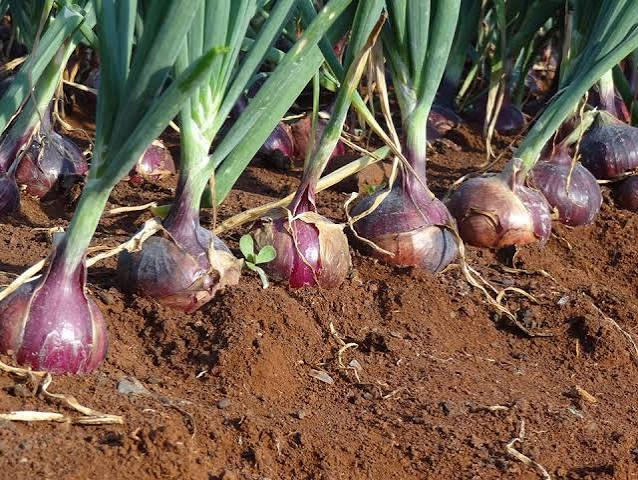
1. Choosing the Wrong Variety:
The single biggest killer of profits in onion farming in Kenya is planting the wrong variety. Many beginners buy cheap, uncertified seeds from open-air markets, only to harvest tiny bulbs or crops that bolt prematurely. In onion farming in Kenya, the proven performers are Red Coach, Chui, and Neptune, which are well suited to Kenyan conditions and have strong local demand. Always buy certified seed and seedlings from reputable suppliers in onion farming in Kenya, cheap seed is the most expensive mistake you can make.
2. Planting at the Wrong Time:
Onions are highly sensitive to day length and temperature, and mistimed planting is a classic beginner error in onion farming in Kenya. In most regions, the long rains (March to May) and short rains (October to December) are the ideal windows. Planting too late exposes crops to heavy rains and fungal disease; planting too early causes bolting. Successful onion farming in Kenya means planning backwards from the market window, not planting whenever land is free.
3. Poor Nursery Management:
Nearly all onion farming in Kenya starts in a nursery, yet this stage is where most beginners fail. Common errors include sowing seed too deep, overwatering, and skipping hardening off before transplanting. For strong seedlings in onion farming in Kenya, sow in raised, well-drained beds, keep the nursery weed-free, and water lightly but consistently for four to six weeks before transplanting.
4. Transplanting Seedlings That Are Too Old or Too Small:
Seedling age matters enormously in onion farming in Kenya. Transplanting pencil-thin, spindly seedlings or overgrown, thick-necked ones both lead to poor bulb formation. The sweet spot is pencil-sized seedlings about 15 to 20 cm tall, roughly 6 to 8 weeks old. In commercial onion farming in Kenya, uniform seedlings are the foundation of uniform bulbs and uniform bulbs are what buyers pay premium prices for.
5. Ignoring Soil Preparation and Spacing:
Onions demand loose, well-drained, fertile soil with a pH between 6.0 and 6.8. Beginners in onion farming in Kenya often skip soil testing and plant on compacted or waterlogged land, causing stunted roots and rot. Spacing is equally critical: plant at 30 cm between rows and 8 to 10 cm within rows. Proper spacing is non-negotiable in onion farming in Kenya because crowded plants compete for nutrients and produce small bulbs.
6. Under-Fertilizing or Over-Fertilizing:
Fertilizer misuse is rampant among newcomers to onion farming in Kenya. Too little nitrogen gives pale, weak plants; too much gives lush tops but tiny bulbs. Apply well-rotted manure at planting, then top-dress with a nitrogen-rich fertilizer at three and six weeks after transplanting, shifting to potassium-rich feeds as bulbs swell. Smart nutrition management separates profitable onion farming in Kenya from disappointing harvests.
7. Inconsistent Watering:
Onions have shallow root systems, so irregular watering causes split bulbs, bolting, and thick necks. Beginners in onion farming in Kenya either flood fields or let crops dry out. The rule is simple: keep soil consistently moist, especially during bulb formation, then reduce watering as bulbs mature to encourage curing. In dry regions, drip irrigation has transformed onion farming in Kenya by delivering steady moisture with minimal waste.
8. Neglecting Weed, Pest, and Disease Control:
Weeds steal nutrients fast, and onions are poor competitors. In onion farming in Kenya, the biggest threats are thrips, onion flies, purple blotch, and downy mildew. Scouting weekly, rotating crops, and using recommended agrochemicals at the first sign of trouble keeps losses low. Integrated pest management is now standard practice in serious onion farming in Kenya ignoring it is a recipe for disaster.
9. Harvesting Too Early or Too Late:
Harvest timing directly affects bulb quality and shelf life. Beginners in onion farming in Kenya often pull bulbs when the tops are still green, or leave mature bulbs in the ground until they rot. Harvest when about 70 to 80 percent of the tops have fallen over and necks are soft. Getting this right is a hallmark of experienced onion farming in Kenya, because properly matured bulbs store for months.
10. Failing to Cure and Store Properly:
Kenya loses huge volumes of onions to post-harvest spoilage, and poor curing is the main culprit. After harvest, cure bulbs in a shaded, ventilated area for two to three weeks until necks are completely dry. Proper curing and storage cool, dry, well-ventilated spaces can double or triple your selling window. In onion farming in Kenya, the farmer who stores well controls when to sell, and therefore controls the price.
Bonus Mistake: No Market Plan:
Many beginners treat onion farming in Kenya as “plant first, sell later.” With perishable produce and fluctuating prices, that is dangerous. Line up buyers, cooperatives, or aggregation centres before planting, and consider value addition like dried onion flakes. Strategic marketing is what turns onion farming in Kenya from a gamble into a business.
How to Get Started the Right Way:
If you are new to onion farming in Kenya, begin with a manageable plot a quarter to half an acre so you can learn the crop without betting everything on one season. Visit a successful farmer in your area, join a WhatsApp or farmer group focused on onion farming in Kenya, and keep a simple record of every cost and activity. Extension officers from your county government can also guide you on soil testing and pest control. Remember, the fundamentals of profitable onion farming in Kenya are variety, timing, water, and post-harvest care get those four right and everything else follows.
Conclusion:
Onion farming in Kenya offers real, repeatable profits but only for those who respect the crop’s technical demands. Avoid wrong varieties, poor timing, weak nursery care, bad spacing, fertilizer misuse, irregular watering, ignored pests, mistimed harvests, and sloppy storage, and you will already be ahead of most beginners. Start small, learn each season, and apply these lessons consistently. Keep learning from each cycle, invest in quality seed and irrigation, and network with other growers. The farmers thriving in onion farming in Kenya today are those who treated their first seasons as paid training. With patience and precision, onion farming in Kenya can become one of the most reliable income streams on your farm.
Are you in need of in-depth knowledge on onion and garlic production? If yes, we are a call away. Contact us for: Onion seedlings, Garlic seedlings, Germinated garlic cloves, Farm planning services, Soil testing, training on onion and garlic growing, Drip irrigation installation and maintenance, Agronomic support, Onion and Garlic value pack and Farm management. For free consultation, placing orders or booking a visit with an agronomist, please contact us via Call or what’s app +254703982228, Email: info@oniondoctor.co.ke You can also check out our social media handles for daily updates on TikTok: https://www.tiktok.com/@oniondoctorke0706252490?_r=1&_t=ZS-96UPUyx6ESL Instagram:https://www.instagram.com/oniondoctorke?igsh=MW5sZzJ6c3BnZ3Z0dw==Facebook:https://www.facebook.com/share/1HouRgLCwS/Twitter:https://x.com/OnionDoctorKe?s=20