
Garlic farming in Kenya has emerged as one of the most lucrative agricultural ventures for smallholder and commercial farmers alike. Known locally as “Kitunguu Saumu,” garlic is a high-value horticultural crop that belongs to the onion family. With soaring local and international demand, garlic farming in Kenya presents an incredible opportunity for farmers looking to diversify their income streams and tap into a market that is currently dominated by imports. The numbers tell a compelling story. Kenya imports approximately 80% of its garlic supply, primarily from China and India, despite having ideal climatic conditions for garlic cultivation in its highland regions. This massive import dependency creates a golden opportunity for local farmers who can produce high-quality garlic bulbs. At current market prices ranging from KSh 150 to KSh 400 per kilogram, garlic farming in Kenya can generate net profits of KSh 680,000 to KSh 1,980,000 per acre in just 4–5 months. At Onion Doctor, we believe that garlic farming in Kenya represents more than just a crop it represents a pathway to economic empowerment, food security, and agricultural transformation. This comprehensive guide will walk you through every aspect of garlic farming in Kenya, from selecting the right varieties to maximizing your profits through strategic marketing.
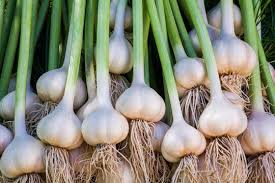
Understanding the Garlic Market in Kenya:
The garlic market in Kenya is characterized by a significant supply gap that presents enormous opportunities for local producers. Despite growing demand from households, restaurants, hotels, food processors, and the pharmaceutical industry, local production remains insufficient. This gap is filled by imports, which means that farmers who invest in garlic farming in Kenya can capture a substantial share of this lucrative market.The demand for garlic in Kenya is driven by multiple factors:
- Culinary uses: Garlic is essential in Kenyan, French, Mediterranean, Italian, and Mexican cuisines
- Medicinal properties: Rich in allicin, garlic boosts immunity, regulates blood pressure, and supports cardiovascular health
- Food processing: Used in garlic powder, paste, oil, and seasoning blends
- Traditional medicine: Increasingly popular among Kenyans embracing natural remedies
Best Regions for Garlic Farming in Kenya:
Highland Regions: The Garlic Belt of Kenya:
Garlic farming in Kenya thrives in specific agro-ecological zones. The best regions include:
- Central Highlands: Nyeri, Murang’a, Kiambu, Kirinyaga, Embu, Meru
- Rift Valley Highlands: Parts of Nakuru, Bomet, Nyandarua
- Eastern Highlands: Parts of Machakos and Makueni
These regions offer:
- Altitudes of 500–2,400 meters above sea level
- Temperature ranges of 12–24°C during vegetative growth
- Well-drained, fertile loamy soils
- Adequate rainfall or access to irrigation
Expanding Garlic Farming in Kenya to Arid and Semi-Arid Regions:
At Onion Doctor, we are pioneering garlic farming in Kenya’s arid and semi-arid lands (ASALs). Through climate-smart technologies like drip irrigation and drought-tolerant varieties, farmers in regions like Kajiado, Narok, Laikipia, and Garissa can successfully grow garlic. Our top notch drip irrigation systems make garlic farming in Kenya possible even in challenging environments.
Selecting the Best Garlic Varieties for Farming in Kenya:
Choosing the right variety is the foundation of successful garlic farming in Kenya. Garlic varieties are broadly classified into three main types: Hardneck, Softneck, and Elephant. Hardnecks have a stiff central stem and offer robust, complex flavors, while Softnecks have pliable stems, store longer, and are widely grown in milder climates.
- 1. Hardneck Garlic: Hardneck varieties produce a stiff central woody stalk called a “scape”. They typically feature fewer but larger cloves that are easy to peel. They thrive in colder climates and have a stronger, spicier flavor, though they do not store as long.
- 2. Softneck Garlic: Softneck garlic is the type most commonly found in supermarkets. They do not produce scapes, and their stems remain pliable, making them ideal for braiding. They have a milder flavor, yield more cloves per bulb (10–20), and have an excellent storage life.
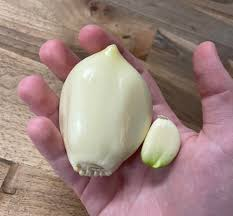
- 3. Elephant Garlic: Elephant garlic is technically a part of the leek family rather than true garlic. It produces enormous bulbs with 4–6 very large cloves. The flavor is remarkably mild and sweet compared to true garlic, making it great for roasting whole
Onion Doctor’s Recommendation:
For beginners in garlic farming in Kenya, we recommend starting with softneck varieties like Africa Giant or Arusha Giant due to their reliability, longer storage life, and strong market demand. As you gain experience, consider adding hardneck varieties to capture the gourmet market segment.
Soil Preparation and Land Management for Garlic Farming in Kenya:
Soil Requirements:
Successful garlic farming in Kenya begins with understanding your soil. Garlic requires:
- Soil type: Well-drained sandy loam or loam
- pH range: 5.5–7.0 (slightly acidic to neutral)
- Organic matter: High content for nutrient availability
- Drainage: Excellent to prevent bulb rot
Step-by-Step Land Preparation for Garlic Farming in Kenya:
- Soil Testing: Before planting, conduct a comprehensive soil test to determine pH, nutrient levels, and organic matter content. Onion Doctor offers professional soil testing services to optimize your garlic farming in Kenya.
- Deep Tillage: Plough the land to a depth of 25–30 cm to break hard pans and improve root penetration. This is essential for proper bulb development in garlic farming in Kenya.
- Harrowing: Break down soil clods to achieve a fine tilth, creating the loose, airy environment that garlic roots need.
- Soil Solarization: Cover moist beds with clear polythene sheets for 20–30 days to kill soil-borne pests and pathogens. This organic practice is highly recommended for garlic farming in Kenya.
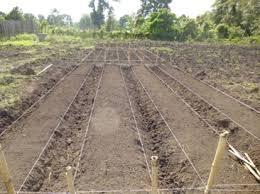
- Bed Formation: Create raised beds 10–15 cm high and 1 meter wide to ensure proper drainage. Garlic farming in Kenya fails when bulbs sit in waterlogged soil.
- Organic Matter Incorporation: Mix well-rotted manure or compost (16 tons per acre) thoroughly into the soil. This provides slow-release nutrients throughout the growing cycle.
- Basal Fertilizer Application: Apply DAP to promote strong root development during the early stages of garlic farming in Kenya.
The Planting Process: How to Plant Garlic for Maximum Yield:
Selecting Planting Material:
Quality seed cloves are the cornerstone of profitable garlic farming in Kenya. Follow these guidelines:
- Source certified, disease-free cloves from reputable suppliers like Onion Doctor
- Select the largest cloves from healthy bulbs—larger cloves produce larger bulbs
- Avoid cloves with discoloration, soft spots, or signs of disease
- Treat cloves with appropriate fungicides before planting to prevent soil-borne diseases
Planting Technique:
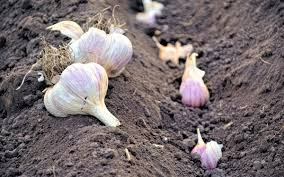
- Clove Preparation: Carefully separate cloves from bulbs without damaging the basal plate (root-growing area).
- Spacing: Plant cloves 10–15 cm apart within rows, with rows spaced 20–30 cm apart.
- Depth: Plant cloves 2.5–4 cm deep with the pointed end facing up and the basal plate facing down.
- Coverage: Cover with loose, airy soil and firm gently to ensure good soil-to-clove contact.
- Initial Watering: Lightly water to moisten the soil without waterlogging. Excess moisture can cause cloves to rot before germination.
Germination typically occurs within 7–10 days under optimal conditions
Irrigation and Water Management for Garlic Farming in Kenya:
Water Requirements:
Garlic farming in Kenya requires consistent moisture management:
- Critical stages: Early vegetative growth and bulb formation
- Avoid: Waterlogging and overhead irrigation during humid conditions
Drip Irrigation: The Gold Standard:
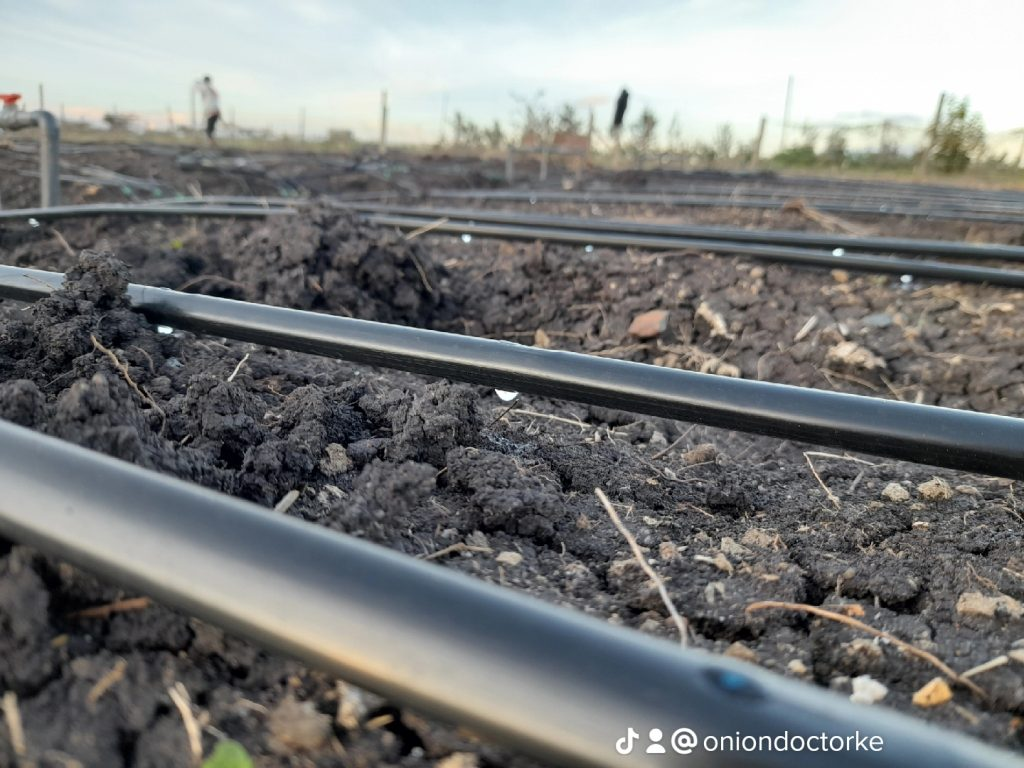
At Onion Doctor, we strongly recommend drip irrigation for garlic farming in Kenya because it:
- Delivers water directly to the root zone
- Reduces water loss through evaporation
- Keeps foliage dry, minimizing fungal disease risk
- Allows precise control of moisture levels
- Enables fertigation (fertilizer application through irrigation)
Mulching for Moisture Conservation:
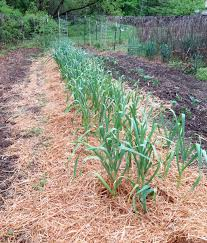
Apply a 4–6 inch layer of organic mulch (straw, grass clippings, or dry leaves) after planting. Mulching in garlic farming in Kenya:
- Retains soil moisture
- Suppresses weed growth
- Regulates soil temperature
- Adds organic matter as it decomposes
- Reduces irrigation frequency by up to 40%
Nutrition and Fertilizer Management:
Understanding Garlic Nutritional Needs:
Garlic farming in Kenya requires a strategic approach to fertilization. The crop has a shallow, unbranched root system with low nutrient extraction capacity, meaning it needs relatively high nutrient inputs for optimal yields.
Fertilizer Schedule for Garlic Farming in Kenya:
| Growth Stage | Fertilizer Type | Application Rate | Purpose |
|---|---|---|---|
| Basal (Pre-planting) | Well-rotted manure + DAP | 16 tons/acre + 50 kg/acre | Root development, soil structure |
| Early Growth (Week 2) | CAN or Urea | 50 kg/acre | Leaf development |
| Vegetative (Week 6) | NPK 23:23:0 | 50 kg/acre | Foliar growth |
| Bulbing Stage (Week 10) | NPK 17:17:17 | 50 kg/acre | Bulb enlargement |
| Late Bulbing (Week 14) | Potassium sulfate | 30 kg/acre | Bulb firmness, storage quality |
Pest and Disease Management in Garlic Farming in Kenya:
Garlic farming in Kenya is affected by pests like thrips, nematodes and onion flies and diseases like Downey Mildew, Purple Blotch and Pink Root among others.
Integrated Pest Management (IPM) for Sustainable Garlic Farming in Kenya:
At Onion Doctor, we advocate for sustainable approaches to pest and disease management:
- Prevention First: Use certified disease-free seed, practice crop rotation, and maintain field hygiene
- Cultural Control: Proper spacing, adequate drainage, and timely weeding
- Biological Control: Encourage natural predators like ladybugs and lacewings
- Botanical Pesticides: Garlic spray, chili spray, and neem oil for soft-bodied insects
- Chemical Control: Use approved pesticides as a last resort, following strict rotation to prevent resistance
Harvesting and Post-Harvest Handling:
Determining the Right Time to Harvest Garlic in Kenya:
Garlic is typically ready for harvest 4–6 months after planting, depending on the variety and growing conditions. Key indicators include:
- 60–80% of leaves have turned yellow or brown
- Pseudo-stems begin to fall over
- Bulbs are well-formed with tight, papery skins
- The neck becomes soft
Important: Harvest while some green leaves remain to ensure the bulb is fully enclosed in its protective skin.
Harvesting Technique:
- Choose dry weather for harvesting to prevent moisture-related rots
- Loosen soil around bulbs using a digging fork or spade
- Lift bulbs carefully to avoid bruising or cutting
- Shake off excess soil gently
- Do not wash bulbs brushing off dry soil is sufficient
Critical: Injured bulbs are highly susceptible to storage rots. Handle with extreme care during garlic farming in Kenya.
Curing: The Secret to Long-Term Storage:
Curing is perhaps the most critical post-harvest step in garlic farming in Kenya. Proper curing:
- Dries the neck and outer skins completely
- Concentrates flavors
- Extends storage life from weeks to months
- Prevents storage diseases
Curing Process:
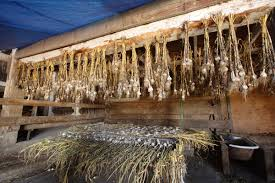
- Bundle bulbs in groups of 10–15
- Hang in a shaded, well-ventilated area or spread in a single layer
- Maintain good air circulation
- Cure for 3–4 weeks until necks are completely dry
- Avoid direct sunlight, which can cause sunburn and greening
Challenges in Garlic Farming in Kenya and How to Overcome Them:
Challenge 1: Access to Quality Seed:
- Problem: Limited availability of certified, disease-free seed cloves; high cost of quality planting material.
- Onion Doctor Solution: We provide certified garlic seedlings, germinated cloves, and farm planning services.
Challenge 2: Pests and Diseases:
- Problem: White rot, thrips, and nematodes can devastate crops.
- Onion Doctor Solution: We offer a crop protection guide to deal with pests and diseases.
Challenge 3: Market Price Volatility:
- Problem: Prices can fluctuate by 100% between seasons.
- Onion Doctor Solution: We teach proper curing and storage techniques, plus provide market intelligence to help farmers time their sales strategically.
Challenge 4: High Initial Investment:
- Problem: Drip irrigation and quality seed require significant upfront capital.
- Onion Doctor Solution: We offer flexible packages and can help farmers access financing through our partner networks.
Challenge 5: Lack of Technical Knowledge:
- Problem: Many farmers lack specialized knowledge in allium cultivation.
- Onion Doctor Solution: Comprehensive training programs, on-farm demonstrations, and ongoing agronomic support.
Are you in need of in-depth knowledge on onion and garlic production? If yes, we are a call away. Contact us for: Onion seedlings, Garlic seedlings, Germinated garlic cloves, Farm planning services, Soil testing, training on onion and garlic growing, Drip irrigation installation and maintenance, Agronomic support, Onion and Garlic value pack and Farm management. For free consultation, placing orders or booking a visit with an agronomist, please contact us via Call or what’s app +254703982228, Email: info@oniondoctor.co.ke You can also check out our social media handles for daily updates on TikTok: https://www.tiktok.com/@oniondoctorke0706252490?_r=1&_t=ZS-96UPUyx6ESL Instagram:https://www.instagram.com/oniondoctorke?igsh=MW5sZzJ6c3BnZ3Z0dw==Facebook:https://www.facebook.com/share/1HouRgLCwS/Twitter:https://x.com/OnionDoctorKe?s=20