
Onion farming in Kenya has become one of the most profitable agricultural ventures for smallholder and large-scale farmers alike. However, the journey from seed to harvest is fraught with challenges, and pests remain the single biggest threat to profitability in onion farming in Kenya. At Onion Doctor, we have spent years studying the pest profiles that devastate onion crops across the country. This comprehensive guide will walk you through every major pest affecting onion farming in Kenya, how to identify them, the damage they cause, and the most effective integrated pest management (IPM) strategies to protect your investment.Whether you are a beginner exploring onion farming in Kenya or an experienced grower looking to optimize your pest control, this guide is your definitive resource.
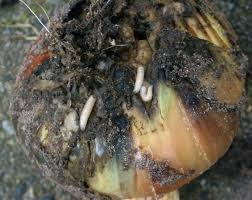
Why Pest Management is Critical for Onion Farming in Kenya:
Onion farming in Kenya contributes significantly to the country’s horticultural export earnings and domestic food security. Kenya produces over 200,000 metric tons of onions annually, with major production zones in Kajiado, Narok, Laikipia, Meru, Nyeri, and Bungoma. Despite this potential, pest-related yield losses can range from 30% to 80% if left unmanaged.The tropical and subtropical climate across different agro-ecological zones in Kenya creates ideal breeding conditions for a wide spectrum of onion pests. From the hot, dry lowlands to the cool, wet highlands, onion farming in Kenya faces unique pest pressure that demands zone-specific management strategies. At Onion Doctor, we emphasize that understanding your local pest ecology is the first step toward successful onion farming in Kenya.
1. The Onion Thrips:
Identification:
The onion thrips is the most destructive pest in onion farming in Kenya. These are tiny, slender insects measuring just 1-2 mm in length. Adults are pale yellow to brown and have two pairs of fringed wings. Nymphs are wingless and even smaller, often hiding deep within leaf sheaths.
Damage Symptoms:
Thrips feed by rasping the leaf surface and sucking out sap, causing:
- Silvering or streaking on leaves
- Leaf curling and twisting
- Stunted bulb development
- Secondary bacterial and fungal infections through feeding wounds
- In severe infestations, complete defoliation and plant death
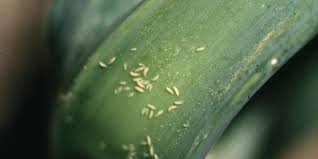
Why Thrips Thrive in Onion Farming in Kenya:
The warm, dry conditions prevalent during the long dry season (June-October) in most onion-growing regions of Kenya favor rapid thrips reproduction. A single female can lay up to 80 eggs, and the life cycle completes in just 10-14 days under optimal temperatures.
Management Strategies for Onion Farming in Kenya:
- Monitor weekly using yellow sticky traps or by tapping plants over white paper
- Apply neem-based insecticides at first sign of infestation
- Use reflective mulches to disorient thrips
- Practice crop rotation with non-allium crops
- Maintain adequate irrigation stressed plants are more susceptible
- Plant resistant varieties from Onion Doctor.
2. The Onion Maggot:
Identification:
The onion maggot is a small fly (5-7 mm) resembling a housefly but smaller, with a grayish body. The larvae the actual maggots are legless, creamy-white, and about 8-10 mm long when fully grown.
Damage Symptoms:
- Seedling collapse and death (“damping off” appearance)
- Tunneling into bulbs causing rot and foul odor
- Wilting of older plants despite adequate moisture
- Soft, watery decay at the base of the bulb
- Up to 60% seedling mortality in untreated fields
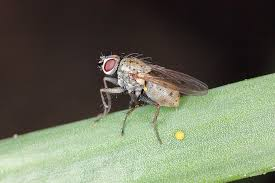
Impact on Onion Farming in Kenya:
Onion maggots are particularly devastating in direct-seeded onion farming in Kenya, especially in cool, wet conditions. The pest is prevalent in highland areas like Nyandarua, Nyeri, and parts of Meru where temperatures remain moderate.
Management Strategies for Onion Farming in Kenya:
- Use treated seeds or seedling transplants from certified nurseries like Onion Doctor`s.
- Apply preventive soil drenches with appropriate insecticides at planting.
- Practice deep burial of crop residues to eliminate overwintering sites.
- Avoid excessive organic manure that attracts egg-laying females.
- Use row covers in small-scale onion farming in Kenya.
- Time planting to avoid peak maggot flights.
3. The Cutworm:
Identification:
Cutworms are the larvae of noctuid moths. They are smooth, plump caterpillars ranging from gray to brown to black, typically 3-5 cm long. They curl into a “C” shape when disturbed.
Damage Symptoms:
- Plants cut off at soil level the signature symptom
- Seedlings toppled overnight appearing as if sliced with a knife
- Feeding on underground stems and roots
- Irregular holes in leaves of older plants
- Significant stand reduction in young onion fields
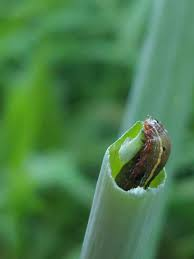
Relevance to Onion Farming in Kenya:
Cutworms are widespread across all onion farming in Kenya regions but are most problematic in:
- Newly cleared fields with high organic matter
- Fields following pasture or fallow
- Irrigated fields with moist soil surfaces
Management Strategies for Onion Farming in Kenya:
- Hand-pick larvae at night with a flashlight (effective for small plots)
- Place cardboard collars around seedling stems
- Apply Bacillus (Bt) as a biological control
- Use bait formulations with bran and insecticide
- Till soil deeply before planting to expose and destroy pupae
- Maintain clean field borders to reduce moth habitat
4. The Leaf Miner:
Identification:
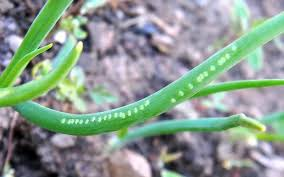
Adult leaf miners are small black and yellow flies (2-3 mm). The larvae are legless maggots that mine inside leaves, leaving distinctive trails. The pupae are brown and found in the soil.
Damage Symptoms:
- Serpentine mines or tunnels visible on leaves
- White or brown trails winding across leaf surfaces
- Premature leaf death when mines are numerous
- Reduced photosynthetic capacity
- Entry points for bacterial pathogens
Leaf Miner Challenges in Onion Farming in Kenya:
Leaf miners are an emerging threat in onion farming in Kenya, particularly in:
- Greenhouse and shade net production
- Irrigated fields with high humidity
- Areas with continuous allium cultivation
Management Strategies for Onion Farming in Kenya:
- Remove and destroy infested leaves immediately.
- Use yellow sticky traps to monitor adult populations.
- Practice strict crop rotation.
- Avoid excessive nitrogen fertilization that promotes succulent growth.
- Apply biological controls like parasitic wasps.
5. The Nematode:
Identification:
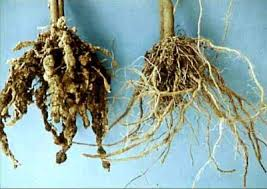
Root-knot nematodes are microscopic roundworms that live in soil. They cannot be seen with the naked eye, but their damage is unmistakable. Juveniles penetrate roots and mature into swollen females.
Damage Symptoms:
- Root galls or knots swollen, distorted root tissue
- Stunted, yellowed plants with poor vigor
- Wilting during midday heat despite adequate soil moisture
- Reduced bulb size and uneven crop maturity
- Secondary root rot due to damaged root systems
Nematode Distribution in Onion Farming in Kenya:
Root-knot nematodes are endemic across onion farming in Kenya regions, with highest pressure in:
- Sandy soils (coastal regions, parts of Eastern Kenya)
- Fields with continuous vegetable production
- Irrigated areas with warm soil temperatures
Management Strategies for Onion Farming in Kenya:
- Soil test before planting to determine nematode populations
- Apply nematicides (fumigants or non-fumigants) based on soil test results
- Plant nematode-resistant cover crops like marigold
- Practice long crop rotation (3-4 years) with non-host crops
- Use soil solarization in small plots during hot months
- Apply organic amendments like neem cake to suppress nematodes
- Use certified nematode-free seedlings from Onion Doctor.
Integrated Pest Management (IPM) for Onion Farming in Kenya:
Onion Doctor advocates for a holistic, Integrated Pest Management (IPM) approach to onion farming in Kenya. IPM combines multiple strategies to keep pest populations below economic injury levels while minimizing environmental impact and preserving beneficial organisms.
The Five Pillars of IPM for Onion Farming in Kenya:
1. Prevention & Cultural Control:
- Use certified, pest-free seeds and seedlings from Onion Doctor.
- Practice crop rotation with non-allium crops (maize, beans, legumes)
- Time planting to avoid peak pest seasons
- Maintain field sanitation remove crop residues and weeds
- Optimize plant spacing for air circulation and ease of scouting
- Use resistant varieties from Onion Doctor.
2. Monitoring & Scouting:
- Inspect fields weekly during critical growth stages
- Use pheromone and sticky traps for early detection
- Keep pest records to predict seasonal patterns
- Learn to identify pests, beneficial insects, and damage symptoms
3. Biological Control:
- Conserve natural enemies ladybugs, lacewings, parasitic wasps, predatory mites
- Apply microbial pesticides
- Use nematode biocontrol agents for soil-dwelling pests
- Avoid broad-spectrum insecticides that harm beneficials
4. Mechanical & Physical Control:
- Hand-pick large pests like cutworms and armyworms
- Use row covers and screens in small-scale operations
- Apply mulches (reflective or organic) for pest deterrence
- Use traps (light traps, pheromone traps, sticky traps)
5. Chemical Control:
- Apply pesticides only when economic thresholds are exceeded
- Select target-specific products to preserve beneficials
- Rotate pesticide modes of action to prevent resistance
- Follow pre-harvest intervals (PHI) strictly for food safety
- Use proper application techniques correct dosage, timing, and coverage
Are you in need of in-depth knowledge on onion and garlic production? If yes, we are a call away. Contact us for: Onion seedlings, Garlic seedlings, Germinated garlic cloves, Farm planning services, Soil testing, training on onion and garlic growing, Drip irrigation installation and maintenance, Agronomic support, Onion and Garlic value pack and Farm management. For free consultation, placing orders or booking a visit with an agronomist, please contact us via Call or what’s app +254703982228, Email: info@oniondoctor.co.ke You can also check out our social media handles for daily updates on TikTok: https://www.tiktok.com/@oniondoctorke0706252490?_r=1&_t=ZS-96UPUyx6ESL Instagram:https://www.instagram.com/oniondoctorke?igsh=MW5sZzJ6c3BnZ3Z0dw==Facebook:https://www.facebook.com/share/1HouRgLCwS/Twitter:https://x.com/OnionDoctorKe?s=20