
Onion farming in Kenya represents one of the most lucrative agribusiness opportunities for smallholder farmers, yet it remains one of the most challenging crops to grow successfully. With 80% of Kenya’s land classified as arid or semi-arid, Onion Doctor has been at the forefront of transforming drylands into productive onion farms since 2020, helping over 1,000 farmers convert more than 2,500 acres across 11 counties into thriving onion farming in Kenya operations. However, even the most well-planned onion farming in Kenya venture can collapse overnight when diseases strike. A single outbreak of downy mildew or purple blotch can destroy up to 50% of your harvest, turning months of hard work into devastating losses. That’s why understanding onion diseases and prevention isn’t just helpful it’s absolutely critical for anyone serious about profitable onion farming in Kenya. In this comprehensive guide from Onion Doctor, we’ll walk you through the most destructive diseases affecting onion farming in Kenya, teach you how to spot them early, and share the exact prevention strategies that have helped our farmers achieve yields of up to 15 tonnes per acre. Whether you’re a beginner starting your first onion farming in Kenya project or an experienced grower looking to protect your investment, this guide will equip you with everything you need to keep your bulbs healthy from seed to storage.
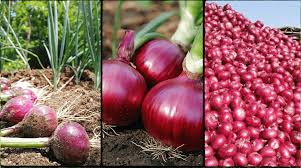
Understanding the Disease Triangle in Onion Farming in Kenya:
Before diving into specific diseases, every farmer practicing onion farming in Kenya must understand the “Disease Triangle” the three conditions required for any plant disease to develop:
- A susceptible host (your onion plants)
- A virulent pathogen (the disease-causing organism)
- Favorable environmental conditions (moisture, temperature, humidity)
In onion farming in Kenya, we can’t eliminate the host (we need those onions!), but we can disrupt the other two factors. This is the foundation of all disease prevention strategies that Onion Doctor teaches farmers across Kenya. The unique climate challenges of onion farming in Kenya ranging from arid conditions in northern counties to high-humidity regions during rainy seasons mean that disease pressure varies dramatically by location and season. Understanding your local conditions is the first step to successful onion farming in Kenya.
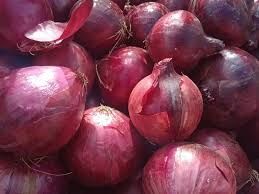
The Top 5 Onion Diseases Destroying Onion Farming in Kenya:
1. Downy Mildew:
Downy mildew is arguably the most destructive disease facing onion farming in Kenya. Caused by the fungus-like pathogen Peronospora destructor, this disease thrives in the cool, humid conditions that often occur during Kenya’s short rains and in high-altitude onion farming in Kenya regions like Nyandarua and Nakuru.
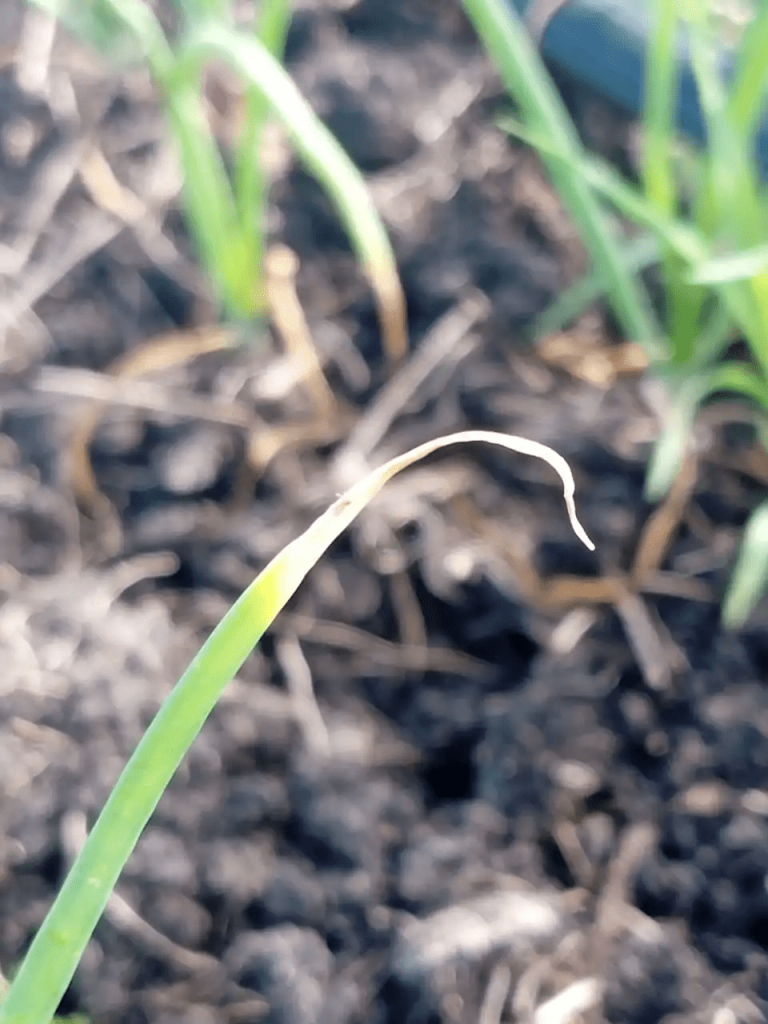
How to Identify Downy Mildew in Your Onion Farming in Kenya Field:
- Initial Signs: Pale-green or yellow, irregular patches appearing on older leaves.
- Fuzzy Growth: In high humidity or morning dew, a fuzzy, violet-gray to white fungal growth develops on these lesions.
- Progression: Leaves weaken, collapse, and die from the tip down, drastically stunting bulb growth
Why Downy Mildew is Particularly Dangerous for Onion Farming in Kenya:
Kenya’s diverse microclimates create perfect conditions for downy mildew in many onion farming in Kenya zones. The disease spreads via wind-blown spores that can travel long distances, meaning even isolated onion farming in Kenya plots aren’t safe from neighboring infected fields. Additionally, the pathogen can survive in soil for 4-5 years as thick-walled resting spores, making crop rotation essential for long-term onion farming in Kenya success.
Onion Doctor’s Prevention Strategy for Downy Mildew in Onion Farming in Kenya:
- Plant resistant varieties: Choose drought-tolerant, disease-resistant seedlings from Onion Doctor’s certified nurseries
- Optimize spacing: Maintain 15-20cm between plants and 30cm between rows to maximize airflow
- Irrigation management: Use drip irrigation (available through Onion Doctor) instead of overhead sprinklers that wet foliage
- Morning watering: If you must water, do so early so leaves dry quickly in the sun
- Monitor weekly: Scan your onion farming in Kenya field every 7 days, focusing on shaded, dense areas
- Fungicides: Apply fungicides at first sign of infection; repeat after heavy rains
- Crop rotation: Never plant onions, garlic, or leeks in the same field for at least 3-4 years
2. Purple Blotch:
Purple blotch is caused by the fungus Alternaria porri and represents a major threat to onion farming in Kenya during warm, humid conditions particularly in coastal counties and during the long rains. Field and storage losses from this single disease can range from 30% to 100% if unmanaged.
How to Identify Purple Blotch in Your Onion Farming in Kenya Crop:
- Initial lesions: Small, water-soaked spots that quickly turn brown
- Characteristic signs: Oval lesions developing deep purple centers with concentric rings (target spots)
- Yellow halos: Lesions surrounded by yellow zones that expand rapidly
- Leaf death: Infected leaves yellow, brown, and wilt downward within 2-4 weeks
- Bulb infection: Spores wash down to neck region causing yellow to wine-red semi-watery decay
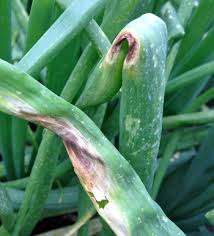
Purple blotch often follows thrips damage or other injuries, making integrated pest management crucial for onion farming in Kenya.
Why Purple Blotch Thrives in Onion Farming in Kenya:
The warm temperatures and high humidity common in many onion farming in Kenya regions during the growing season create perfect conditions for purple blotch. The fungus survives in crop residue for over a year, and spores spread via splashing water and wind meaning one infected plant can threaten your entire onion farming in Kenya field.
Onion Doctor’s Prevention Strategy for Purple Blotch in Onion Farming in Kenya:
- Sanitation is critical: Remove and destroy all onion debris immediately after harvest never leave culls in the field.
- Thrips control: Manage thrips populations (they create entry wounds) using neem extracts or recommended insecticides
- Proper fertility: Avoid excessive nitrogen, especially late-season applications that delay maturity
- Drip irrigation: Keep foliage completely dry; overhead irrigation is a major trigger
- Fungicide rotation: Use fungicides starting from 3 weeks after transplanting
- Resistant varieties: Select Purple Blotch-tolerant varieties suited to your onion farming in Kenya region.
- Weed management: Eliminate weeds that reduce airflow and create humid microclimates
3. Botrytis Neck Rot:
Botrytis diseases caused by several species including B. allii, B. aclada, and B. squamosa are particularly devastating because they often strike after harvest, destroying stored bulbs and wiping out your onion farming in Kenya profits when you thought you were safe.
How to Identify Botrytis in Your Onion Farming in Kenya Harvest:
- Field symptoms: Small yellow-white oval sunken spots on leaves; rapid browning and death of tops
- Neck rot: Soft, brownish, spongy tissue at the neck; gray mold or black sclerotia (like hard peas) between scales
- Storage rot: Infected scales become watery; entire bulb can dry out or develop secondary bacterial soft rot
- Yield impact: Storage losses of 20-60% in affected batches
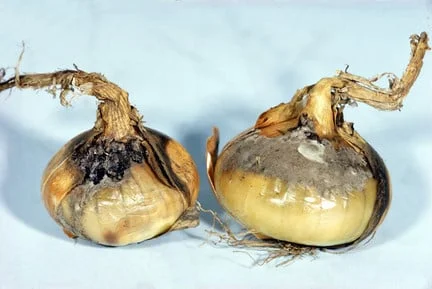
Why Botrytis is a Hidden Threat in Onion Farming in Kenya:
The fungus enters through wounds, succulent green necks, or senescent tissue. In onion farming in Kenya, improper curing (common due to unpredictable rains) and poor storage facilities create ideal conditions for post-harvest epidemics. The pathogen can even survive in seed for over three years, highlighting the importance of certified seed in onion farming in Kenya.
Onion Doctor’s Prevention Strategy for Botrytis in Onion Farming in Kenya:
- Dry before topping: Ensure necks are completely dry before removing tops this is the #1 rule
- Proper curing: Cure bulbs for 7-14 days under shade with excellent airflow; Onion Doctor provides curing guidance
- Harvest timing: Harvest during dry weather; never handle wet bulbs
- Wound prevention: Avoid bruising during harvest and handling
- Storage conditions: Maintain cool, dry, well-ventilated storage; check regularly
- Clean seed: Use only certified, disease-free seeds and seedlings.
- Fungicide application: Apply protective fungicides during late season when conditions favor infection
4. Pink Root Disease:
Pink root is a soilborne disease that attacks the root system, making it particularly insidious because symptoms appear similar to nutrient deficiency or drought stress farmers often misdiagnose it in onion farming in Kenya.
How to Identify Pink Root in Your Onion Farming in Kenya Field:
- Root symptoms: Roots turn light pink, then darken to red or purple; eventually die and rot
- Above-ground signs: Stunted growth, yellowing, wilting despite adequate water
- Bulb symptoms: Pink discoloration on skin of white onion varieties
- Long-term impact: Plants become severely stunted; bulbs fail to size properly
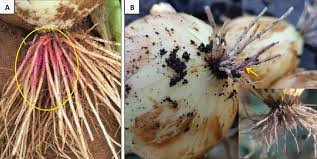
The pathogen can survive in soil as dormant spores for years, making it a persistent problem in continuous onion farming in Kenya.
Onion Doctor’s Prevention Strategy for Pink Root in Onion Farming in Kenya:
- Resistant varieties: Plant Pink Root-resistant varieties available through Onion Doctor.
- Long rotations: Implement 4-year rotations with non-Allium crops (maize, beans, sorghum).
- Soil solarization: Cover moist soil with clear plastic during hot months to reduce spore loads.
- Soil pH management: Maintain optimal pH (6.0-6.8) for onion farming in Kenya.
- Improve drainage: Raised beds prevent waterlogging that favors the pathogen.
- Biofumigation: Incorporate mustard or brassica cover crops that release natural fungicidal compounds.
5. Bacterial Soft Rot:
Bacterial soft rot is caused by several bacteria that thrive in warm, wet conditions—exactly what many onion farming in Kenya regions experience during rainy seasons. This disease is particularly frustrating because it spreads rapidly and has no chemical cure.
How to Identify Bacterial Soft Rot in Your Onion Farming in Kenya Crop:
- Foliar symptoms: Leaves wilt and collapse; plant appears water-soaked
- Bulb symptoms: Scales become soft, watery, and translucent; foul, pungent odor
- Tissue test: Infected bulbs ooze fluid when squeezed; internal tissue is mushy
- Spread pattern: Often starts at wounds or insect damage sites; spreads rapidly in storage
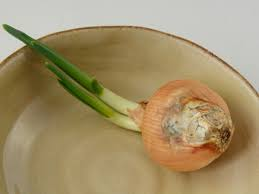
Why Bacterial Soft Rot is Devastating for Onion Farming in Kenya:
Bacteria enter through any wound thrips feeding, hail damage, harvest injuries, or even natural growth cracks. Once inside, they produce enzymes that rapidly break down plant tissue. In warm, humid storage conditions common in many onion farming in Kenya operations, one infected bulb can spoil an entire bag within days.
Onion Doctor’s Prevention Strategy for Bacterial Soft Rot in Onion Farming in Kenya:
- Wound minimization: Handle bulbs gently at all stages; avoid harvesting in wet conditions
- Insect control: Prevent thrips and onion fly damage that creates entry points
- Proper curing: Dry necks and outer scales completely before storage
- Sanitation: Remove and destroy infected plants immediately; never compost diseased material
- Storage hygiene: Clean and disinfect storage facilities between batches
- Temperature control: Store with good ventilation; avoid temperature fluctuations
- Copper sprays: Preventive copper applications can reduce bacterial populations on foliage
Common Mistakes Killing Onion Farming in Kenya (And How to Avoid Them):
Mistake 1: Continuous Monocropping:
- The Problem: Planting onions in the same field year after year builds up massive pathogen populations.
- The Onion Doctor Solution: Implement strict 4-year rotations with non-Allium crops.
Mistake 2: Overhead Irrigation:
- The Problem: Wetting foliage creates perfect conditions for fungal diseases.
- The Onion Doctor Solution: Install drip irrigation systems; water at the base only.
Mistake 3: Ignoring Early Symptoms:
- The Problem: By the time you notice severe damage, it’s often too late for effective control.
- The Onion Doctor Solution: Train your eyes; scout weekly; act at first sign.
Mistake 4: Poor Harvest Timing:
- The Problem: Harvesting too early or in wet conditions leads to storage failures.
- The Onion Doctor Solution: Wait for proper maturity; harvest only in dry weather.
Mistake 5: Inadequate Curing:
- The Problem: Rushing to market without proper drying causes neck rot and storage losses.
- The Onion Doctor Solution: Cure thoroughly; dry necks completely before storage.
Are you in need of in-depth knowledge on onion and garlic production? If yes, we are a call away. Contact us for: Onion seedlings, Garlic seedlings, Germinated garlic cloves, Farm planning services, Soil testing, training on onion and garlic growing, Drip irrigation installation and maintenance, Agronomic support, Onion and Garlic value pack and Farm management. For free consultation, placing orders or booking a visit with an agronomist, please contact us via Call or what’s app +254703982228, Email: info@oniondoctor.co.ke You can also check out our social media handles for daily updates on TikTok: https://www.tiktok.com/@oniondoctorke0706252490?_r=1&_t=ZS-96UPUyx6ESL Instagram:https://www.instagram.com/oniondoctorke?igsh=MW5sZzJ6c3BnZ3Z0dw==Facebook:https://www.facebook.com/share/1HouRgLCwS/Twitter:https://x.com/OnionDoctorKe?s=20