
Spring onions are one of the most profitable and fast-maturing crops for Kenyan farmers. Unlike bulb onions that take 3–4 months to mature, spring onions are ready for harvest in just 6–8 weeks, making them ideal for smallholder farmers and urban agriculturalists looking for quick returns. The demand for fresh spring onions in Kenya’s urban centers like Nairobi, Mombasa, Kisumu, and Nakuru is skyrocketing. Restaurants, supermarkets, and households use them daily for salads, stir-fries, soups, and garnishes. With Kenya’s vegetable market valued at over a million and growing at 29% annually, onion farming in Kenya presents a lucrative opportunity for both subsistence and commercial farmers. Whether you’re a beginner in onion farming in Kenya or looking to scale your existing operation, this guide covers everything you need to know to succeed.
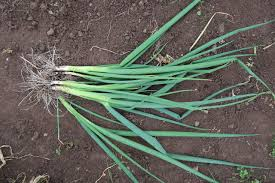
What Are Spring Onions? Understanding the Crop:
Spring onions are non-bulbing onion varieties grown primarily for their long, green stalks and small white stems. Unlike bulb onions grown for their large underground bulbs, spring onions are harvested young when the stems are pencil-thick and about 15–20 cm tall.
Key characteristics of spring onions:
- Fast growth: Harvest in 6–8 weeks in warm weather, 12–14 weeks in cooler conditions.
- High yield: One acre can produce 10,000–15,000 kg annually.
- Continuous harvest: You can cut leaves early for cooking while letting the plant continue growing.
- Market price: Ksh 40-120 per kg locally.
Best Regions for Spring Onion Farming in Kenya:
Onion farming in Kenya thrives in specific climatic zones. Spring onions prefer cool to warm climates with well-drained soils and consistent moisture.
Top Regions for Onion Farming in Kenya:
- Central Kenya: Thika, Kiambu, and Murang’a (altitude 1,200–2,000m, temperatures 15–25°C)
- Rift Valley: Nakuru and Eldoret (annual rainfall 800–1,200mm)
- Western Kenya: Kisumu and Kakamega (fertile loamy soils, high humidity)
- Coastal Regions: Mombasa and Kilifi (with irrigation, year-round production possible)
Ideal Growing Conditions for Onion Farming in Kenya:
Climate Requirements:
- Temperature: 13°C to 25°C (optimal range)
- Altitude: 500–2,500 meters above sea level
- Rainfall: 600–1,200mm annually, well-distributed
- Sunlight: Full sun exposure (minimum 6 hours daily)
Soil Requirements for Onion Farming in Kenya:
Spring onions demand specific soil conditions for optimal growth:
- Soil type: Well-drained loamy or sandy loam soil.
- pH level: 6.0–7.5 (slightly acidic to neutral)
- Organic matter: High content; mix compost manure.
- Drainage: Excellent; avoid waterlogged areas.
- Depth: Deep soil profile for root development.
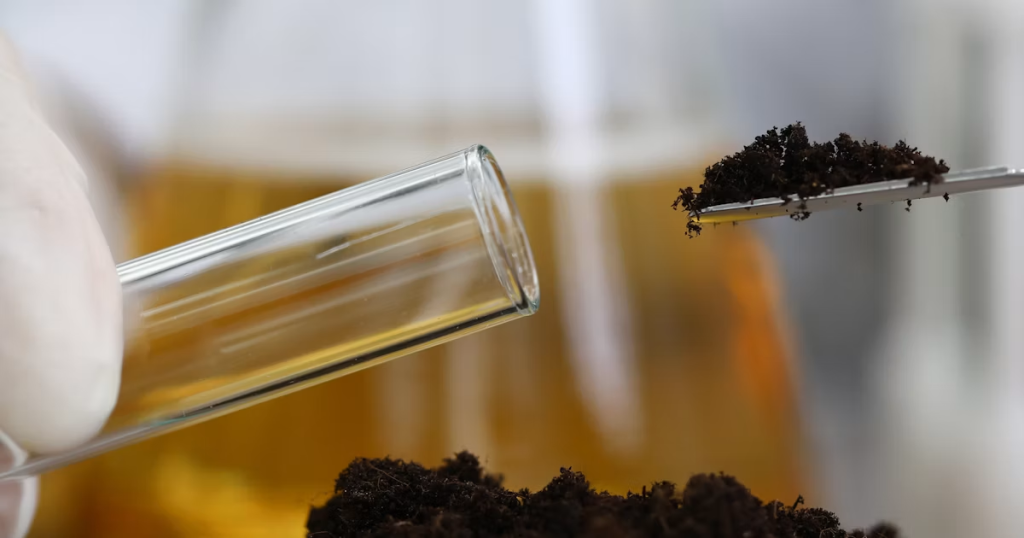
Pro tip: Before starting your onion farming in Kenya venture, conduct a soil test to determine nutrient deficiencies and pH levels. This helps you apply the right fertilizers and amendments.
Step-by-Step Guide to Spring Onion Farming in Kenya:
Step 1: Land Preparation:
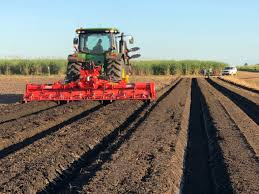
Proper land preparation is the foundation of successful onion farming in Kenya.
- Clear the land: Remove all weeds, bushes, and perennial grasses. Use a non-selective herbicide if necessary.
- Plow deeply: Till the soil to 15–20 cm depth to ensure proper aeration and root penetration.
- Create raised beds: Make beds 1 meter wide and 10–15 cm high to improve drainage.
- Add organic matter: Mix well-decomposed manure thoroughly into the soil.
- Apply basal fertilizer: Add phosphate fertilizer.
Step 2: Nursery Preparation:
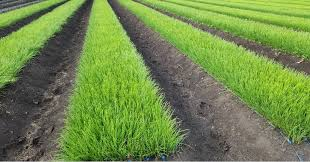
Most successful onion farming in Kenya starts with a nursery:
- Prepare nursery beds: 1 meter wide, 10–15 cm high
- Make furrows: 15cm apart, 2–3cm deep
- Sow seeds: Plant thinly along the furrows
- Mulch: Cover with grass or banana leaves to protect seeds from splashing out during irrigation
- Germination: Expect sprouts in 7–10 days
- Shade management: Remove mulch after germination and create a shade structure above tender seedlings
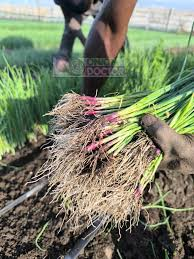
Transplanting timing: Seedlings are ready after 4–6 weeks when they reach 15cm height with pencil-thick bases.
Step 3: Transplanting:
Transplanting is a critical phase in onion farming in Kenya:
- Timing: Early morning or late evening (avoid hot midday sun)
- Spacing: 30cm between rows, 8–10cm within rows
- Depth: Plant at the same depth as in the nursery
- Irrigation: Water before and after transplanting to reduce shock
- Hardening off: Reduce shade two weeks before transplanting to improve survival rates
Step 4: Fertilizer and Nutrient Management:
Proper nutrition is essential for high yields in onion farming in Kenya:
| Growth Stage | Fertilizer |
| Basal (Planting) | DAP |
| 4 weeks after transplanting | CAN (Calcium Ammonium Nitrate) |
| Ongoing | Urea + Potassium |
Step 5: Irrigation:
Onion farming in Kenya requires consistent moisture without waterlogging:
- Drip irrigation: Highly recommended for water efficiency and disease prevention
- Frequency: Water daily in hot weather; every 2–3 days in cooler periods
- Amount: Keep soil moist but not saturated
- Critical periods: Germination and early establishment phases
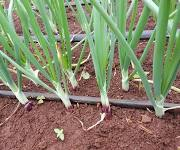
Avoid: Overhead irrigation that keeps foliage wet, as this promotes fungal diseases like downy mildew.
Step 6: Pest and Disease Management:
Protecting your crop is vital for profitable onion farming in Kenya.
Common Pests:
- Onion thrips: Cause white flecking on leaves. Control with insecticides and increase watering.
- Aphids: Cluster under leaves. Spray with water or use natural insecticides.
Common Diseases:
- Downy mildew: Prevent with proper spacing and avoiding wet foliage.
- Purple blotch: Manage with fungicides and crop rotation.
Integrated Pest Management (IPM) for Onion Farming in Kenya:
- Regular crop scouting
- Crop rotation (avoid planting onions in the same spot continuously)
- Use certified disease-resistant varieties
- Maintain field hygiene
Harvesting and Post-Harvest Handling:
When to Harvest:
Spring onions are ready when:
- Plants are 30–40cm tall
- Stems are pencil-thick (8–15mm diameter)
- Usually 8–12 weeks from planting
How to Harvest:
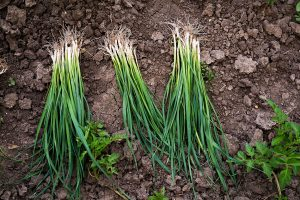
- Pull plants from soil by hand or use a hand fork
- Do not cut roots or leaves
- Discard plants with blemishes or without green leaves
- Bunch 20–25 plants together with rubber bands
Post-Harvest for Onion Farming in Kenya:
- Washing: Clean bunches at the packing shed
- Trimming: Remove unsightly older leaves
- Storage: Keep cool; wrap in plastic for refrigerator storage (lasts several weeks)
- Transport: Use 84L crates, keep cool, protect from wind
Are you in need of in-depth knowledge on onion and garlic production? If yes, we are a call away. Contact us for: Onion seedlings, Garlic seedlings, Germinated garlic cloves, Farm planning services, Soil testing, training on onion and garlic growing, Drip irrigation installation and maintenance, Agronomic support, Onion and Garlic value pack and Farm management. For free consultation, placing orders or booking a visit with an agronomist, please contact us via Call or what’s app +254703982228, Email: info@oniondoctor.co.ke You can also check out our social media handles for daily updates on TikTok: https://www.tiktok.com/@oniondoctorke0706252490?_r=1&_t=ZS-96UPUyx6ESL Instagram:https://www.instagram.com/oniondoctorke?igsh=MW5sZzJ6c3BnZ3Z0dw==Facebook:https://www.facebook.com/share/1HouRgLCwS/Twitter:https://x.com/OnionDoctorKe?s=20