
Challenges and Solutions in Onion Farming In Kenya
Whether you’re a seasoned grower or just planting your first bulbs, you’ll quickly discover that this humble crop comes with its own set of challenges.
From unpredictable weather patterns that can make or break a harvest, to pests and diseases that seem to have a personal vendetta against your crop, onion farming keeps you on your toes. Add in fluctuating market prices and the constant need for proper irrigation, and you’ve got a real test of patience, skill, and resilience.
But here’s the beauty of it — every challenge is also an opportunity to learn, adapt, and grow. With the right knowledge, smart farming practices, and a supportive community, those challenges can turn into stepping stones toward a thriving, profitable onion farm.
So, in this blog series, we’ll explore the most common onion farming challenges, share practical solutions, because at the end of the day, farming isn’t just about crops — it’s about passion, perseverance, and the joy of seeing your hard work take root.
Common challenges facing onion farming in Kenya.
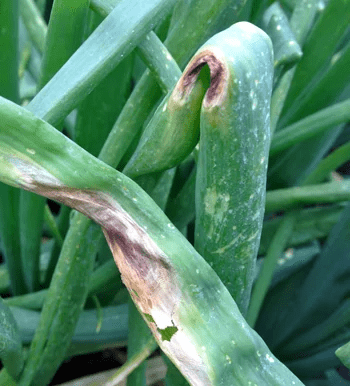
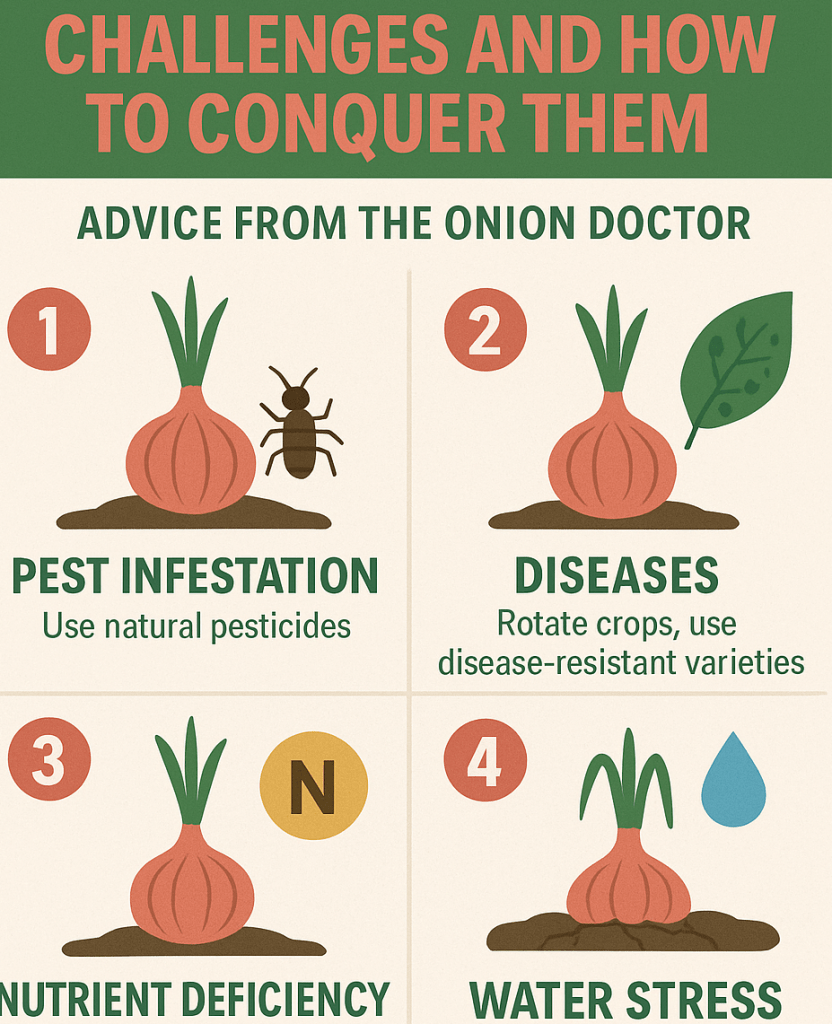
- Infestation of Pest And Diseases– Pest and diseases are some of the common challenges affecting onion farming in Kenya. Diseases like fungal diseases attack onions when there is too much moisture content in the soil. Some of the fungal diseases are downy mildew, purple blotch, late and early blight affects onions this results to poor yield. Pest also majorly affects onions and they thrive when the temperature is warm, some of the pest is thrips and white flies they are found in the leaves of the onion plant they lead to slow growth and poor yield if not controlled.
- Inability To Source Water Along With Overdependence on Rains- Some onion farmers in Kenya tend to depend on rains and due to change of climate the rains tend to stop in mid season and they face challenge unable to source water from other sources like wells and borehole due to inadequate resources. Lack of sufficient water in onions lead to poor bulb formation and low yield.
- Skyrocketing Input- Purchasing and installing irrigation system ,fertilizer application and quality seeds are abundant yet they are in high prices makes poor investments especially on small scale farmers.
- Poor Storage Facilities- Farmers lack good storage facilities forcing them to sell their products at a very low prices. Untidy operations during harvests can cause a major downtown in the market value of onion through bruising, sprouting or complete rot.
- Fluctuation of market prices- In onion farming the prices of onions vary on the demand and supply of onions in the market, sometimes the prices of the onion can fluctuate and that affects onion farmers go losses.
- Weed Control-Onion farmers tend to use easier method of controlling weeds like use of selective herbicides but on the other hand control of weeds using selective herbicide three weeks after transplanting can reduce onion plant weight and bulb yield, cause damage by interfering with their biochemical process, overuse of the herbicide can develop resistance making it less effective and some herbicide can alter with the photosynthetic pigments in onions, which affects growth and yield. The best method to be used is manual weeding which is very effective and healthy to the plant.
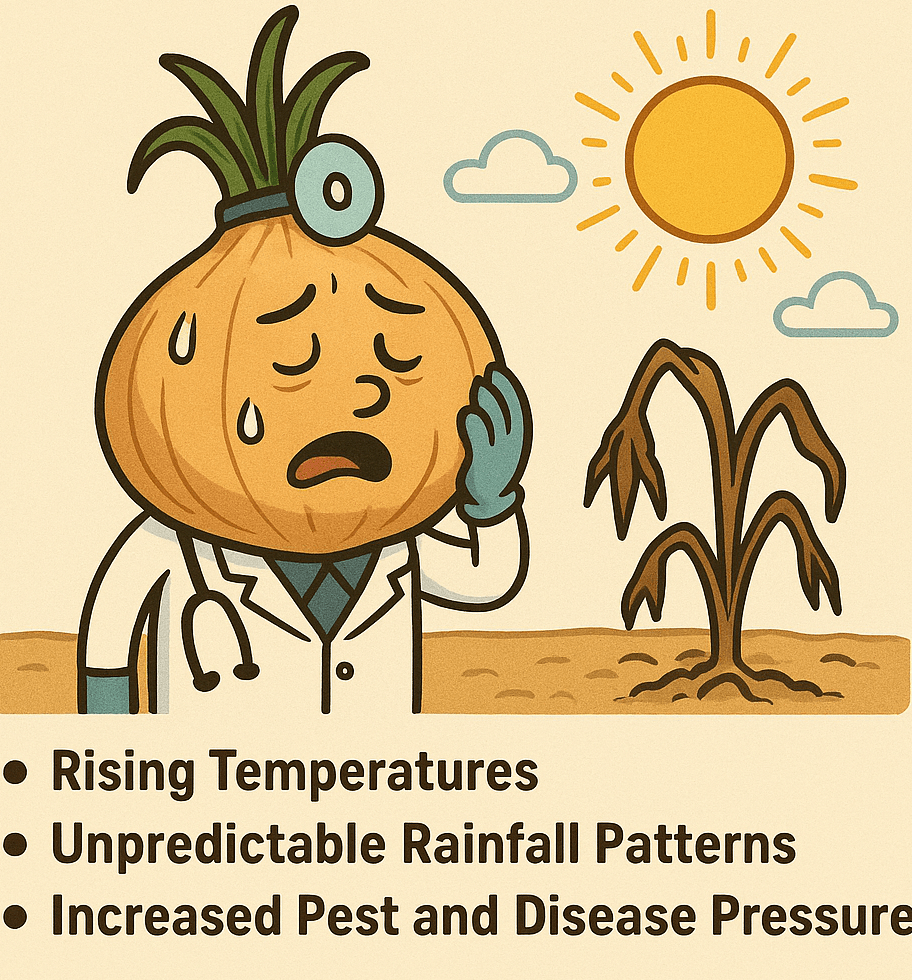
Solutions To Challenges of Onion Farming In Kenya; New Solutions With Onion Doctor.
Every challenge has a solution and with Onion Doctor we have solutions to problems concerning on farming in Kenya. We assist farmer to grow onion both small scale and large scale by providing skills and knowledge. We have soil testing, land planning services, agronomy, training, propagation and high quality seedlings. We are located in Kajiado county Kenya.
In Onion farming here are some of the solutions to challenges;
1.Market planning and co-operative selling- Price your onions for profit in local market by;
- Calculating costs of seeds, labor, fertilizers, rent and transport cost.
- Know the market price by surveying local markets and competition to find out the prevailing price for onion.
- Consider demand and quality by charging higher prices during peak per season and large , higher quality bulbs.
- Determine your profit margin; Add a markup to your costs that reflects desired profits.
2.Intergrated Pest And Disease Management- This a combination of techniques that involves cultural, biological and chemical control of pest and diseases and the same time. This involves planting disease resistant varieties, Intercropping help to reduce pest infestation, planting of cover crop and mulching suppress weeds; physical method like use of sticky traps to capture pests. Biological control is introducing animal to feed on other pests like lady bird. Chemical control is use of fungicide on fungal infections like purple blotch and downy mildew, use of pesticides to suppress pests like thrips and white flies. Use of Intergrated Pest Management is mostly recommended to fight pest and diseases to onion farmers in Kenya.
3.Invest in Irrigation And Water Conservation- One of the key factors to consider when farming onion is sufficient water to cover your farm throughout the season. Some onion farmers tend to use rains as form of irrigation and end up failing them. To overcome this challenge one should install drip irrigation system to save water and keep enough moisture in the soil, plant onions close to other reliable water sources and capture and retain water in ponds for irrigation purpose.
4.Cost Effective Farming- Create your own farming solutions, such as natural pest control methods to avoid expensive chemical treatments, team up with other farmers to purchase seeds to significant disease, plan crop cycles smartly by rotating crops each season to spread out costs and manage expenses better and join or create a local group to share tools and equipment thus saving money.
5.Soil fertility- To improve your soil fertility, practice crop rotation, organic composition and soil testing should be done at least twice per year to know the state of your soil, get recommendation on what type of fertilizer to be applied and type of crop to be planted to keep the land productive.
6.Improve harvesting and storage techniques- Improving harvesting and storage techniques by;
- Post harvesting of onions should be sorted to remove damaged, diseased or undersized bulb to meet market quality and standards.
- Harvest timing should be crucial, harvest onion when 70-80% of the tops have fallen over and turned yellow or brown.
- Proper curing of onions to remove excess moisture its done in the field during dry weather.
- Store onions in a cool, dry and well ventilated area to prevent sprouting and rotting.
At Onion Doctor we have offer land planning services, soil testing, drip irrigation and installation, onion and garlic value pack, onion and garlic oasis packages, transplanting supervision, germinated garlic cloves and market linkages. Dial this number 0706242590/0703982228.