
Whether you’re a smallholder farmer or managing a large-scale farm, understanding the best irrigation practices can make the difference between an average harvest and a bumper yield. In this blog, we’ll walk you through tried-and-tested methods that save water, reduce disease, and boost productivity.
With Onion Doctor we are going to guide you through from choosing best irrigation method to bumper harvest with farming onion in Kenya. At onion doctor we have the secrets behind best irrigation practices and help farmers to achieve their goals through onion farming we have land planning services, agronomical support , onion and garlic value pack, onion and garlic oasis packages, ready seedlings, drip irrigation and installation, soil testing, transplanting supervision and agronomic support package. For consultation about anything to do with onion and garlic farming, we got you covered! You can book a visit with our agronomist, Call or WhatsApp 0706252490/0703982228.
One of the key factors to consider when farming onion in Kenya is sufficient water to serve your farm for the whole season, one can source water from well, borehole, river or even rain water. For rewarding journey of onion farming in Kenya one has to choose the right irrigation method.
Choosing The Right Irrigation Method for Onion Farming in Kenya.
There are various types of irrigation methods in Kenya;
- Drip Irrigation
- Furrow Irrigation
- Sprinkler irrigation
- Basin Irrigation
- Overhead Irrigation
- Rain hose irrigation
- Center Pivot irrigation
Drip irrigation system is mostly used by onion farmers in Kenya
Contact us for: Onion seedlings, Garlic seedlings, Germinated garlic cloves, Farm planning services, Soil testing, training on onion and garlic growing, Drip irrigation installation and maintenance, Agronomic support, Onion and Garlic value pack and Farm management.
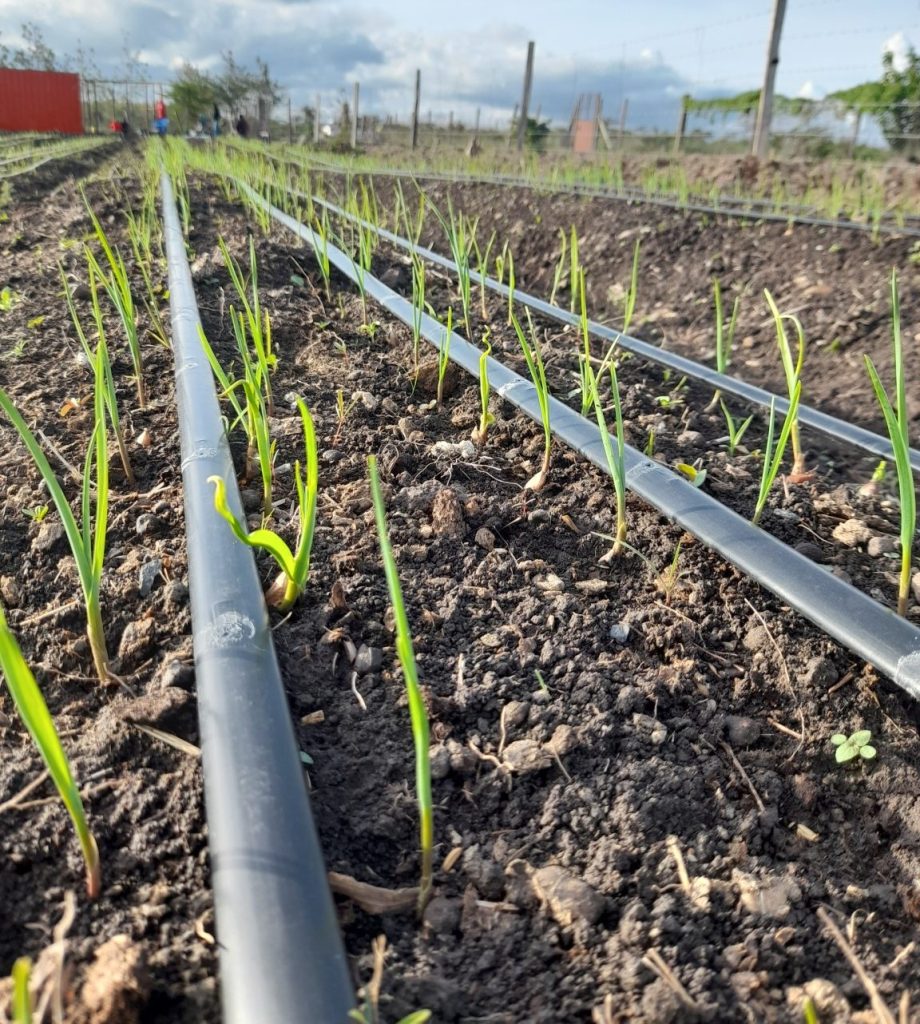
Advantages of onion farming in Kenya using drip irrigation systems
Drip irrigation systems offer several advantages for onion farming in Kenya, including:
- Water efficiency
- soil health
- Labor saving
- Increased yield
- Irrigation schedule
- Cost effective
- Reduced disease spread
- Improve soil condition
Match Irrigation With Growth Stages
The growth stages of bulb onions on any form of irrigation system used by onion farmers are matched with irrigation needs to ensure optimal growth and yield. Here’s a summary of the irrigation schedule based on the growth stages:
- Seedbed: Watering is not necessary for establishment as seedbeds are at or near field capacity.
- Early Growth: Watering is crucial to promote early growth and establish a strong root.
- Bulb Initiation: Watering is essential to prevent water stress and ensure sufficient foliage for viable bulb production.
- Maturation: In 2-3 weeks before harvesting gradually reduce watering to prevent rotting.
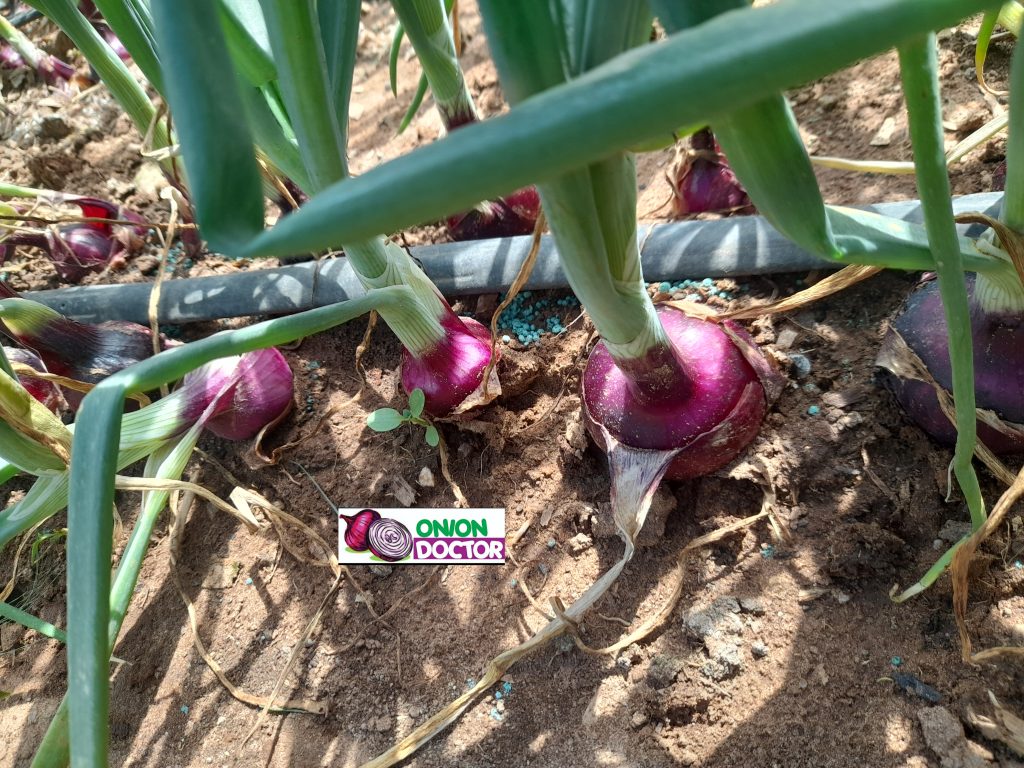
Monitor Soil Moisture in Onion Farming
There are various ways to monitor soil moisture in the soil, some of the ways include;
1.Visual inspection- Check the soil’s color and texture to gauge moisture levels. Light, crumby soil indicates dryness, while darker spongy soil suggest moisture is needed.
2.Finger test-Insert your finger into the soil to feel for moisture. If it feels dry, its time to water the field.
3.Smart plant project- Utilize an Arduino Dock with a soil moisture sensor to measure levels and display them on OLED Expansion.
4.Bluetooth monitor- Use a Bluetooth monitor that pairs with an app to measure soil moisture, temperature and light levels providing real time data for optimal onion plant condition.
5.Water management techniques- Implement drip irrigation, furrow irrigation, or sprinkler irrigation to manage water delivery and conserve
Irrigation Plan Basics
1.Water quality- Ensure the water used for irrigation is clean and free from contamination. Testing water salinity is crucial to prevent damage to crops.
2.Irrigation frequency- Onions generally require deep and frequent watering especially during the seedling stage.
3.Water application- Apply around 1.5-2.5 cm of water per irrigation, adjusting based on soil texture and growth stage.
4.Irrigation system- Drip irrigation is highly recommended for onion due to its water use efficiency and ability to direct water to the root zone.
5.Soil moisture monitoring- Use tools like soil moisture probs to monitor soil moisture levels and make precise irrigation adjustment.
6.Water stress awareness- Be vigilant for signs of water stress, such as wilting or yellowing leaves and intervene promptly to maintain the health of the onion crop.

At onion doctor we have an onion value pack that come with drip irrigation and installation for onion farmers in Kenya.
With the right irrigation strategy, your onions won’t just grow — they’ll thrive. By combining consistent watering schedules, efficient systems like drip irrigation, and careful monitoring of soil moisture, you set the stage for bigger bulbs and better profits. Remember, in onion farming, every drop counts — so make each one work for you.
Onion Doctor is dedicated to transforming arid regions in Kenya into thriving, climate-smart hubs for onion and garlic production. They offer a comprehensive solution for smallholder farmers, including:
- Drought tolerant seedlings to enhance crop yields.
- Drip irrigation systems to optimize water and nutrient use.
- Training and support in climate-smart practices and post-harvest handling.
Healthy onions, happy farmers- that’s the Onion Doctor’s promise call or WhatsApp 0706252490/0703982228 for onion seedlings, Garlic seedlings, Germinated garlic cloves, Farm planning services, Soil testing, training on onion and garlic growing, Drip irrigation installation and maintenance, Agronomic support, onion and Garlic value pack and Farm management.