
Every season, thousands of smallholder farmers lose up to 40% of their garlic harvest to a disease most of them can’t even name. It starts as a small purple dot. Three weeks later, entire fields look like they’ve been scorched by fire. This is purple blotch and if you’re serious about profitable garlic farming in Kenya, this is the single most important article you will read this year.Garlic is one of Kenya’s most lucrative horticultural crops. A kilogram of quality garlic fetches between KES 150–300, far above most vegetables. Yet garlic farming in Kenya remains a high-risk, high-reward venture and purple blotch, caused by the fungus Alternaria porri, is the number one reason farmers fail in their first season.
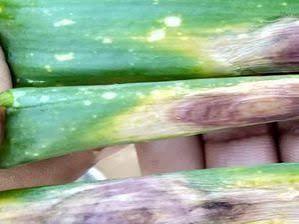
What Exactly Is Purple Blotch?
Purple blotch is a fungal disease caused by Alternaria porri, the same pathogen that causes early blight in onions. The fungus attacks garlic leaves, pseudostems, and bulbs, reducing photosynthesis and causing premature leaf death which directly shrinks bulb size and yield. In garlic farming in Kenya, the disease thrives because of the combination of warm temperatures, high humidity, and the common practice of overhead irrigation during the rainy seasons. The pathogen survives in crop debris, soil, and on infected seed cloves meaning that without proper management, every season it gets worse.

The Symptoms: Learn to Read the Warning Signs:
Early detection is your best defense. In garlic farming in Kenya, purple blotch typically appears 4–6 weeks after planting, and here’s what to look for:
- Small water-soaked lesions on older leaves that rapidly expand
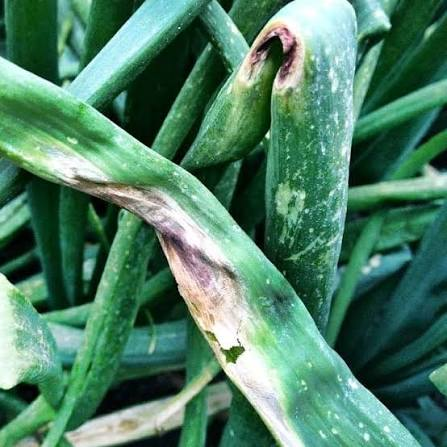
- Distinct purple to brown spots with characteristic concentric rings (target-like patterns)
- Yellow halos surrounding each lesion
- Lesions merging into large dead patches, causing leaves to yellow, wither, and collapse
- Dark, sunken lesions on bulbs and necks, leading to soft rot during storage

By the time you see leaves dying from the tips downward, the fungus has already been feeding on your profits for days.
Why Purple Blotch Hits Garlic Farming in Kenya So Hard:
Several local conditions make Kenyan garlic fields a paradise for Alternaria porri:
- Rain-fed and overhead irrigation: Splashing water spreads spores rapidly across the field.
- Continuous cropping: Many farmers plant garlic on the same plot season after season, building up massive pathogen loads in the soil.
- Planting infected cloves: Most farmers save their own seed unknowingly replanting diseased material.
- Dense planting: Tight spacing for “maximum yield” creates humid microclimates the fungus loves.
- Lack of certified seed: Unlike in Europe or China, garlic farming in Kenya suffers from scarce access to certified, disease-free planting material.
The Integrated Management Strategy That Actually Works:
You cannot spray your way out of purple blotch. Successful garlic farming in Kenya requires an integrated approach:
1. Use Clean, Certified Seed:
- Source seed from reputable suppliers like Onion Doctor.
- Inspect cloves before planting discard any with discoloration or soft spots
- Hot water treatment: soak cloves in 50°C water for 10–20 minutes before planting
2. Crop Rotation:
- Avoid planting garlic (or onions, leeks, shallots) on the same field for at least 3 years
- Rotate with non-allium crops like legumes, maize, or brassicas
3. Field Sanitation:
- Remove and destroy (never compost) infected plant debris
- Rogue out infected plants early
- Weed regularly weeds harbor humidity and sometimes the pathogen
4. Smart Water Management:
- Drip irrigation is far superior to overhead sprinklers for garlic farming in Kenya
- If you must use sprinklers, irrigate early in the morning so leaves dry quickly
- Ensure proper drainage waterlogged fields are purple blotch incubators
5. Proper Spacing:
- Space plants 10–15 cm apart in rows 30 cm apart to allow airflow
- Resist the temptation to overcrowd yield loss from disease far outweighs “extra” plants
6. Fungicide Control:
For severe infections, apply protectant fungicides every 7–14 days during humid periods:
- Mancozeb or chlorothalonil as protectants
- Azoxystrobin or difenoconazole for curative action
- Rotate active ingredients to prevent fungicide resistance
- Always follow pre-harvest intervals (PHI) and KEPHIS regulations
7. Harvest and Post-Harvest Care:
- Harvest when tops begin to dry, but before complete senescence
- Cure bulbs properly in a shaded, well-ventilated area for 2–3 weeks
- Store at 0–4°C with 65–70% humidity for long-term storage
- Never store damaged or diseased bulbs with healthy ones
A Seasonal Prevention Calendar for Kenyan Garlic Farmers:
| Growth Stage | Action |
|---|---|
| Land preparation | Deep plough, remove debris, test soil |
| Seed selection | Certified cloves, hot water treatment |
| Planting | Proper spacing, raised beds if drainage is poor |
| Vegetative stage (weeks 3–8) | Scout twice weekly, first fungicide spray if humid |
| Bulbing stage | Maintain dry foliage, avoid overhead water |
| Harvest | Early morning harvest, careful handling |
| Post-harvest | Curing, sorting, proper storage |
Are you in need of in-depth knowledge on onion and garlic production? If yes, we are a call away. Contact us for: Onion seedlings, Garlic seedlings, Germinated garlic cloves, Farm planning services, Soil testing, training on onion and garlic growing, Drip irrigation installation and maintenance, Agronomic support, Onion and Garlic value pack and Farm management. For free consultation, placing orders or booking a visit with an agronomist, please contact us via Call or what’s app +254703982228, Email: info@oniondoctor.co.ke You can also check out our social media handles for daily updates on TikTok: https://www.tiktok.com/@oniondoctorke0706252490?_r=1&_t=ZS-96UPUyx6ESL Instagram:https://www.instagram.com/oniondoctorke?igsh=MW5sZzJ6c3BnZ3Z0dw==Facebook:https://www.facebook.com/share/1HouRgLCwS/Twitter:https://x.com/OnionDoctorKe?s=20