
Onion farming in Kenya is one of the most rewarding horticultural ventures a farmer can undertake. With domestic demand consistently outpacing supply, onion farming in Kenya offers reliable income, a short production cycle of three to four months, and strong prices in both local and regional markets. Yet the difference between a farmer who harvests small, misshapen bulbs and one who harvests large, uniform, marketable onions often comes down to one thing: cultural practices. Cultural practices are the everyday field management decisions how you prepare the land, space your plants, water, weed, rotate crops, and handle harvests that collectively determine yield and quality. This blog walks you through every critical cultural practice in onion farming in Kenya, blending traditional wisdom with modern agronomic science.
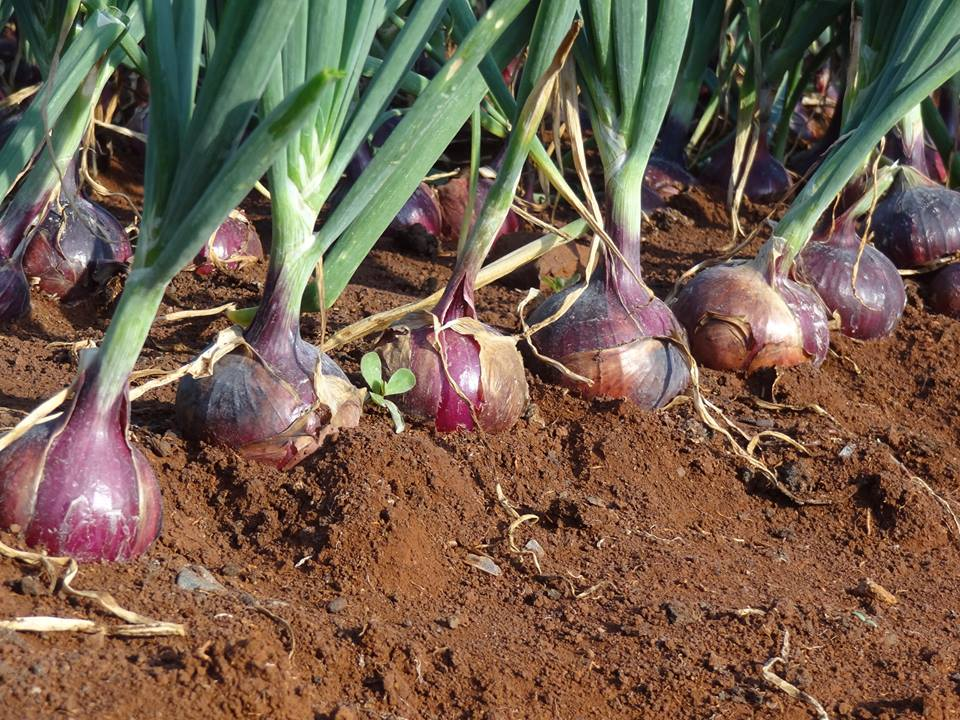
The Cultural Roots of Onion Farming in Kenya:
Onions have been cultivated in East Africa for centuries, and onion farming in Kenya carries deep cultural significance among several communities. Among the Kikuyu of Central Kenya, onions were traditionally intercropped with maize and beans in the garden system a practice that modern science now recognizes as brilliant companion planting, since onions naturally repel certain pests.In Western Kenya, particularly among the Luhya and Luo communities near Lake Victoria, onion farming in Kenya has long been associated with women’s economic empowerment. Onion beds were historically regarded as “women’s gold,” providing households with a reliable income stream and a measure of financial independence long before formal banking reached rural areas.
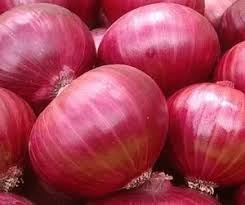
1. Choosing the Right Varieties: The Foundation of Onion Farming in Kenya:
Successful onion farming in Kenya begins with variety selection. The most popular varieties include:
- Red Coach: a small, pungent, red-skin bulb prized in Kenyan markets for its flavor and long shelf life.
- African Red: slightly larger, deep red bulbs that are highly marketable.
- Red Creole: a local favorite, though lower yielding, it fetches premium prices for its strong taste.
- Texas Grano: a large, sweet, yellow onion suited for high-potential areas.
- Neptune F1: hybrid options for farmers targeting high yields.
When planning onion farming in Kenya, match the variety to your altitude, rainfall pattern, and target market. Dry lowland areas favor Red Creole, while cooler highlands perform better with Malbec F1.
2. Land Selection and Preparation:
Healthy onion farming in Kenya starts with the right field. Onions are shallow-rooted and intolerant of waterlogging, so choose well-drained soils with a pH between 5.8 and 6.8.
Key land preparation practices include:
- Deep ploughing and harrowing to create a fine, level seedbed that allows uniform bulb development.
- Ridging or raised beds, especially in areas with heavy rainfall, to improve drainage.
- Soil testing before planting to guide lime and fertilizer application acidic soils below pH 5.5 invite fungal diseases like white rot.
- Field hygiene: remove crop residues and volunteer onion plants from previous seasons, which harbor pests and diseases.
Farmers who skip proper land preparation often discover that onion farming in Kenya punishes shortcuts compacted soil produces forked and stunted bulbs.
3. Nursery Management and Transplanting:
Most onion farming in Kenya relies on seedling transplants rather than direct seeding, because seedlings give better stand establishment and uniformity.
Nursery best practices:
- Sow seeds in a well-prepared, fine-soil nursery bed, mixing in well-decomposed manure.
- Keep the nursery shaded, moist but not waterlogged, and free of weeds.
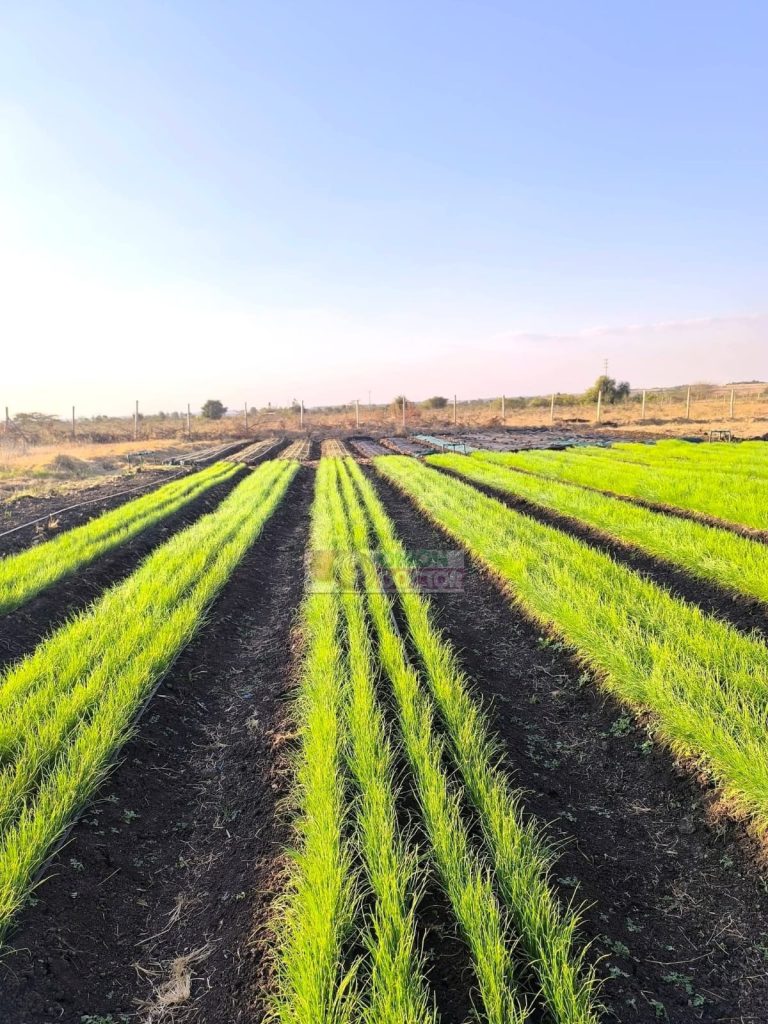
- Transplant seedlings at 6–8 weeks old (pencil-thick, 3–4 leaves), ideally in the early morning or late afternoon to reduce transplant shock.
Transplanting spacing:
- 30 cm between rows and 8–10 cm within rows for bulb onions.
- Water immediately after transplanting to settle soil around roots.
Correct spacing is one of the most underrated cultural practices in onion farming in Kenya overcrowding produces small bulbs, while overly wide spacing wastes land and encourages weed growth.
4. Water Management and Irrigation:
Onions need consistent moisture, especially during bulb initiation and bulbing. However, onion farming in Kenya thrives on frequent light irrigations rather than heavy flooding, since wet leaves and waterlogged roots invite diseases.
Practical irrigation tips:
- Irrigate 2–3 times weekly in dry weather, adjusting for rainfall.
- Reduce irrigation when 20–30% of the tops fall over this signals maturity and helps bulbs cure in the field.
- Use drip irrigation where possible to keep foliage dry and save water.
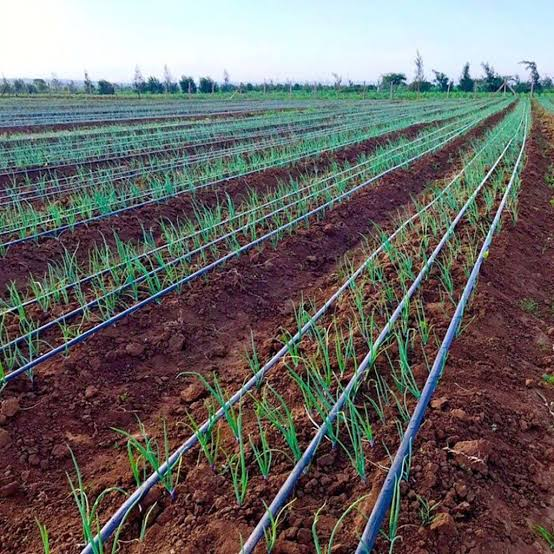
In arid and semi-arid counties where onion farming in Kenya is expanding, efficient water use through drip kits can double water productivity compared to overhead sprinklers.
5. Weeding: The Non-Negotiable Cultural Practice:
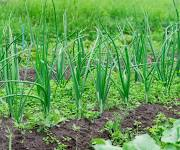
Onions are poor competitors against weeds. Because the crop is shallow-rooted, deep hoeing damages roots, so shallow weeding is the rule. Many farmers practicing onion farming in Kenya weed by hand or with shallow cultivation at 2–3 week intervals for the first two months.
Modern approaches include:
- Mulching with dry grass or plastic film to suppress weeds and conserve moisture.
- Pre-emergence herbicides registered for onions, used carefully according to label instructions.
- Timely weeding before transplanting and immediately after, since early weed pressure causes the most yield loss.
6. Cultural Pest and Disease Management:
One of the smartest pillars of onion farming in Kenya is using cultural practices to prevent pests and diseases before chemicals become necessary.
| Pest/Diseases | Cultural Practices |
| Thrips | Proper spacing, weed control, irrigation to reduce plant stress |
| Cutworms | Deep ploughing to expose pupae, collars around seedlings |
| Downy mildew / purple blotch | Crop rotation, wide spacing, avoiding overhead irrigation |
| White rot (Sclerotium cepivorum) | Long rotations (5+ years away from alliums), resistant varieties |
| Onion maggot | Field sanitation, timely harvesting, avoiding fresh manure |
Crop rotation is critical: never plant onions where onions, garlic, leeks, or chives grew in the previous season. A rotation with legumes, maize, or vegetables breaks pest and disease cycles. Farmers committed to sustainable onion farming in Kenya often rotate with French beans or cowpeas to also fix nitrogen.
7. Fertilizer and Manure Management:
Onions respond well to balanced nutrition. The general guidance for onion farming in Kenya:
- Apply well-decomposed manure during land preparation (avoid fresh manure, which spreads maggots).
- At transplanting, apply a starter fertilizer such as DAP or a balanced NPK.
- Top-dress with CAN or urea at 3–4 weeks and again at 6–7 weeks but stop nitrogen late in the season, since excess nitrogen produces soft bulbs that rot in storage.
- Ensure adequate potassium for bulb firmness and shelf life.
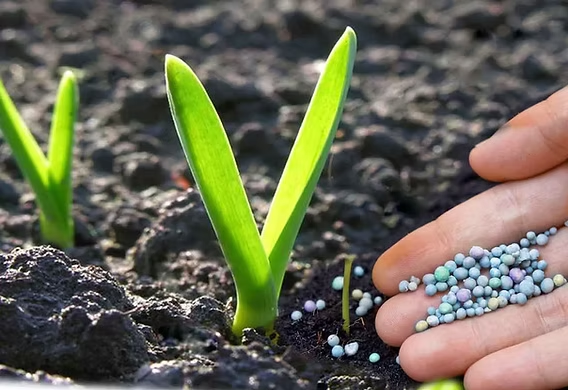
Soil-test-based recommendations are always superior, and Onion Doctor agronomists advising on onion farming in Kenya increasingly push for this precision.
8. Harvesting: Timing Is Everything:
Harvest when 50–80% of the tops have fallen over and bulbs have attained full size and color. Many losses in onion farming in Kenya occur because farmers harvest too early (small, immature bulbs) or too late (splitting and sprouting).
Harvesting practices:
- Lift bulbs carefully with a fork to avoid bruising wounds become entry points for rot.
- Harvest in dry weather and avoid harvesting wet bulbs.
- Cure bulbs in the field or under shade for 7–14 days until necks are dry and papery.

9. Curing, Storage, and Post-Harvest Handling:
Post-harvest losses can erase the profits of an entire season, so curing and storage are as important as growing. The best storers in onion farming in Kenya are well-cured, dry-necked bulbs of varieties like Red Creole.
Storage best practices:
- Store in a cool, dry, well-ventilated structure, ideally off the ground on racks or slatted shelves.
- Sort out damaged, diseased, or thick-necked bulbs before storage one rotten bulb spoils many.
- Avoid storing near potatoes or fruits, which release moisture and ethylene.
- In hot lowland areas, ventilated charcoal-cooler stores can extend shelf life significantly.

Conclusion: Master the Basics, Reap the Rewards:
At its heart, onion farming in Kenya rewards discipline more than capital. The farmers earning consistently from onion farming in Kenya are those who treat cultural practices land preparation, spacing, weeding, rotation, curing, and storage as non-negotiable steps rather than optional extras. Whether you are a beginner with a quarter acre in Nyandarua or a commercial grower irrigating in Kajiado, onion farming in Kenya offers a clear path: master the culture of the crop, and the crop will reward your culture of hard work. With demand rising and new markets opening every season, onion farming in Kenya stands out as one of the smartest agribusiness decisions a farmer can make today.
Are you in need of in-depth knowledge on onion and garlic production? If yes, we are a call away. Contact us for: Onion seedlings, Garlic seedlings, Germinated garlic cloves, Farm planning services, Soil testing, training on onion and garlic growing, Drip irrigation installation and maintenance, Agronomic support, Onion and Garlic value pack and Farm management. For free consultation, placing orders or booking a visit with an agronomist, please contact us via Call or what’s app +254703982228, Email: info@oniondoctor.co.ke You can also check out our social media handles for daily updates on TikTok: https://www.tiktok.com/@oniondoctorke0706252490?_r=1&_t=ZS-96UPUyx6ESL Instagram:https://www.instagram.com/oniondoctorke?igsh=MW5sZzJ6c3BnZ3Z0dw==Facebook:https://www.facebook.com/share/1HouRgLCwS/Twitter:https://x.com/OnionDoctorKe?s=20