
If you’ve spent any time around Kenya’s onion-growing belts the red-soil farms of Kajiado, the irrigated plots ringing Lake Naivasha, or the bustling onion sections of Marikiti and Kongowea markets you’ve probably heard farmers whisper about one variety the way football fans whisper about a prolific striker: Neptune F1.And for good reason. In a country where red onions dominate more than 90% of the market, Neptune F1 has earned a reputation as the hybrid that delivers uniformity, deep red color, disease resistance, and yields that make traditional open-pollinated varieties look like they’re farming in a different century.This is the most complete guide to Neptune F1 onion farming in Kenya you’ll find anywhere. Whether you’re a first-time farmer in Makueni or a commercial grower scaling up in Nakuru, by the end of this article you’ll know exactly why Neptune F1 matters, how to grow it, and how to profit from it.
What Is Neptune F1 Onion Variety?
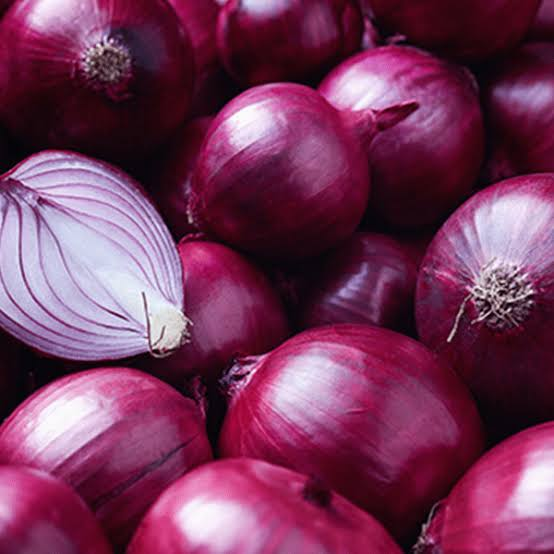
Neptune F1 is a short-day, F1 hybrid red onion bred for tropical and subtropical conditions, distributed in Kenya through Amiran Kenya (as part of the Hazera breeding program) and available at agro-dealers nationwide. An F1 hybrid means the seed is a controlled cross between two parent lines you get genetic consistency, vigor, and uniformity that open-pollinated varieties simply cannot match.The variety has become one of the most commonly grown onions in Kenya, alongside prized specifically for its early maturity, uniform bulbs, extended shelf life, and disease resistance
Neptune F1 at a Glance: Technical Specifications:
| Trait | Specification |
|---|---|
| Variety type | F1 Hybrid, Short Day |
| Bulb shape | Flattened globe |
| Bulb size | Medium, high percentage of uniform sizing |
| Skin color | Deep red, shiny and firm |
| Internal color | Excellent well-defined red rings |
| Taste | Slightly pungent to mild |
| Maturity | 3 months after transplanting |
| Storage | 4–5 months under proper curing |
| Disease resistance | Intermediate resistance to Pink Root |
| Neck | Thin critical for curing and storage |
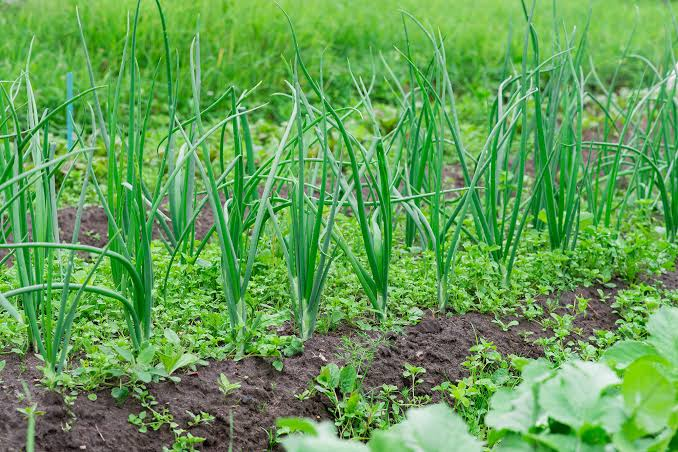
| Growth habit | Upright foliage better airflow, easier field management |
| Growing system | Direct sowing, transplanting, or set production |
| Market use | Fresh market, salads, kachumbari, cooking |
Ideal growing conditions for Neptune:
| Factor | Requirement |
|---|---|
| Altitude | 0–2,200m above sea level. |
| Temperature | 15–30°C (germination best at 20–27°C) |
| Soil | Well-drained sandy loam to clay loam, pH 5.8–7.0, rich in organic matter. |
| Rainfall | 500–700mm, or reliable irrigation onions hate waterlogging |
The Complete Neptune F1 Farming Calendar in Kenya:
Step 1: Land Preparation:
Plough and harrow to a fine tilth. Onions have shallow roots compacted soil means stunted bulbs. Incorporate well-decomposed manure during the final harrowing, and ensure beds slope gently for drainage. Raised beds are strongly recommended in high-rainfall areas.
Step 2: Nursery Management:
- Seed rate: 1.5Kg-2K of Neptune F1 seed produces enough seedlings for one acre.
- Nursery bed: 1m wide, well-manured, with fine soil.
- Sowing: Drill shallow furrows, sow, and cover lightly. Water gently with a fine rose can.
- Germination: 7–14 days.
- Pro tip: Never mix varieties in one nursery bed different germination rates and growth speeds create chaos at transplanting .
- Seedlings are ready at 6–8 weeks, when pencil-thick (3–5mm) with 3–4 leaves.

Step 3: Transplanting:
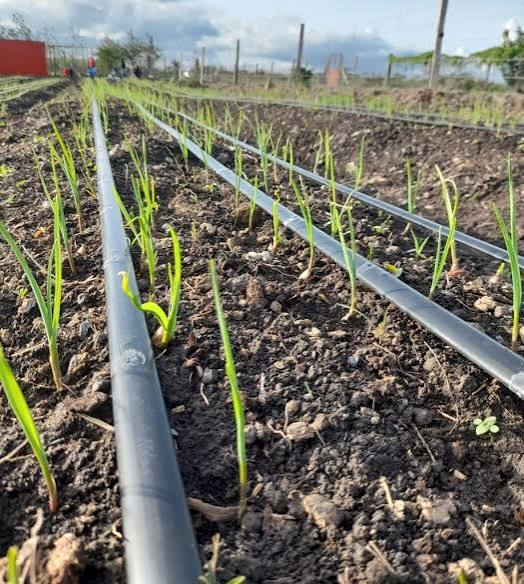
- Timing: Transplant at the start of reliable rains , or under drip irrigation year-round.
- Spacing: 15–20cm between rows, 10–15cm within rows for medium bulbs. Wider spacing = larger bulbs.
- Seedling prep: Water the nursery 24 hours before lifting, trim tops to ~10cm and roots slightly to encourage quick establishment.
- Transplant in the cool of the evening or on a cloudy day to reduce shock.
Step 4: Fertilization Schedule:
Onions are heavy feeders especially during bulb formation:
- Basal (planting): DAP for strong root establishment.
- Top-dress 1 (2–3 weeks after transplanting): CAN, NPK 26:0:0, or Urea.
- Top-dress 2 (3 weeks later): NPK 23:23:23 or NPK 17:17:17 to fuel bulb sizing .
- Micronutrients: Boron and sulfur are essential for firm bulbs and good skin. A foliar feed program pays for itself.
Step 5: Water Management:
Onions demand consistent moisture stress at bulb initiation causes splits and small bulbs. Drip irrigation is the gold standard: roughly 25–30mm per week, applied in the morning so foliage dries by evening (wet foliage invites downy mildew). Critically, stop or drastically reduce irrigation 2–3 weeks before harvest to trigger maturity and harden the bulbs.

Step 6: Weed Control:
Weed by hand or with selective herbicides applied 7–14 days after transplanting. Onions are shallow-rooted and slow to canopy weeds will outcompete them early. Keep the field clean.
Pests & Diseases: The Neptune F1 Protection Plan:
Even a resistant variety needs an IPM (Integrated Pest Management) strategy.
Pests to watch:
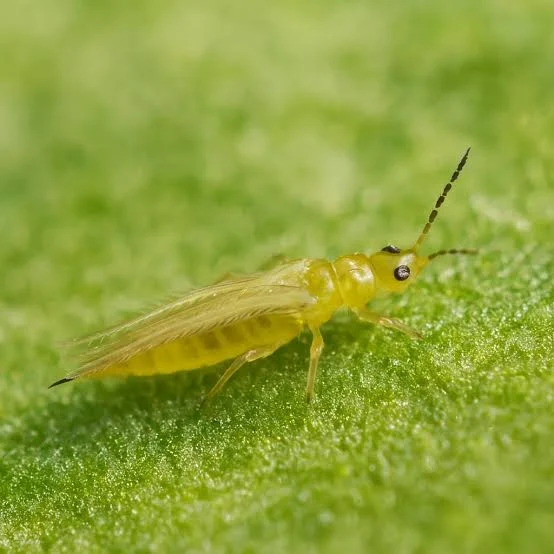
- Thrips: the number one enemy; cause silvery, scorched leaves. Control with blue sticky traps, overhead irrigation knock-down, and targeted sprays only when thresholds are crossed.
- Leaf miners: serpentine tunnels in leaves.
- Nematodes: stunted, swollen-root patches; manage with rotation and organic matter.
- Onion flies/maggots: attack seedlings and bulbs.
Diseases:
- Downy mildew: purple-gray fuzzy patches in cool, wet weather. Spacing + morning irrigation are your first defense.
- Purple blotch: target spots on leaves.
- Pink root: Neptune F1’s built-in resistance helps, but rotate away from allium crops for 3+ years.
- Bacterial soft rot: harvest in dry weather and cure properly.

Remember: the number of healthy green leaves at maturity directly determines bulb size for every leaf, there’s a ring of onion.
Harvesting, Curing & Storage: Where Profit Is Won or Lost:
When to Harvest Neptune F1:
Harvest when 70–80% of the tops have naturally fallen over and started drying, the necks are thin and papery, and the outer skin shows that signature deep red shine. In dry weather, undercut bulbs and leave them in the field 2–3 days for initial curing; in wet weather, move them to a shaded, ventilated shed immediately.
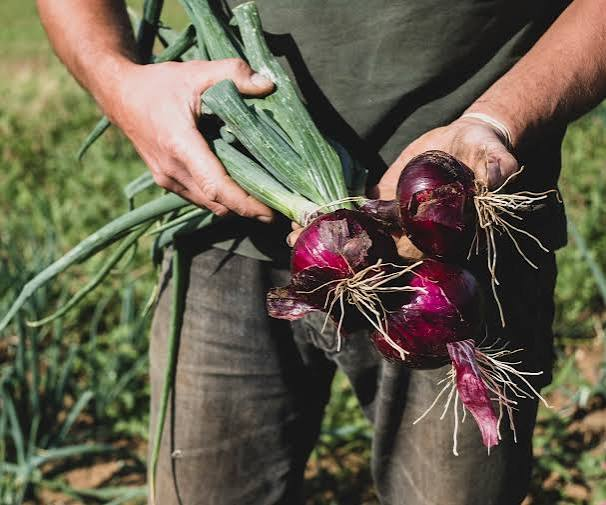
Handle like eggs. Every bruise is an open door for rot in storage.
Curing:
Cure for 2–3 weeks in a well-ventilated, shaded, dry area until necks are completely dry and outer skins are papery. This step alone can double your marketable percentage.
Storage:
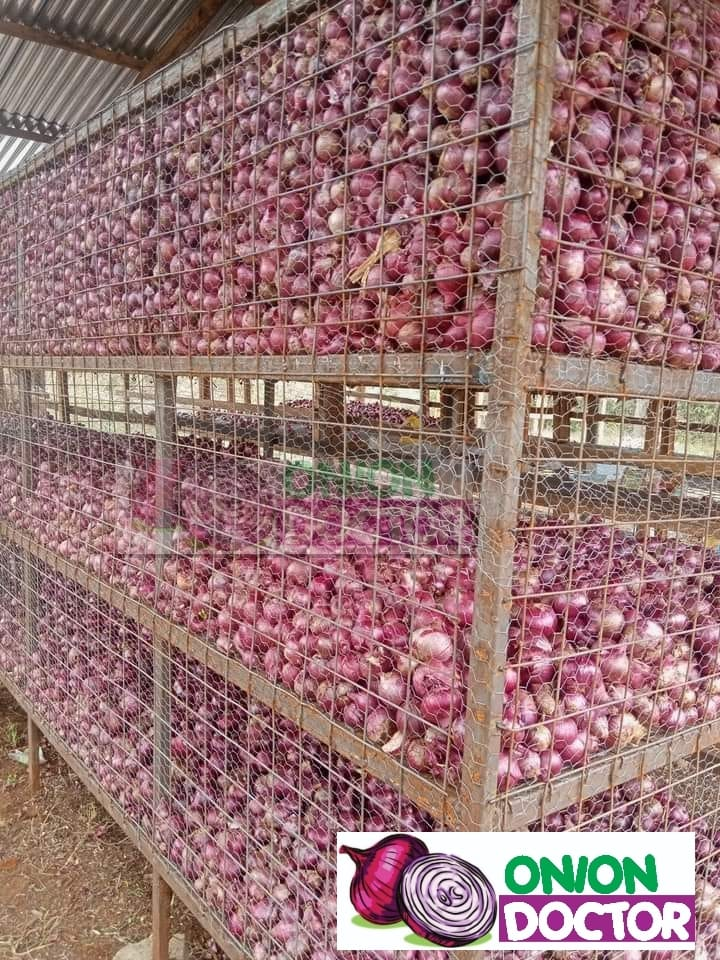
Sorted, cured, disease-free bulbs store well at ambient Kenyan conditions in ventilated crates or net bags 2–3 months comfortably, 4–5+ months in cool, dry, dark rooms (0–5°C, 60–70% humidity where possible). Remove any soft or damaged bulbs before storage; one rotten onion spoils the bag
Are you in need of in-depth knowledge on onion and garlic production? If yes, we are a call away. Contact us for: Onion seedlings, Garlic seedlings, Germinated garlic cloves, Farm planning services, Soil testing, training on onion and garlic growing, Drip irrigation installation and maintenance, Agronomic support, Onion and Garlic value pack and Farm management. For free consultation, placing orders or booking a visit with an agronomist, please contact us via Call or what’s app +254703982228, Email: info@oniondoctor.co.ke You can also check out our social media handles for daily updates on TikTok: https://www.tiktok.com/@oniondoctorke0706252490?_r=1&_t=ZS-96UPUyx6ESL Instagram:https://www.instagram.com/oniondoctorke?igsh=MW5sZzJ6c3BnZ3Z0dw==Facebook:https://www.facebook.com/share/1HouRgLCwS/Twitter:https://x.com/OnionDoctorKe?s=20