
If you are planning or already running garlic farming in Kenya, disease management is the single most important skill separating profitable farmers from those who lose entire crops. Garlic is a high-value crop, but it is vulnerable to fungal, bacterial, viral, and nematode diseases that can destroy yields overnight. In this in-depth guide to garlic farming in Kenya, we cover every major disease affecting Kenyan garlic farms, how to spot them early, organic and chemical control methods, and proven prevention strategies used by successful growers across the country.
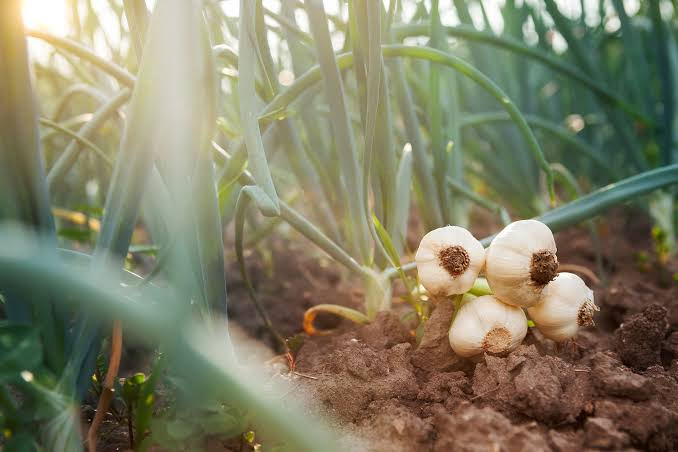
Why Disease Management Matters in Garlic Farming in Kenya:
Garlic bulbs grow underground, which means many diseases go unnoticed until harvest when it is too late. Poor drainage, overcrowding, infected seed cloves, and continuous cropping are the biggest drivers of disease outbreaks. Anyone serious about garlic farming in Kenya must understand that prevention is far cheaper and more effective than treatment. Kenya’s diverse agro-climatic zones from the cool highlands of Nyandarua and Meru to the warmer regions of Kajiado and Machakos mean that different diseases dominate in different areas. This guide will help you diagnose problems specific to your region and protect your investment.
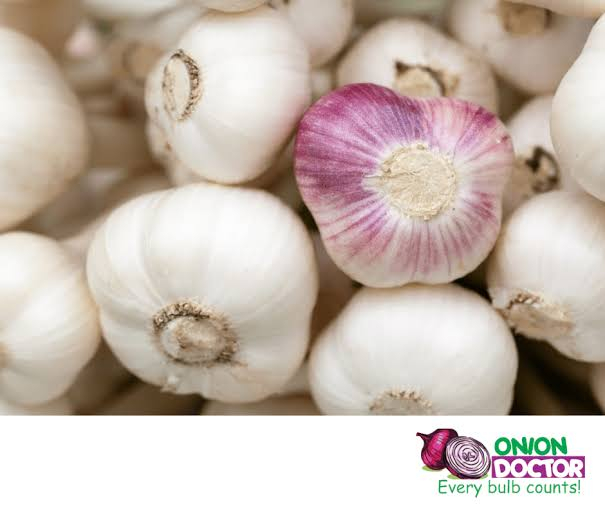
The Major Diseases Affecting Garlic Farming in Kenya:
1. White Rot: The Most Destructive Garlic Disease in Kenya:
White rot is considered the number one threat to garlic farming in Kenya. It is a soil-borne fungal disease that attacks the roots and bulb base, causing plants to yellow, wilt, and collapse.
Symptoms:
- Yellowing and wilting of lower leaves, especially in hot weather
- White fluffy fungal growth (mycelium) at the bulb base
- Small black sclerotia (resting structures) on infected tissue
- Bulbs rot and produce a strong foul smell

Control and prevention:
- Use certified, disease-free seed cloves never plant cloves from infected bulbs
- Practice strict crop rotation (avoid onions, garlic, and leeks for at least 4–6 years)
- Solarize the soil before planting in heavily infested fields
- Apply fungicides such as iprodione or tebuconazole as a soil drench at planting
2. Purple Blotch:
Purple blotch thrives in warm, humid conditions and is common in garlic farming in Kenya, particularly in highland regions with frequent rainfall.
Symptoms: small water-soaked lesions that turn purple or brown with concentric rings; leaves yellow and die early, shrinking bulbs.
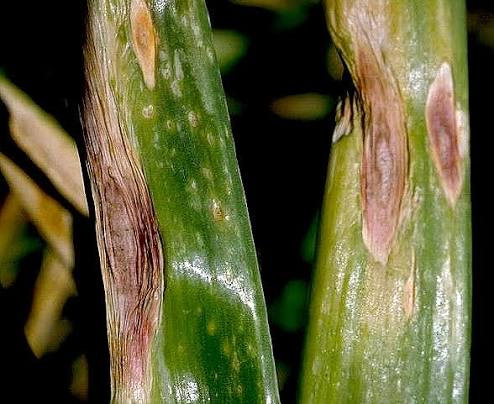
Control: avoid overhead irrigation, space plants properly, apply copper-based fungicides or mancozeb early, and remove infected debris after harvest.
3. Downy Mildew:
One of the most common diseases in garlic farming in Kenya during the rainy season.
Symptoms: pale yellow leaf patches with greyish-purple fuzzy growth underneath; twisted, collapsing leaves; stunted bulbs.
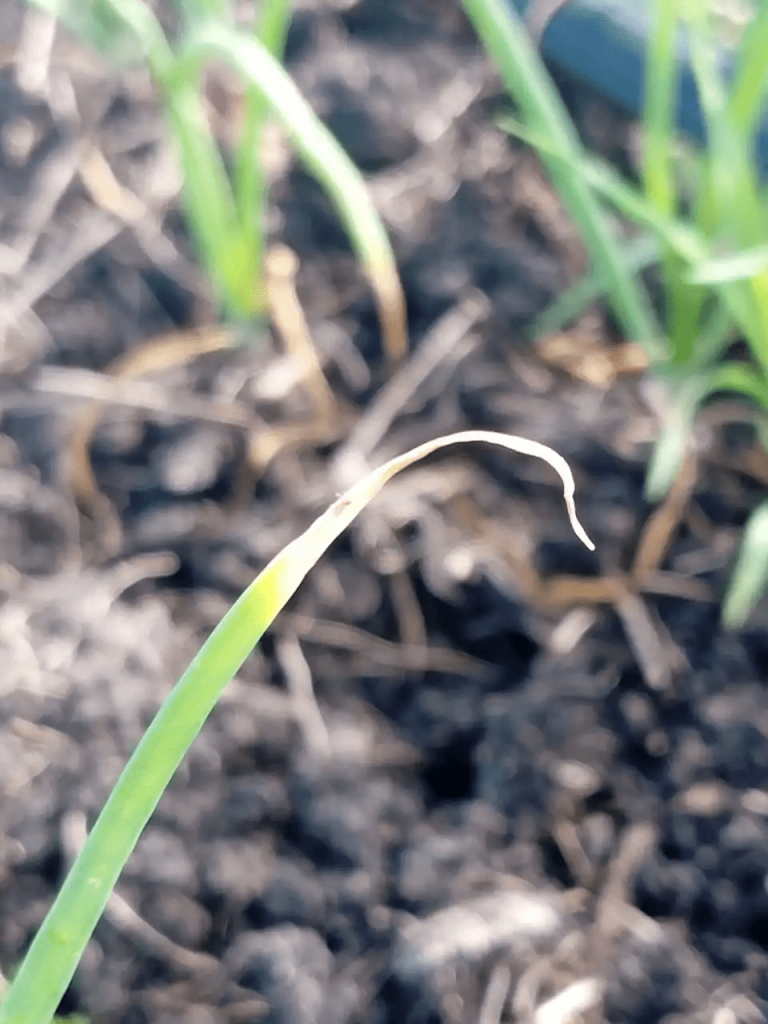
Control: raised beds and drainage, resistant varieties, fungicides, and avoiding excess nitrogen.
4. Rust:
Increasingly reported in garlic farming in Kenya, especially in cooler, humid zones.
Symptoms: orange, powdery pustules on both leaf surfaces; premature leaf death; smaller bulbs.
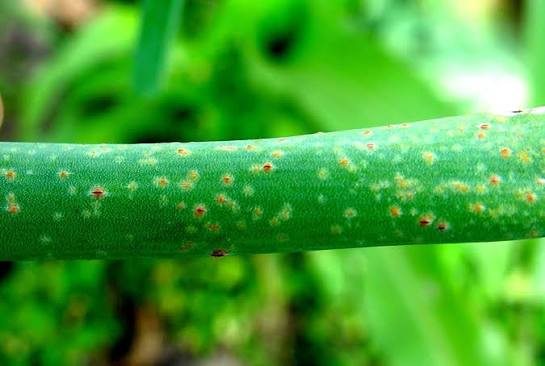
Control: remove wild Allium weed hosts, apply sulfur or azoxystrobin early, and maintain field hygiene.
The Disease Triangle: Understanding Why Garlic Gets Sick:
Every disease needs a susceptible host, a pathogen, and favorable conditions. Successful garlic farming in Kenya means breaking at least one side of that triangle.
Integrated Disease Management (IDM) for Garlic Farming in Kenya:
The most profitable approach to garlic farming in Kenya combines cultural, biological, and chemical tools:
- Cultural: 3–4 year rotation away from all Alliums, certified clean seed, 10–15 cm spacing, raised beds, strict field hygiene, weed control
- Biological: Trichoderma biofungicides at planting, compost teas, marigold intercropping against nematodes
- Chemical (last resort): mancozeb, copper oxychloride, tebuconazole, azoxystrobin — always follow label rates and pre-harvest intervals
Are you in need of in-depth knowledge on onion and garlic production? If yes, we are a call away. Contact us for: Onion seedlings, Garlic seedlings, Germinated garlic cloves, Farm planning services, Soil testing, training on onion and garlic growing, Drip irrigation installation and maintenance, Agronomic support, Onion and Garlic value pack and Farm management. For free consultation, placing orders or booking a visit with an agronomist, please contact us via Call or what’s app +254703982228, Email: info@oniondoctor.co.ke You can also check out our social media handles for daily updates on TikTok: https://www.tiktok.com/@oniondoctorke0706252490?_r=1&_t=ZS-96UPUyx6ESL Instagram:https://www.instagram.com/oniondoctorke?igsh=MW5sZzJ6c3BnZ3Z0dw==Facebook:https://www.facebook.com/share/1HouRgLCwS/Twitter:https://x.com/OnionDoctorKe?s=20