
Garlic farming in Kenya has emerged as one of the most lucrative agribusiness ventures in East Africa. With local demand soaring and approximately 80% of the garlic in Kenyan markets still imported from China and India, the opportunity for local producers is enormous. However, the path to profitable garlic farming in Kenya is fraught with challenges and diseases top that list.Whether you’re a smallholder farmer in Nyeri, a commercial grower in Murang’a, or an aspiring entrepreneur in Kiambu, understanding garlic diseases is not optional it’s essential. A single outbreak of white rot or downy mildew can wipe out entire fields, turning a promising garlic farming in Kenya venture into a financial disaster.This comprehensive guide will equip you with the knowledge to identify, prevent, and manage every major garlic disease. By the end, you’ll have the confidence to protect your investment and join the growing community of successful garlic farming in Kenya practitioners.
Economic Importance of Garlic Farming in Kenya:
Before diving into diseases, let’s understand why protecting your crop matters so much. Garlic farming in Kenya offers exceptional returns when managed properly:
- Yield Potential: 4,000–5,000 kg per acre under optimal conditions
- Market Prices: KSh 300–400 per kg during peak season (May–September); KSh 150–200 during low season.
- Shelf Life: Up to 6 months when properly cured and stored
Understanding Garlic Disease Biology:
Garlic (Allium sativum) belongs to the Amaryllidaceae family, making it closely related to onions, shallots, and leeks. This relationship is a double-edged sword: while garlic shares beneficial traits with its cousins, it also shares their vulnerabilities to specific pathogens.
Why Garlic is Particularly Vulnerable:
Unlike most crops that reproduce through true seeds, garlic farming in Kenya relies almost entirely on vegetative propagation through cloves. This creates unique disease challenges:
- Pathogen Accumulation: Seed cloves can harbor fungal spores, bacteria, and viruses deep within their tissues. Because cloves are large and stored , systemic fungicide treatments often cannot penetrate deeply enough to eliminate entrenched infections.
- Virus Persistence: Viruses are in vegetative material and are unaffected by fungicides. Their vectors (thrips, aphids) are difficult to eliminate completely .
- Soil-Borne Pathogens: Fungi can survive in soil for years, making crop rotation critical for garlic farming in Kenya.
- Storage Vulnerabilities: The same cool, humid conditions that keep garlic fresh also promote fungal growth during storage.
Understanding these biological realities is the foundation of effective disease management in garlic farming in Kenya.
Major Garlic Diseases Affecting Garlic Farming in Kenya:
Based on field reports and agricultural research, here are the five most destructive diseases threatening garlic farming in Kenya today:
1.White Rot: The Silent Killer:
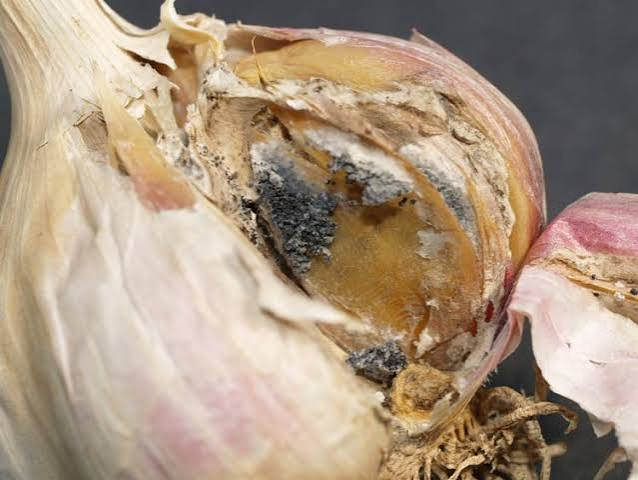
White rot is the most feared disease in garlic farming in Kenya. Once established in a field, it can render the soil unusable for garlic crops for up to 15–20 years.
Causal Agent: A soil-borne fungus that produces tiny, black, seed-like survival structures called sclerotia. These can lie dormant in soil for decades until triggered by root produced by garlic plants.
Symptoms:
- Yellowing and wilting of lower leaves, progressing upward
- White, fluffy (cottony) fungal growth at the base of the bulb
- Small, black sclerotia (like mustard seeds) on decaying tissue
- Infected plants can be easily pulled from the soil due to root decay
- Stunted growth and premature plant death
Conditions Favoring Disease:
- Cool, moist soils
- Poorly drained fields
- Continuous Allium cropping without rotation
Economic Impact: White rot can cause 100% crop loss in severely infected fields. For garlic farming in Kenya, this represents a devastating blow to smallholder farmers who often cannot afford to leave land fallow for the required 3–4 years.
2.Downy Mildew:
Downy mildew is a major concern for garlic farming in Kenya, particularly in high-altitude regions like Nyeri and Murang’a where humidity levels are elevated.
Causal Agent: an oomycete (water mold) that thrives in cool, moist environments with high humidity and moderate temperatures.
Symptoms:
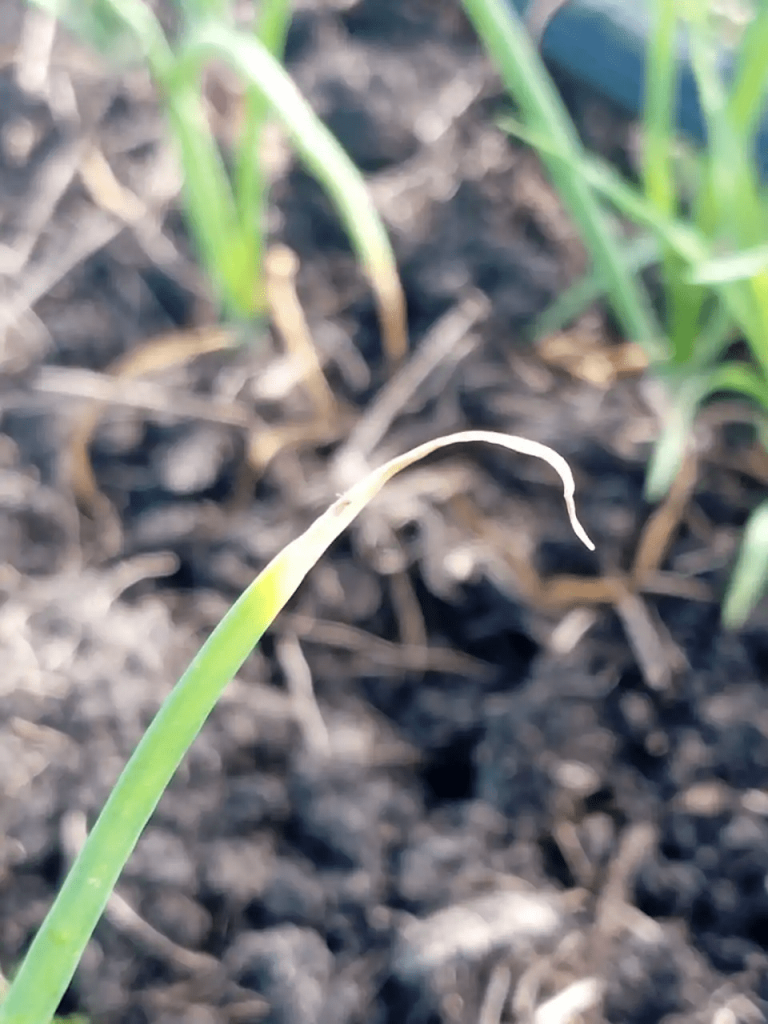
- Small, pale green to yellowish spots on upper leaf surfaces
- Grayish-purple, fuzzy growth on the undersides of leaves (especially in morning dew)
- Leaves may curl, wither, and die prematurely
- Infected bulbs develop soft rot during storage
Conditions Favoring Disease:
- High humidity
- Moderate temperatures (10–20°C)
- Prolonged leaf wetness from rain or overhead irrigation
- Poor air circulation due to overcrowding
Economic Impact: Severe infections can reduce yields by 30–50% and cause post-harvest losses due to bulb rot. For garlic farming in Kenya, this translates to significant income loss, especially when market prices are already volatile.
3.Purple Blotch:
Purple blotch is increasingly common in garlic farming in Kenya, particularly during the warmer growing seasons in low-altitude areas.
Causal Agent: a fungus that thrives in warm, humid conditions.
Symptoms:
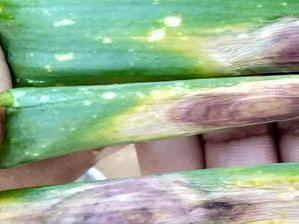
- Small, sunken, whitish flecks on leaves and flower stalks
- Lesions enlarge to develop purple centers with yellowish borders
- Spots coalesce to form large blotches covering entire leaves
- Severely infected leaves die prematurely
- Bulb quality and size are significantly reduced
Conditions Favoring Disease:
- Warm temperatures
- High relative humidity
- Rainy or humid weather periods
- Wounded plant tissue
Economic Impact: Purple blotch directly affects photosynthetic capacity, leading to smaller bulbs and reduced market value. In garlic farming in Kenya, where premium prices depend on bulb size and quality, this disease can slash profits considerably.
4.Garlic Rust:
Rust is a persistent problem in garlic farming in Kenya, especially in the cooler highland regions during the rainy season.
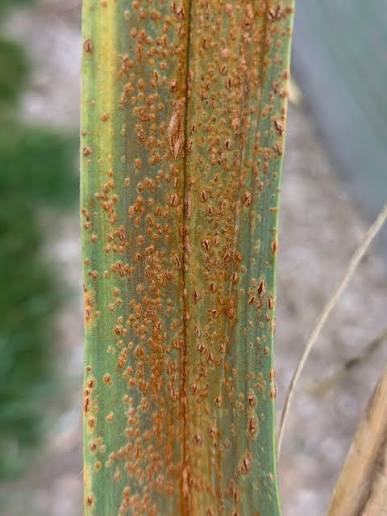
Causal Agent: a fungus that produces distinctive orange pustules on leaf surfaces.
Symptoms:
- Small white to yellow flecks on leaves (early stage)
- Flecks enlarge into orange-brown blisters (pustules) that release spores
- Pustules may appear on both leaf surfaces
- Leaves yellow, wither, and die prematurely
- Severe infections cause complete defoliation
Conditions Favoring Disease:
- Cool temperatures
- High humidity or dew
- Windy conditions that spread spores
- Dense plantings with poor air circulation
Economic Impact: Rust reduces photosynthetic area, leading to smaller bulbs and decreased yields. In commercial garlic farming in Kenya, rust can necessitate expensive fungicide applications, eating into profit margins
5.Fusarium Basal Rot:
Fusarium basal rot is a soil-borne disease that poses a serious threat to garlic farming in Kenya, particularly during warm growing seasons.
Causal Agent: A soil-borne fungi that infect through the basal plate of the bulb.
Symptoms:
- Yellowing and dieback starting from leaf tips, progressing downward
- Roots rot and are replaced by white, moldy fungal growth
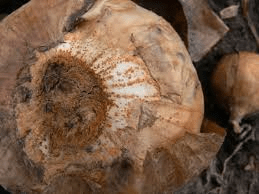
- Basal plate shows brown, watery decay
- Decay spreads upward into the bulb scales
- Infected bulbs are soft and discolored when cut open
- Plants may wilt and die suddenly in warm weather
Conditions Favoring Disease:
- Warm soil temperatures
- Waterlogged or poorly drained soils
- Wounded basal plates during planting
- Stress conditions (drought, nutrient deficiency)
Economic Impact: Fusarium basal rot causes significant yield reduction and affects bulb quality. Infected bulbs are unmarketable and can spread the pathogen to storage facilities, threatening entire harvests in garlic farming in Kenya
Leaf Symptoms Diagnostic Chart:
| Symptom Pattern | Likely Disease | Confirm By |
|---|---|---|
| Yellowing from base upward + white fluffy growth at bulb base | White Rot | Check for black sclerotia; easy plant pulling |
| Brown leaf tips | Downy Mildew | Morning inspection for fuzzy growth |
| Purple-centered spots with yellow halos | Purple Blotch | Spots enlarge and coalesce in warm weather |
| Orange-brown pustules releasing powdery spores | Rust | Spores rub off on finger; cool-season occurrence |
| Yellowing from leaf tips downward | Fusarium Basal Rot | Cut bulb to check basal plate decay |
| Yellow streaks/mosaic pattern | Viral Infection | Often accompanied by aphid or thrip presence |
Bulb Symptoms Diagnostic Chart:
| Bulb Symptom | Likely Disease | Confirm By |
|---|---|---|
| Soft, watery decay with white mold and black dots | White Rot | Presence of sclerotia; field history |
| Brown, watery decay starting at basal plate | Fusarium Basal Rot | White fungal growth on roots; warm conditions |
| Blue-green mold on surface wounds | Penicillium Blue Mold | Storage conditions; physical damage |
| Soft, foul-smelling decay | Bacterial Soft Rot | Slimy texture; strong odor |
| Neck area soft and brown with gray mold | Botrytis Neck Rot | Humid storage; infected neck tissue |
Scouting Protocol for Garlic Farming in Kenya: Inspect your field weekly. Walk in a zigzag pattern, examining 10 plants at 5 different locations. Record symptoms, photograph suspicious plants, and scan your plants using the Onion Doctor app to identify the disease correctly.
Integrated Disease Management (IDM) Strategies for Garlic Farming in Kenya:
Successful disease control in garlic farming in Kenya requires an Integrated Disease Management approach combining multiple strategies rather than relying on chemicals alone.
1.Cultural Practices: The Foundation of Disease Prevention:
Crop Rotation:
- Rotate garlic with non-Allium crops (maize, beans, legumes) for minimum 3–4 years
- This breaks disease cycles for soil-borne pathogens like white rot and fusarium
- Never plant garlic where onions, shallots, or leeks were grown recently
Field Sanitation:
- Remove and burn all infected plant debris do not compost it
- Eliminate volunteer Allium plants that can harbor pathogens
- Control weeds that may act as alternate hosts
Proper Spacing:
- Maintain 30 cm between rows and 15 cm between plants
- Adequate spacing improves air circulation, reducing humidity around leaves
- This is especially important for preventing downy mildew in humid regions of garlic farming in Kenya
Soil Solarization:
- Cover moist, prepared beds with clear polythene sheets for 20–30 days before planting
- This kills soil-borne pathogens, pests, and weed seeds using solar heat
- Particularly effective against white rot sclerotia near the soil surface
2.Water Management: Moisture Control is Disease Control:
Irrigation Best Practices:
- Use drip irrigation it delivers water to roots while keeping foliage dry.
- Avoid overhead sprinklers, it leads to fungal infections.
- Water early in the morning so leaves dry quickly.
- Stop irrigation 2–4 weeks before harvest to allow bulbs to mature and skins to dry.
Drainage:
- Plant garlic in raised beds to ensure excellent drainage.
- Avoid low-lying areas where water accumulates
- Waterlogged conditions promote white rot, fusarium, and bacterial soft rot.
3.Seed Quality and Treatment:
Use Certified Disease-Free Seed:
- Purchase seed cloves from Onion Doctor.
- Select the largest, healthiest cloves they produce bigger bulbs and stronger plants.
- Inspect cloves carefully: reject any with mold, soft spots, or discoloration.
- Obtain fresh planting seed every 3 seasons to avoid pathogen buildup.
Pre-Planting Treatments:
- Hot water treatment: Soak seed cloves in water for 10–20 minutes to kill nematodes and surface pathogens, followed by a cold water soak.
- Fungicide dip: Treat cloves with approved systemic fungicides before planting.
- Biological treatment: Soak in solutions for biological control.
4.Soil Health and Fertility Management:
Soil pH and Composition:
- Maintain soil pH between 5.5 and 7.0 (optimal for garlic)
- Incorporate well-rotted manure or compost to improve soil structure and drainage.
Balanced Fertilization:
- Apply DAP at planting for root development.
- Top-dress with CAN or NPK during vegetative growth.
- Switch to potassium-rich fertilizers during bulbing stage.
- Avoid excessive nitrogen, which promotes lush, susceptible growth.
5.Biological and Organic Control Methods:
For farmers practicing organic garlic farming in Kenya, these eco-friendly solutions are effective:
Biopesticides:
- Neem-based sprays: Effective against pests and some fungal diseases.
- Garlic spray: Crush garlic cloves mixed with water as a natural fungicide/repellent
- Chilli spray: Acts as an irritant and repellent for soft-bodied insects
Companion Planting:
- Plant garlic near pest-repelling herbs (marigold, basil, rosemary)
- Avoid planting near other Alliums to prevent disease spread
7. Preventive Measures for Successful Garlic Farming in Kenya:
Prevention is always more cost-effective than cure. Implement these preventive measures from day one:
Pre-Planting Checklist:
- Test soil for pH, nutrients, and drainage capacity
- Solarize soil for 20–30 days if disease history exists
- Source certified disease-free seed from Onion Doctor
- Inspect seed cloves meticulously; discard any with blemishes
- Plan crop rotation ensuring no Allium crops for 3–4 years
- Prepare raised beds with excellent drainage
- Install drip irrigation system from Onion Doctor.
Growing Season Protocol:
- Monitor weekly for early disease symptoms
- Maintain proper spacing (30cm × 15cm)
- Water at base using drip irrigation; avoid wetting foliage
- Mulch with straw or dry grass to suppress weeds and maintain moisture
- Weed regularly garlic is a poor competitor
- Apply fertilizers on schedule based on growth stage
- Scout for pests (thrips, aphids) that vector viral diseases
- Remove infected plants immediately and burn them
Are you in need of in-depth knowledge on onion and garlic production? If yes, we are a call away. Contact us for: Onion seedlings, Garlic seedlings, Germinated garlic cloves, Farm planning services, Soil testing, training on onion and garlic growing, Drip irrigation installation and maintenance, Agronomic support, Onion and Garlic value pack and Farm management. For free consultation, placing orders or booking a visit with an agronomist, please contact us via Call or what’s app +254703982228, Email: info@oniondoctor.co.ke You can also check out our social media handles for daily updates on TikTok: https://www.tiktok.com/@oniondoctorke0706252490?_r=1&_t=ZS-96UPUyx6ESL Instagram:https://www.instagram.com/oniondoctorke?igsh=MW5sZzJ6c3BnZ3Z0dw==Facebook:https://www.facebook.com/share/1HouRgLCwS/Twitter:https://x.com/OnionDoctorKe?s=20