
Onion farming in Kenya has emerged as one of the most profitable horticultural ventures in the country. With a population of over 55 million people who consume onions daily in stews, fries, salads, and street food the demand for onions in Kenya has never been higher. Yet the country still imports a significant portion of its onions from Tanzania, creating a massive market gap that local farmers can fill. The beauty of onion farming in Kenya lies in its versatility. Onions can be grown across diverse ecological zones from the sun baked plains of Kajiado to the fertile highlands of Meru, from irrigated farms in Naivasha to rain-fed plots in Nakuru. Whether you have half an acre or 50 acres, whether you’re a smallholder or a commercial investor, onion farming in Kenya can transform your income.
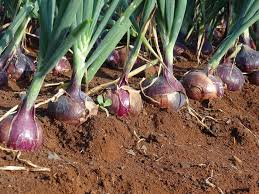
1.Climate & Soil Requirements:
Successful onion farming in Kenya starts with understanding what onions need from the environment. Getting these fundamentals right is the difference between a bumper harvest and a failed crop.
Climate:
- Altitude: 500–2,000 m above sea level
- Temperature: 15–25°C optimal
- Rainfall: 500–700 mm annually
- Warm days + cool nights = uniform bulbs
- Avoid waterlogged, very humid areas
Soil:
- Sandy loam, well-drained, fertile
- Soil pH: 5.8–6.8 (test before planting)
- Rich in organic matter
- Avoid heavy clay causes waterlogging
- Non-compacted, loose structure
The top regions for onion farming in Kenya include Karatina, Oloitoktok, Naivasha, Meru, Kajiado, Makueni, and Kirinyaga all of which offer that ideal blend of climate and soil. However, with drip irrigation, onion farming in Kenya is possible in nearly every county.
2.Choose the right variety:
Choosing the right variety is critical for onion farming in Kenya. Your choice determines your yield, disease resistance, shelf life, and the price you’ll get at market. Here are the top performing varieties:
| Variety | Type | Maturity Period | Yield Potential | Key Features |
| Red Creole | OPV | 120–150 days | 16–20 tons/acre | Deep red bulbs, excellent storage, Pink rot resistant |
| Bombay Red | OPV | 120–150 days | 15–25 tons/acre | Strong pungency, drought tolerant, highly marketable |
| Jambar F1 | Hybrid | 80–90 days | 20–25 tons/acre | Early maturity, uniform bulbs, disease resistant |
| Neptune F1 | Hybrid | 110–120 days | 15–20 tons/acre | Firm bulbs with good shelf life |
| Malbec F1 | Hybrid | 80–90 days | 20 to 25 tons per acre | strong disease tolerance and exceptional bulb quality with an extended shelf life of up to 3 months |
4.Land Preparation & Nursery Setup:
Proper land preparation is the backbone of productive onion farming in Kenya. Onion seeds are tiny and require a fine, well-aerated seedbed to germinate successfully.
- Soil test first: Visit a accredited institution like Onion Doctor. A test tells you exactly what nutrients and pH corrections your soil needs saving you thousands in guesswork fertilizer.
- Clear and plough: Remove all weeds and previous crop residue. Plough to 30 cm depth and harrow to break up clods.
- Apply organic matter: Incorporate well-composted manure per acre to improve soil structure and water retention.
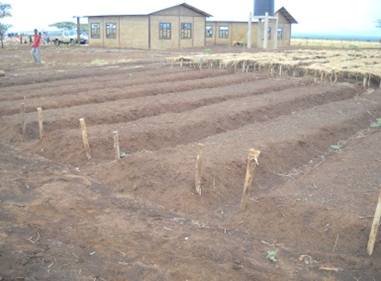
- Prepare nursery seedbeds: Raise beds 15 cm high, 1 m wide, any convenient length. Fine tilth is essential sieve soil if necessary. This is a crucial step in onion farming in Kenya.
- Sow seeds: Sow in rows 10 cm apart at 1–2 cm depth. Cover lightly with fine soil and mulch with dry grass. Water gently twice daily.
- Transplant at 6–8 weeks: Seedlings should be 15–20 cm tall (pencil-thick stems). Transplant in the evening or on a cloudy day to reduce transplant shock.
5.Fertilizer & Nutrient Management:
Feeding your crop correctly is what separates average yields from record-breaking yields in onion farming in Kenya. Onions are heavy feeders, especially of nitrogen, phosphorus, and potassium. After transplanting, apply DAP to stimulate root development. At 3–4 weeks after transplanting, top-dress with CAN to boost leafy growth. During bulb initiation, apply NPK to support bulb formation. Do not apply nitrogen-heavy fertilizers close to harvest it delays bulb maturation and reduces shelf life, a common costly mistake in onion farming in Kenya.
| Timing | Fertilizer | Rate/Acre | Purpose |
| Transplanting | DAP | 80 kg | Root establishment |
| 3 weeks after | CAN or NPK | 120 kg | Vegetative growth |
| Bulb formation | Foliar feed | 20ml/20L water | Micronutrients for bulb sizing |
Pro Tip from the Onion Doctor: Always base your fertilizer program on a soil test result. Over-fertilizing is as damaging as under-fertilizing. WhatsApp 0706252490 for a customized spray and feeding program for your farm.
6. Pest & Disease Management: Protect Your Investment:
Pests and diseases are the biggest threat to onion farming in Kenya. Early identification and rapid response can save an entire crop. Here are the most common threats and how to beat them:
Major pests and control:
| Pest | Damage | Control |
| Thrips | Silvery leaf scars, stunted growth | Use appropriate pesticides |
| Cutworms | Seedlings cut at base | Use appropriate pesticides |
| Onion Maggot | Root/bulb tunneling | Crop rotation, certified seeds, soil drench |
| Leaf Miner | Serpentine leaf tunnels | Systemic insecticides, weed control |
| Nematodes | Root galls, stunting | Soil fumigation, resistant varieties. |
7.Harvesting & Post-Harvest Handling:
Harvesting at the right time and handling properly is the final mile of profitable onion farming in Kenya. Getting this wrong can wipe out months of hard work.
- Know when to harvest.Onions are ready when 50–70% of tops have fallen over naturally. Necks should be dry and thin. Forced early harvest = poor shelf life and reduced prices at market.
- Stop watering 2 weeks before harvest. This triggers the natural curing process and reduces rot risk in onion farming in Kenya.
- Harvest in dry weather.Pull bulbs gently by hand or use a fork to loosen soil. Avoid bruising — every damaged bulb loses market value significantly.
- Field cure for 7–14 days.Lay onions in windrows in the field or under shade. Allow tops to dry completely. This dramatically extends shelf life.
- Grade and sort.Separate by size (large, medium, small). Remove damaged or diseased bulbs. Well-graded onions fetch premium prices at Wakulima and Kongowea markets.
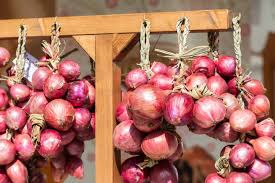
- Store in aerated conditions.Use mesh bags, slatted crates, or raised platforms. Good airflow prevents rotting. Never store in sealed containers or plastic bags.
8.Key Challenges & How to Overcome Them:
No honest guide to onion farming in Kenya is complete without addressing the real challenges farmers face and the practical ways to overcome them:
| Challenges | Solutions |
| Price volatility (import competition) | Plan planting to target peak prices |
| Thrips & fungal disease outbreaks | Scout weekly; spray preventively |
| High cost of drip irrigation setup | Join farmer SACCOs for input loans |
| Post-harvest losses from poor storage | Cure bulbs properly before storage |
| Lack of agronomist guidance | Engage Onion Doctor agronomists from day one |
| Climate unpredictability | Use drip irrigation for water control |
Are you in need of in-depth knowledge on onion and garlic production? If yes, we are a call away. Contact us for: Onion seedlings, Garlic seedlings, Germinated garlic cloves, Farm planning services, Soil testing, training on onion and garlic growing, Drip irrigation installation and maintenance, Agronomic support, Onion and Garlic value pack and Farm management. For free consultation, placing orders or booking a visit with an agronomist, please contact us via Call or what’s app +254703982228, Email: info@oniondoctor.co.ke You can also check out our social media handles for daily updates on TikTok: https://www.tiktok.com/@oniondoctorke0706252490?_r=1&_t=ZS-96UPUyx6ESL Instagram:https://www.instagram.com/oniondoctorke?igsh=MW5sZzJ6c3BnZ3Z0dw==Facebook:https://www.facebook.com/share/1HouRgLCwS/Twitter:https://x.com/OnionDoctorKe?s=20