
Onions are the silent goldmine of Kenyan agriculture. While most households use them daily, Kenya still imports onions from Tanzania to meet demand creating a massive gap that smart farmers are filling. With proper management, a single acre can yield 15–25 tonnes and generate upwards of KSh 900,000 in just 4–5 months. Whether you’re a smallholder in Kajiado, a commercial grower in Naivasha, or exploring agribusiness in Kitui, this guide covers everything you need to know about profitable onion farming in Kenya.
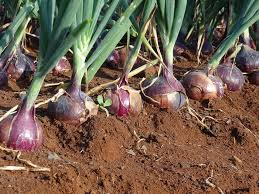
1. Understanding Kenya’s Onion Market & Economics:
The Demand-Supply Gap:
Kenya consumes onions year-round, but local production peaks during rainy seasons, causing price crashes. The secret to profitability? Planting calendars aligned with off-peak demand. Farmers who harvest in January–February (when Tanzanian supply drops) often earn KSh 60+ per kilo at the farm gate.
Investment cost for an acre:
| Input | Cost (KSh) |
| Drip irrigation | 170,000 |
| Fertilizer | 25,000 |
| Certified seeds | 44,000 |
| Agrochemicals | 35,000 |
| Labor (90 man-days) | 45,000 |
| Miscellaneous | 10,000 |
| Total | 329,000 |
2. Choosing the Right Onion Variety for Your Region:
| Variety | Type | Maturity Period | Yield Potential | Key Features |
| Red Creole | OPV | 120–150 days | 16–20 tons/acre | Deep red bulbs, excellent storage, Pink rot resistant |
| Bombay Red | OPV | 120–150 days | 15–25 tons/acre | Strong pungency, drought tolerant, highly marketable |
| Jambar F1 | Hybrid | 80–90 days | 20–25 tons/acre | Early maturity, uniform bulbs, disease resistant |
| Neptune F1 | Hybrid | 110–120 days | 15–20 tons/acre | Firm bulbs with good shelf life |
| Red Pinoy F1 | Hybrid | 90 days | 15–20 tons/acre | Attractive deep red bulbs, long shelf life. |
3. Climate & Soil Requirements for Optimal Yields:
Ideal Growing Conditions:
- Altitude: 0–1,900m above sea level
- Temperature: 15°C–30°C (optimum); avoid >30°C during bulb formation
- Rainfall: 500–700mm annually; well-distributed or supplemented with irrigation
- Soil pH: 6.0–6.8
- Soil Type: Well-drained sandy loam
Critical Soil Preparation Steps:
- Soil Testing: Always test with accredited institutions (e.g Onion Doctor) to determine nutrient deficiencies.
- Land Clearing: Clear all weeds 2–3 weeks before ploughing.
- Ploughing & Harrowing: Achieve fine tilth onions have shallow root systems and cannot penetrate compacted soil.
- Manure Application: Incorporate well-decomposed goat manure 1–2 weeks before transplanting.
4. Nursery Management: The Foundation of Success:
Onions are grown via seedlings never direct seeding in the main field.
Setting Up Your Nursery:
- Bed Size: 1m wide × 10–15cm high
- Seed Rate: 0.8–1.2 kg per acre (sows enough for 1 acre of main field)
- Soil Mix: Topsoil + phosphatic fertilizer
- Sowing: Drill seeds in 1cm furrows, 15cm apart; cover lightly and mulch
Nursery Care (6–8 Weeks):
- Germination: 7–10 days; remove mulch after emergence.
- Irrigation: Light, frequent watering never let beds dry out.
- Pest Watch: Watch for damping-off (use certified seeds) and aphids
- Transplanting Time: When seedlings have 3–5 true leaves and pencil-thick bases (usually 6–8 weeks)
5. Transplanting & Field Management:
- Spacing: 30cm between rows and 8–10cm between plants.
- Depth: 3cm deep don’t bury the crown
- Basal Fertilizer: Apply phosphatic fertilizers during transplanting for root development.
Irrigation Strategy:
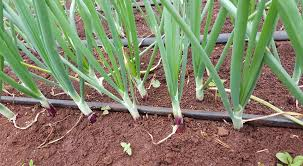
Drip irrigation is non-negotiable for serious onion farmers. Overhead sprinklers cause fungal diseases and waste water.
| Growth Stage | Water Needs | Notes |
|---|---|---|
| Establishment (Weeks 1–3) | High | Daily light irrigation |
| Vegetative (Weeks 4–8) | Moderate-High | Every 2–3 days |
| Bulb Formation (Weeks 9–12) | Peak | Critical for bulb size |
| Maturity (Week 13+) | STOP | Reduces rot, improves curing |
Fertilize schedule:
| Timing | Fertilizer | Rate/Acre | Purpose |
|---|---|---|---|
| Transplanting | DAP | 80 kg | Root establishment |
| 3 weeks after | CAN or NPK | 120 kg | Vegetative growth |
| Bulb formation | Foliar feed | 20ml/20L water | Micronutrients for bulb sizing |
6. Pest & Disease Management: Protect Your Investment:
Onions are vulnerable to several pests and diseases that can wipe out 30–50% of yields if unmanaged:
Major pests and control:
| Pest | Damage | Control |
|---|---|---|
| Thrips | Silvery leaf scars, stunted growth | Use appropriate pesticides |
| Cutworms | Seedlings cut at base | Use appropriate pesticides |
| Onion Maggot/Flies | Root/bulb tunneling | Crop rotation, certified seeds, soil drench |
| Leaf Miner | Serpentine leaf tunnels | Systemic insecticides, weed control |
| Nematodes | Root galls, stunting | Soil fumigation, resistant varieties |
Major diseases and control:
| Disease | Symptoms | Prevention/Treatment |
|---|---|---|
| Downy Mildew | Brown leaf tips, leaf collapse | Avoid overhead or sprinkler irrigation. Use drip irrigation to keep foliage dry, and water early in the morning so the sun can dry leaves by midday. |
| Purple Blotch | Purple-brown leaf lesions | Apply appropriate fungicides. |
| Bacterial Soft Rot | Slimy, foul-smelling bulbs | Avoid injury, dry before storage, crop rotation |
| Pink/White Root Rot | Discolored roots, wilting | Resistant varieties (Red Creole, Red Passion) |
| Neck Rot | Soft neck tissue, internal rot | proper curing |
| Botrytis (Gray Mold) | Gray fuzzy growth | Field hygiene, fungicides |
Onion Doctor’s IPM Strategy:
- Start with certified, disease-free seeds
- Practice 3-year crop rotation (avoid solanaceous crops)
- Maintain 30cm row spacing for ventilation
- Scout weekly early detection saves crops
- Apply fungicides preventively during wet periods
7. Weed Management: The Silent Yield Thief:
Weeds compete aggressively with onions during the first 6 weeks. Carry out manual weeding or use appropriate herbicides.
8. Harvesting & Post-Harvest Handling:
When to Harvest:
- Leaves turn yellow and fall over (80% of tops down)
- Neck tissue softens
- Bulbs have shiny, papery skins
- Timing: Usually 120 days after transplanting (variety-dependent)
Harvesting Best Practices:
- Harvest during dry weather: wet bulbs rot quickly
- Lift gently with a fork bruised bulbs don’t store
- Field dry: 2–3 days in the field (protect from rain)
- Cure properly: 7–14 days in shade with good ventilation this is where shelf life is made or broken.
- Trim: Cut roots and leave 3.5cm of neck
- Grade: Sort by size
10. Common Mistakes Kenyan Onion Farmers Make:
- Wrong variety for the region:planting Jambar F1 in extremely hot areas without irrigation
- Overwatering at maturity causes rotting and splitting
- Skipping soil tests leads to over/under-fertilization
- Poor curing results in storage losses of 40%+
- Ignoring market timing harvesting when everyone else does
- Using saved seeds disease buildup and low germination
- Planting too deep restricts bulb expansion
Are you in need of in-depth knowledge on onion and garlic production? If yes, we are a call away. Contact us for: Onion seedlings, Garlic seedlings, Germinated garlic cloves, Farm planning services, Soil testing, training on onion and garlic growing, Drip irrigation installation and maintenance, Agronomic support, Onion and Garlic value pack and Farm management. For free consultation, placing orders or booking a visit with an agronomist, please contact us via Call or what’s app +254703982228, Email: info@oniondoctor.co.ke You can also check out our social media handles for daily updates on TikTok: https://www.tiktok.com/@oniondoctorke0706252490?_r=1&_t=ZS-96UPUyx6ESL Instagram:https://www.instagram.com/oniondoctorke?igsh=MW5sZzJ6c3BnZ3Z0dw==Facebook:https://www.facebook.com/share/1HouRgLCwS/Twitter:https://x.com/OnionDoctorKe?s=20