
Iron toxicity in onions is a physiological disorder that occurs when plants absorb excessive amounts of soluble iron from the soil. This condition typically happens in waterlogged, poorly drained, or highly acidic soils, where anaerobic (oxygen-deprived) conditions convert insoluble iron into a form that roots easily soak up. The resulting overload damages the onion’s root system, causes leaf bronzing or yellowing, and significantly reduces bulb size and crop yield.
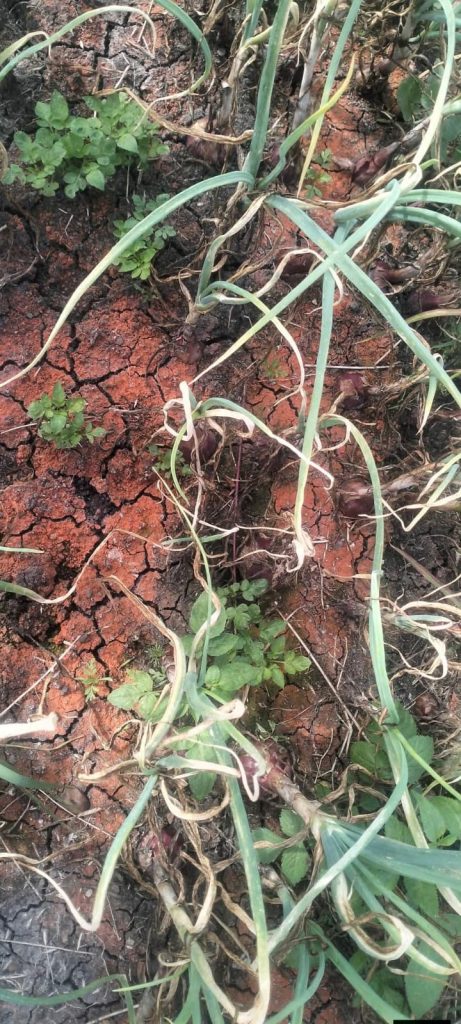
Causes of Iron toxicity in Onion Farming:
- Waterlogging: Poorly drained, waterlogged soils trigger anaerobic conditions. This causes iron to become highly soluble and easily absorbed in toxic amounts.
Soil Type & pH: This condition is particularly prevalent in heavy clay soils such as those found in the Kajiado region or in highly acidic soils.
Inhibits Nutrient Uptake: Excessive iron creates an imbalance that disrupts the uptake and translocation of other vital minerals like potassium, calcium, and magnesium
Signs of iron toxicity in onions:
- Leaf bronzing and stippling: Small brown or purple-brown spots appearing on older/lower leaves, often starting at the tips and spreading inward. In severe cases, leaves may appear burned or scorched.
- Reduced growth and stunting: Excess iron generates reactive oxygen species (ROS) that damage cell membranes, impair photosynthesis, and restrict root development.
- Root decay: Roots may develop a dark brown to black coating or show reduced branching problematic for onions, which have a shallow, sparsely branched root system concentrated in the top 30 cm of soil.
- Nutrient imbalances: High iron can obstruct the uptake of manganese, copper, zinc, and phosphorus, leading to secondary deficiencies that compound the visible symptoms
- Yield drop: Noticeably smaller bulb sizes and reduced overall harvest weights.
Effective solutions:
1. Optimize Soil pH and Limit Iron Reduction:
- Correct Acidity: Test your soil and apply agricultural lime if the pH drops below 6.0. Liming raises the soil pH, which reduces the solubility and uptake of excess iron.
- Manage Waterlogging: Avoid waterlogging, as anaerobic conditions lead to a chemical reduction of iron into toxic forms. Ensure well-drained beds and avoid over-irrigating use drip irrigation from Onion Doctor.
2. Apply proper Nutrients: You can counteract iron overload by ensuring proper levels of competing macronutrients.
- Potassium and Magnesium: Apply additional Potassium and Magnesium fertilizers. These elements compete with iron for root uptake and help maintain the plant’s metabolic balance.
- Phosphorus: Incorporate phosphate fertilizers to prevent iron from entering the onion tissue in toxic quantities.
3. Incorporate Organic Matter:
- Adding well-decomposed organic matter improves the soil’s structure, aeration, and water-holding capacity. Good soil aeration oxidizes toxic, dissolved iron in the root zone into safer, insoluble forms. Mix in compost or farmyard manure before transplanting.
4. Consult Agricultural Extension Experts:
- Because soil conditions vary, it is best to get data on your soil. Consult regional agronomists from Onion Doctor for customized soil testing and fertilizer recommendations.
Are you in need of in-depth knowledge on onion and garlic production? If yes, we are a call away. Contact us for: Onion seedlings, Garlic seedlings, Germinated garlic cloves, Farm planning services, Soil testing, training on onion and garlic growing, Drip irrigation installation and maintenance, Agronomic support, Onion and Garlic value pack and Farm management. For free consultation, placing orders or booking a visit with an agronomist, please contact us via Call or what’s app +254703982228, Email: info@oniondoctor.co.ke You can also check out our social media handles for daily updates on TikTok: https://www.tiktok.com/@oniondoctorke0706252490?_r=1&_t=ZS-96UPUyx6ESL Instagram:https://www.instagram.com/oniondoctorke?igsh=MW5sZzJ6c3BnZ3Z0dw==Facebook:https://www.facebook.com/share/1HouRgLCwS/Twitter:https://x.com/OnionDoctorKe?s=20