
Unlocking the Secrets Beneath Your Feet: The Power of Soil Sampling
Healthy soil is the foundation of thriving crops, lush gardens, and sustainable farming. Yet, what lies beneath the surface often remains a mystery—until you dig a little deeper. Soil sampling is more than just scooping dirt into a bag; it’s a science-backed process that reveals your soil’s true story—its nutrients, pH levels, and overall health. By understanding your soil, you can make smarter planting decisions, optimize fertilizer use, and boost yields while protecting the environment. In this guide, we’ll walk you through the essentials of soil sampling, so you can turn every seed you plant into a success story.
Soil sampling is a critical practice for assessing soil health and fertility, and it involves methods and techniques to ensure accurate and representative samples.
Key Methods of Soil Sampling
- Grid Sampling
- Zig-Zag Sampling
- Composite Sampling
- Core sampling
Soil sampling involves using specific tools and following a systematic procedure to collect soil samples for analysis, ensuring accurate assessment of soil health and fertility.
Tools Required for Soil Sampling
- Soil Probe or Auger: Used to extract soil cores from various depths. Augers are particularly useful for deeper sampling.
- Spade or Shovel: For digging and collecting soil samples, especially in areas where probes may not be effective.
- Bucket or Container: To mix and store the collected soil samples before analysis.
- Labels and Markers: For labeling samples to avoid confusion during analysis.
- Gloves: To prevent contamination of samples and protect the sampler.
Why is soil sampling important?

For onion farmers in Kenya Onion Doctor provide soil sampling services and onion value pack, healthy soil, healthy harvest test before you plant.
Soil sampling is important because it measures a broad scope of chemical, biological and physical soil characteristics, giving farmers greater insight into the vitality of their soils and cropping systems.
Well-balanced soil provides a wide host of benefits, including:
- Improved input and water-use efficiency
- Reduced soil erosion
- Better soil structure for greater physical stability
- Improved soil aeration
- Higher water drainage and retention
- Greater nutrient absorption
- Increased biological productivity of a field
- Increased yield / net productivity
Soil changes generally occur over the span of several years. It is often difficult to track and identify small changes, but a strong soil sampling strategy can help to capture the variation in soil quality and fertility over time.
One of the most critical elements that testing can reveal is the ability of the soil to support microbial activity. Also known as “microorganisms,” soil microbes perform several complex functions that are essential to crop productivity including:
- Providing free nitrogen to legumes
- Breaking down crop residues
- Cycling nutrients through the soil
- Enhancing water and nutrient uptake
- Stimulating plant growth
Not all microbes are created equal. Fertile soils require a balanced presence of beneficial microbes and an absence or low presence of harmful microbes.
Soil sampling procedures
Sampling procedure for shallow surface soil:
• Determine whether the field is and
categorize area in to similar topography, management history and/or
crop performance.
• Selecting appropriate sample collection methods.
• Preparing all soil sampling tools and equipment.
• Dividing the total uniform field in to equal distance
to make the sampling point representative of the whole field. Then
starting from the border of the farm land measure 3-5 m distance based
on the size of the study area and mark by page and then continue in to
the center farm land.
• Select sub sampling points which have equal distance from each other.
Based on the sample collection method 20+ sub-sampling points can be
identified.
• Removing ash, animal manure, plant leaves, grass and other residues
from selected soil sampling points to increase the accuracy of soil
sampling.
• Digging 900 (vertically) up to 20-30 cm depth and 10 cm thickness on
selected soil sampling point by spade if we take soil sample by soil
auger. Sampling of saline soil depend on the nature of salt
concentration in sub soil surface and the excavation reaches up to 90
cm down in to the soil surface. If soil sample taken by soil probe there
is no excavation because it is adjusted in different depth, so it is simply
inserted down into the soil surface with its graduate distance.
• Taking soil sample from 20+ sub sample and put in to large clean
plastic or paper if sampling field is uniform. If sample collected in
heterogeneous field, sample collected from each sampling area collected
separately.
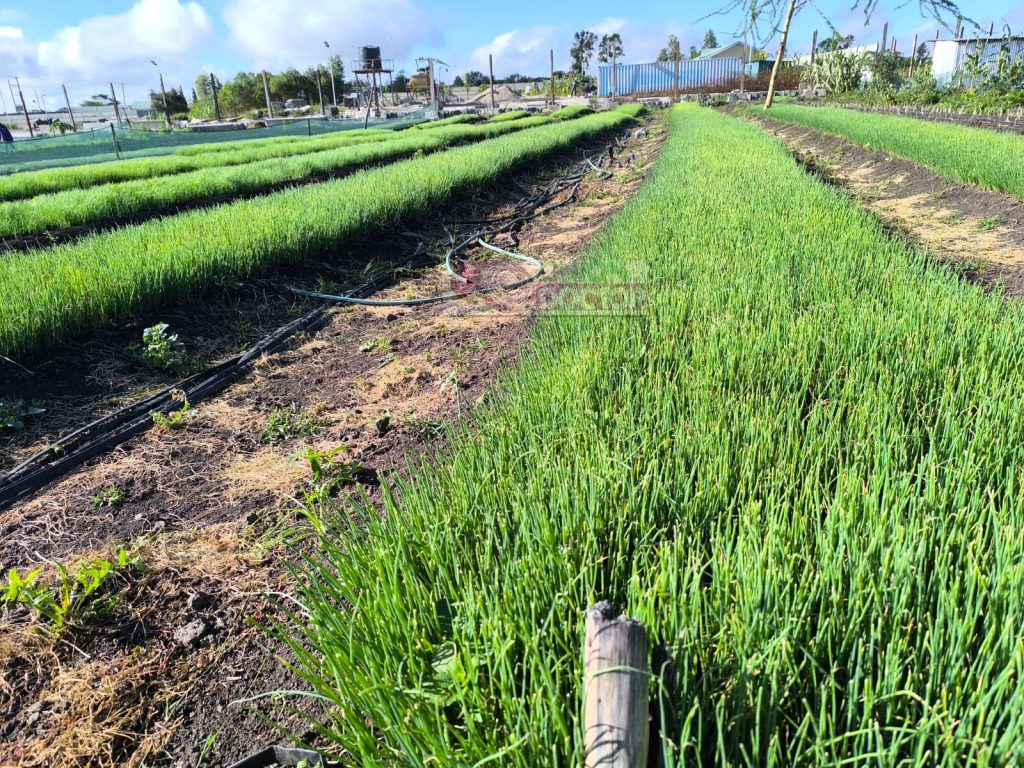
H we’ve got healthy seedlings, we deliver country wide healthy roots, happy harvest! 🧅💚 Soil check ✅, seedlings thriving 🌿 #Onion doctor Kenya #Onion farming in Kenya #HealthySoil.
At Onion Doctor we have offer land planning services, soil testing, drip irrigation and installation, onion and garlic value pack, onion and garlic oasis packages, transplanting supervision, germinated garlic cloves and market linkages. Dial this number 0706242590/0703982228.