
If there is one horticultural crop that has quietly minted millionaires in Kenya over the last decade, it is the humble bulb onion. Onion farming in Kenya has exploded in popularity because onions are eaten in virtually every household, every single day in stews, salads, kachumbari, and curries. Demand is constant, supply is often inconsistent, and prices fluctuate wildly in your favor when you harvest during off-peak months. Kenya consumes an estimated 400,000+ metric tonnes of onions annually, yet local production covers only a fraction of that, forcing heavy imports from Tanzania, Ethiopia, and even China. This gap is precisely why onion farming in Kenya is so lucrative: the market is enormous, and a farmer who produces quality bulbs at the right time rarely struggles to find buyers. Beyond feeding the nation, onion farming in Kenya makes sense financially. You can start small on half an acre, harvest within 3–4 months, and reinvest your profits. With proper agronomy, a well-managed onion farm can yield 15–20 tonnes per acre, and at prices ranging from KSh 40 to over KSh 100 per kilo depending on the season, the returns per acre can exceed KSh 200,000 far more than most cereal crops.
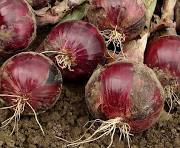
2. Climatic and Soil Requirements for Onion Farming in Kenya:
Climate:
Onions thrive in cool-to-warm climates with moderate rainfall and plenty of sunshine. The ideal temperature range is 13–30°C. Extreme heat causes bolting (premature flowering), while excessive cold slows bulb development. Altitudes of 500–2,000 metres above sea level are suitable, which covers most of Kenya’s highlands and mid-altitude zones from Kajiado and Machakos to Nyandarua, Nakuru, Nyeri, Meru, Bungoma, and parts of Western Kenya.
Rainfall of 500–700 mm per season, well distributed, is adequate. However, because onions have shallow root systems, heavy rainfall close to maturity causes rotting, and waterlogging causes fungal diseases like downy mildew and purple blotch. This is why serious players in onion farming in Kenya prefer irrigated production under dry conditions, giving them full control over water.
Soil:
Onions demand well-drained, fertile soils with a pH of 5.8–6.8 (slightly acidic to neutral). Sandy loams and loamy soils rich in organic matter are perfect. Clay soils should be avoided unless heavily amended, as they retain too much water and deform the bulbs. Before planting, test your soil at Onion Doctor or a certified lab a small cost that separates profitable onion farming in Kenya from guesswork farming.
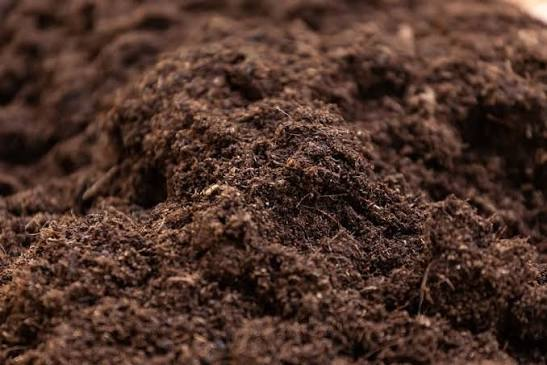
Step-by-Step: Starting Your Onion Farming in Kenya:
Step 1: Land Preparation:
Plough and harrow to a fine tilth. Onions have delicate roots that cannot penetrate compacted soil. Incorporate well-decomposed manure 2–3 weeks before planting. Raised beds or ridges improve drainage, which is critical in wet areas.
Step 2: Nursery Establishment:
Most onion farming in Kenya starts with a nursery bed. The nursery should be about 1/8 of an acre to raise enough seedlings for one acre of field production.
- Mix the nursery soil with compost and DAP
- Sow seeds in shallow drills at 1–2 cm spacing
- Water gently with a fine rose can; mulch lightly with grass
- Seeds germinate in 7–14 days
Step 3: Transplanting:
Transplant seedlings when they are 10–15 cm tall with 3–4 true leaves (usually 6–8 weeks after sowing).
- Space at 30 cm between rows × 15 cm between plants.
- Water the nursery a day before lifting to reduce root damage
- Transplant in the evening or on a cloudy day to reduce transplant shock
- Optional but powerful: dip roots in a fungicide solution before planting
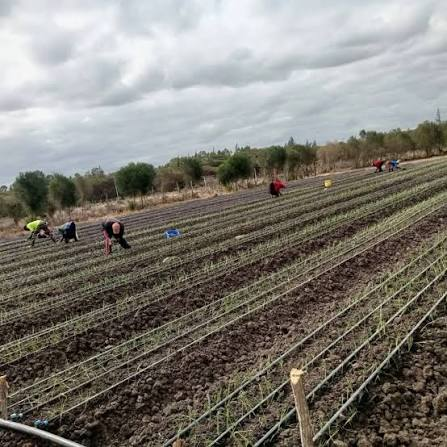
5. Fertilizer and Manure Management in Onion Farming in Kenya:
Onions are heavy feeders. A typical fertilizer programme per acre:
| Stage | Fertilizer | Rate (per acre) |
|---|---|---|
| Land preparation | Well-rotted manure | 5–10 tonnes as per soil test |
| Basal (at transplanting) | DAP or NPK 17:17:17 | 50–75 kg as per soil test |
| Top-dress, 3 weeks | CAN or Urea | 50 kg |
| Top-dress, 6 weeks | CAN | 50 kg |
| Bulbing stage | Potassium-rich foliar | As directed |
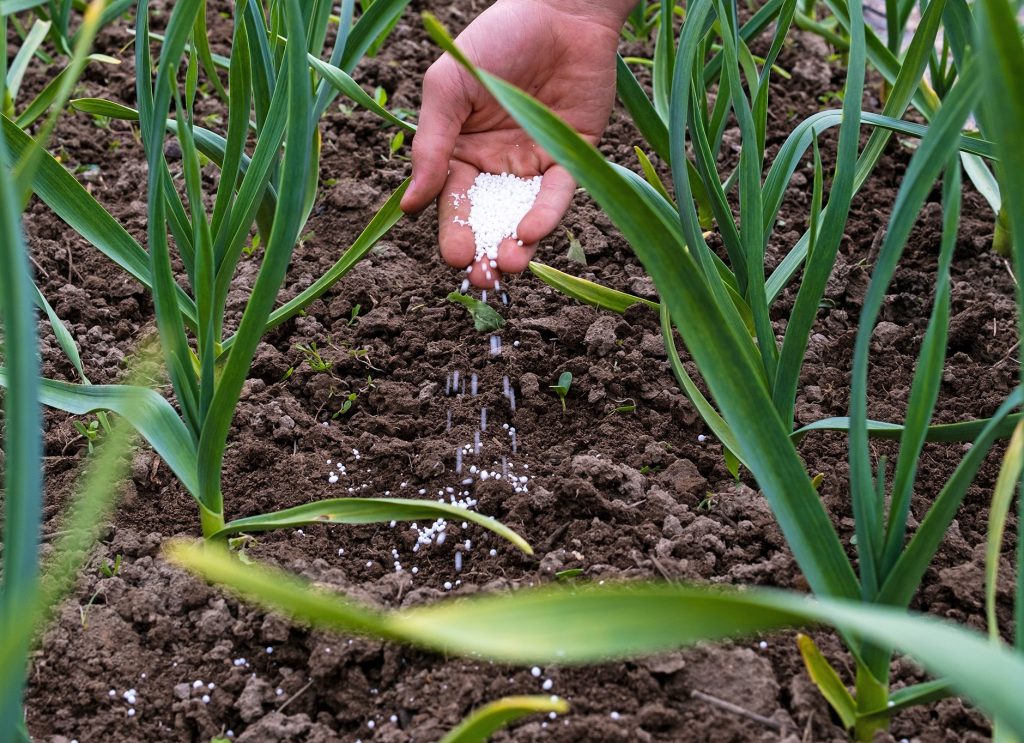
Avoid excess nitrogen late in the season it produces lush foliage but small bulbs and invites pests. Many experts in onion farming in Kenya now combine inorganic fertilizers with foliar feeds rich in calcium, boron, and potassium for firm, large bulbs.
6. Watering, Weeding, and Crop Protection:
Irrigation:
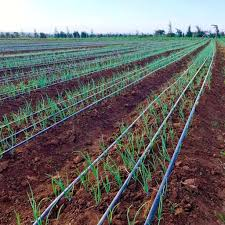
Water onions 2–3 times per week, keeping soil moist but never waterlogged. Drip irrigation is the gold standard it saves water, reduces fungal disease, and delivers fertilizer efficiently. Furrow irrigation is acceptable but riskier. Reduce watering once bulbs start maturing and stop entirely 2–3 weeks before harvest to promote curing.
Weeding:
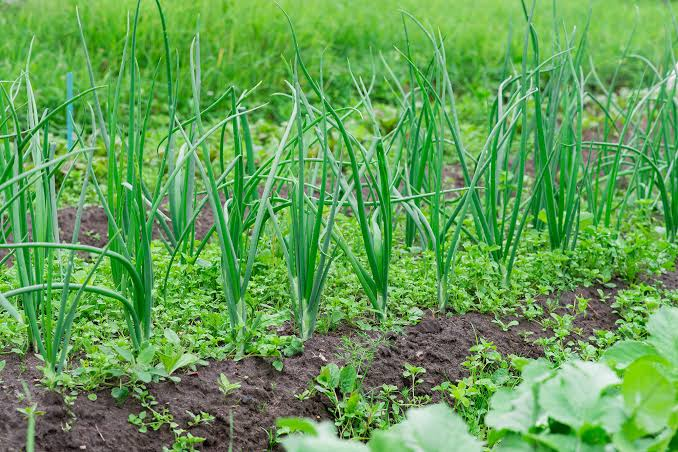
Weed 2–3 times before the canopy closes. Onions are poor competitors against weeds; a weedy field can cut your yield by half. Shallow hand-weeding is best onion roots sit near the surface.
Pests and Diseases:
The biggest threats to onion farming in Kenya:
- Thrips: the number one pest; cause silvering and curling. Control with appropriate insecticides and avoid planting near cereals.
- Onion fly / maggots: attack seedlings; drench soil with an approved insecticide.
- Downy mildew and purple blotch: fungal diseases favored by humidity. Practice crop rotation, spacing, and timely fungicide sprays.
- Bacterial soft rot: mostly a post-harvest/storage issue; harvest only dry bulbs.

Practice a 3–4 year crop rotation; never follow onions with tomatoes, garlic, or shallots.
Harvesting, Curing, and Storage:
Harvest when 50–80% of the tops have fallen over and necks are soft, and bulbs show the characteristic skin color. In Kenya, this is typically 90–120 days after transplanting.
- Lift bulbs gently with a fork; avoid bruising wounds invite rot
- Cure under shade for 10–14 days with tops intact until the outer skins are dry and papery
- Trim roots and tops (leave 2–3 cm of neck), then grade by size
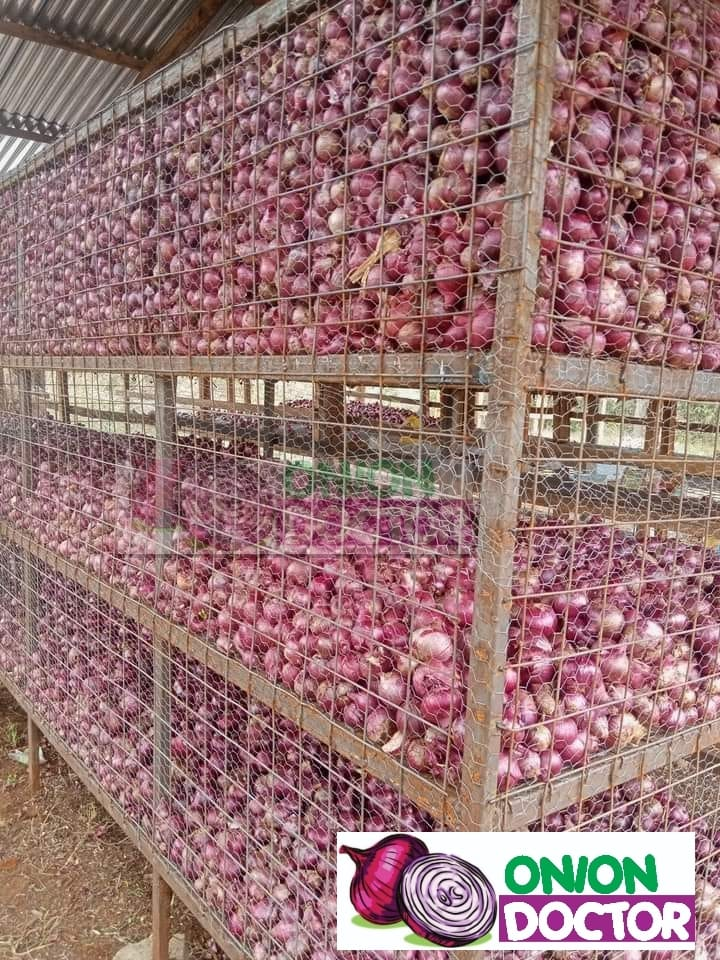
Proper curing is what transforms onion farming in Kenya from a gamble into a business. Cured bulbs stored in a cool, dry, well-ventilated store can last 4–6 months, letting you sell when prices are highest. Store bulbs in slatted crates or woven sacks off the ground never on a concrete floor. Some farmers use storage facilities in Kajiado, Nakuru, and Nairobi’s Marikiti market to hold stock for months.