
Onions are the silent workhorse of Kenyan kitchens. From the sukuma wiki sizzling in a Nairobi flat to the nyama choma marinades of Nakuru, no meal feels complete without them. Yet behind every tear-inducing bulb is a farmer making real money and onion farming in Kenya has quietly become one of the most profitable horticultural ventures in the country. Whether you are a first-time grower in Kirinyaga or a seasoned commercial farmer eyeing the export market, this guide covers everything you need to succeed at onion farming in Kenya in 2026.
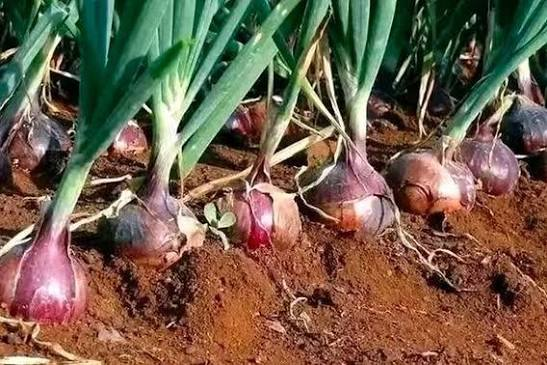
1. Why Onion Farming in Kenya Is a Goldmine Right Now:
Key Drivers of Market Growth:
- Massive Deficit & High Import Reliance: Kenya consumes over 500,000 metric tons of onions annually. Local production currently meets less than 50%–60% of this demand, forcing the country to import heavily from neighboring Tanzania to bridge the deficit. Local farmers directly benefit from this existing market gap.
- Universal Domestic Demand: Red bulb onions are an indispensable staple in Kenyan households, hotels, and food service businesses, ensuring year-round, non-cyclical demand.
- High ROI & Yield Potential: With high-performing hybrid varieties (such as Red Coach F1 and Neptune F1) and efficient drip irrigation, an acre yields between 15 to 25 metric tons (15,000–25,000 kg) per 4–5 month cycle.
- Long Shelf Life & Market Flexibility: Cured hybrid onions can be stored for 2 to 6 months without deteriorating. This allows farmers to hold inventory and sell during off-peak windows when farm-gate prices surge.
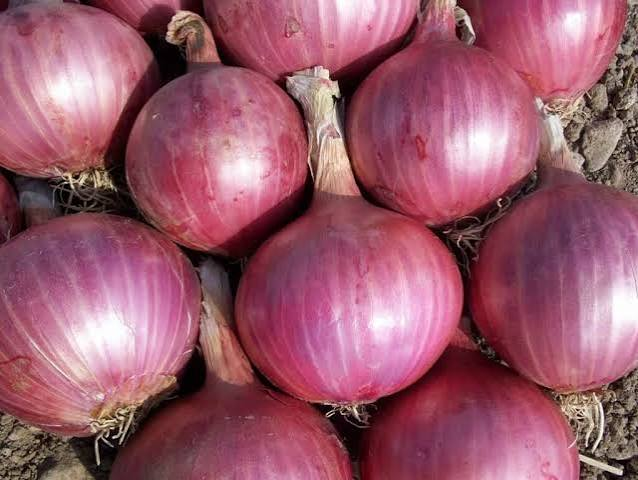
Climate and Soil Requirements:
Onions are sun-lovers with shallow, sensitive roots. Successful onion farming in Kenya demands the right environmental conditions:
- Temperature: 15–25°C is the sweet spot for bulb development. Extreme heat causes bolting (premature flowering), while cold slows growth.
- Rainfall: Onions need 500–700mm of water across the growing cycle, but crucially, they hate waterlogged soil. Most commercial onion farming in Kenya relies on irrigation — furrow, drip, or sprinkler especially in eastern and coastal regions.
- Soil: Well-drained, fertile loam or sandy loam with a pH between 5.8 and 6.8. Heavy clay soils cause bulb rot and malformed shapes. If your soil is acidic, apply agricultural lime three weeks before planting.
- Altitude: Onion farming in Kenya succeeds from sea level up to 2,000 metres The key is matching variety to altitude lowland varieties like Red Creole excel below 1,500m, while highland areas favour longer-day varieties.
Land Preparation:
Good land prep underpins all successful onion farming in Kenya. Plough and harrow the land to a fine tilth at least two weeks before planting. Incorporate well-rotted manure (about 10 tonnes per acre) during the final harrowing. For onion farming in Kenya at commercial scale, raised beds of 1–1.5 metres wide with furrows between them are standard practice they improve drainage and make irrigation and weeding far easier.
4. Step-by-Step Planting Guide:
Nursery Establishment:
Most onion farming in Kenya begins in a nursery. Onion seed is tiny 200 grams can produce enough seedlings for an acre and needs careful handling:
- Prepare a fine, level seedbed (1m × 5m per 200g of seed) and mix in well-decomposed manure.
- Sow seeds shallowly (0.5–1cm deep) in rows 10–15cm apart.
- Water gently twice daily; use a fine rose watering can or mist irrigation.
- Germination takes 7–14 days. Thin overcrowded seedlings at two weeks.
- Apply a light foliar feed every 10 days
- Transplant after 4–6 weeks, when seedlings are pencil-thick with 3–4 true leaves.
Transplanting:
Transplant in the late afternoon or on a cloudy day to minimise shock:
- Spacing: 30cm between rows, 8–10cm within rows.
- Plant depth: Just deep enough to cover the roots deep planting suppresses bulb expansion.
- Water immediately after transplanting, and keep the soil moist for the first two weeks.

Fertiliser Programme:
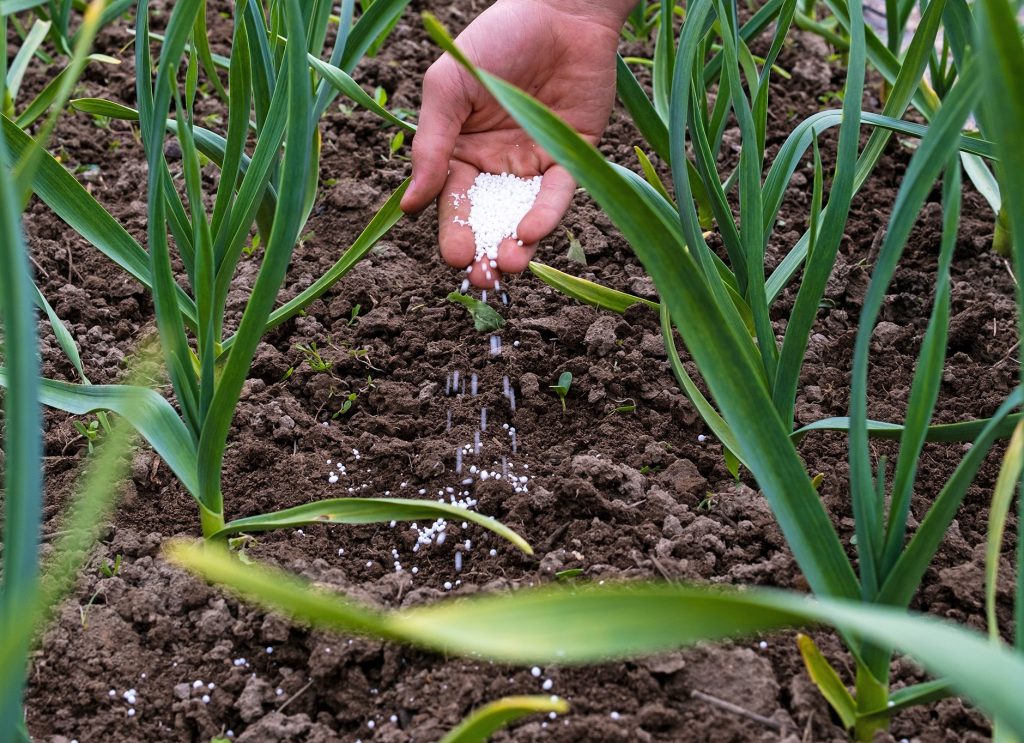
- Basal: DAP at 50kg per acre at transplanting.
- Top-dress: CAN at 50kg per acre, 3 and 6 weeks after transplanting. Switch to Sulphate of Potash 4–6 weeks before maturity to firm up bulbs and improve storage quality.
- Soil testing is strongly recommended :it’s cheap, and precision fertilisation is one of the biggest profit levers in onion farming in Kenya today.
Water Management and Irrigation:
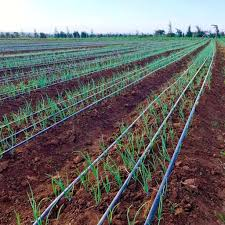
Onions need consistent moisture, especially during bulb formation. The rule of thumb in onion farming in Kenya: roughly 25mm of water per week, applied more frequently during dry spells and reduced as the bulbs approach maturity.Drip irrigation is the gold standard for commercial onion farming in Kenya it cuts water use by 40%, keeps foliage dry (reducing fungal disease), and allows fertigation. However, furrow irrigation remains common for smallholders. Whatever your method, never let the crop wilt during bulb development; water stress at this stage causes tiny, worthless bulbs.
Mulching (dry grass or straw) is a low-cost trick that preserves soil moisture and suppresses weeds increasingly popular in conservation-minded onion farming in Kenya circles.

Pests and Diseases: The Real Enemies of Onion Farming in Kenya:
Effective crop protection planning is central to profitable onion farming in Kenya.Even with perfect conditions, pests and diseases can wipe out an entire crop. Here’s what to watch for:
| Pest | Damage | Control |
|---|---|---|
| Onion thrips | Silvery leaves, stunted bulbs | Spray insecticidal soap or imidacloprid; blue sticky traps |
| Cutworms | Seedlings cut at base | Drench soil with cypermethrin at transplanting |
| Onion flies | Maggots tunnel into bulbs | Rotate crops; drench with appropriate insecticide |
| Red spider mites | Yellow speckling, webbing | Keep foliage dry; spray miticide if severe |
Diseases:
- Downy mildew: Purple-grey fuzz on leaves. Improve airflow, avoid overhead watering, apply copper-based fungicide.
- Purple blotch: Brown lesions with purple edges. Mancozeb or chlorothalonil sprays work well.
- Onion white rot: White fungal growth at the bulb base soil-borne and devastating. Strict crop rotation (4+ years away from alliums) is the only real defence.
- Bacterial soft rot: Mushy bulbs post-harvest. Cure bulbs properly and avoid injuring them during harvest.
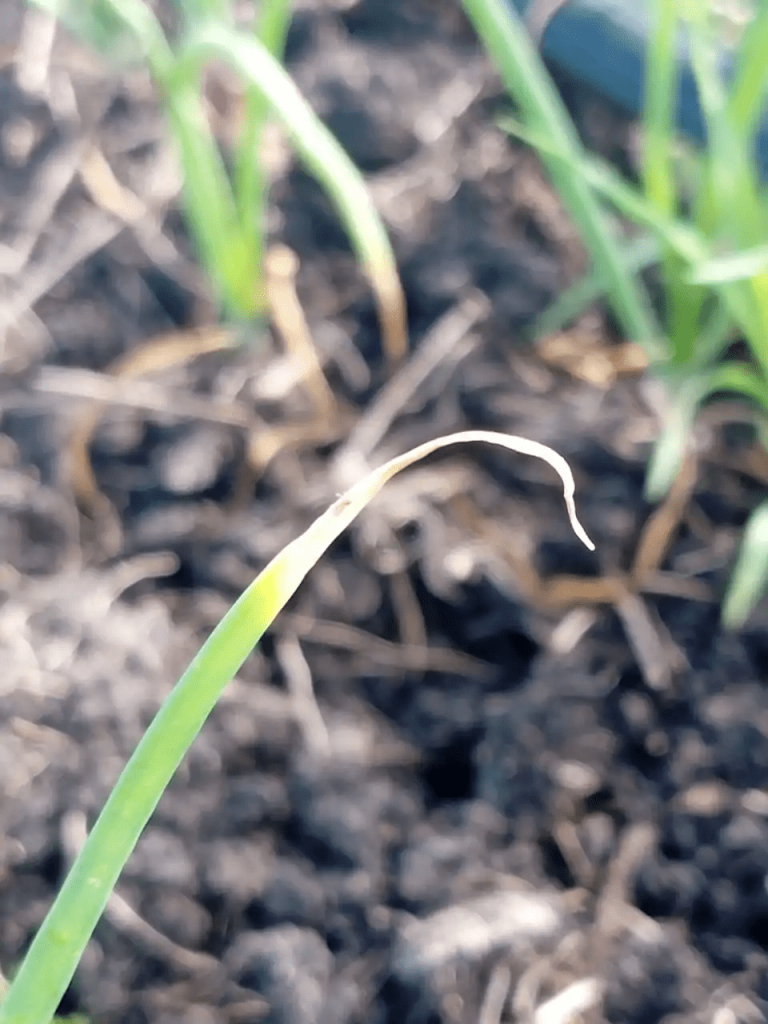
Integrated Pest Management (IPM) combining resistant varieties, crop rotation, biological controls, and judicious chemical use is now the recommended standard for onion farming in Kenya, and it’s a requirement for anyone eyeing export certification.
Harvesting, Curing, and Storage:
Timing the harvest is an art. Your onions are ready when:
- The tops naturally fall over and start yellowing (70–80% of the crop).
- Bulbs have a papery outer skin and the necks feel soft.
- You’ve stopped irrigation 2 weeks prior.
Pull the bulbs by hand or loosen with a fork, then leave them in the field for 2–3 days to dry if weather permits a practice called curing. Properly cured onions store dramatically longer.
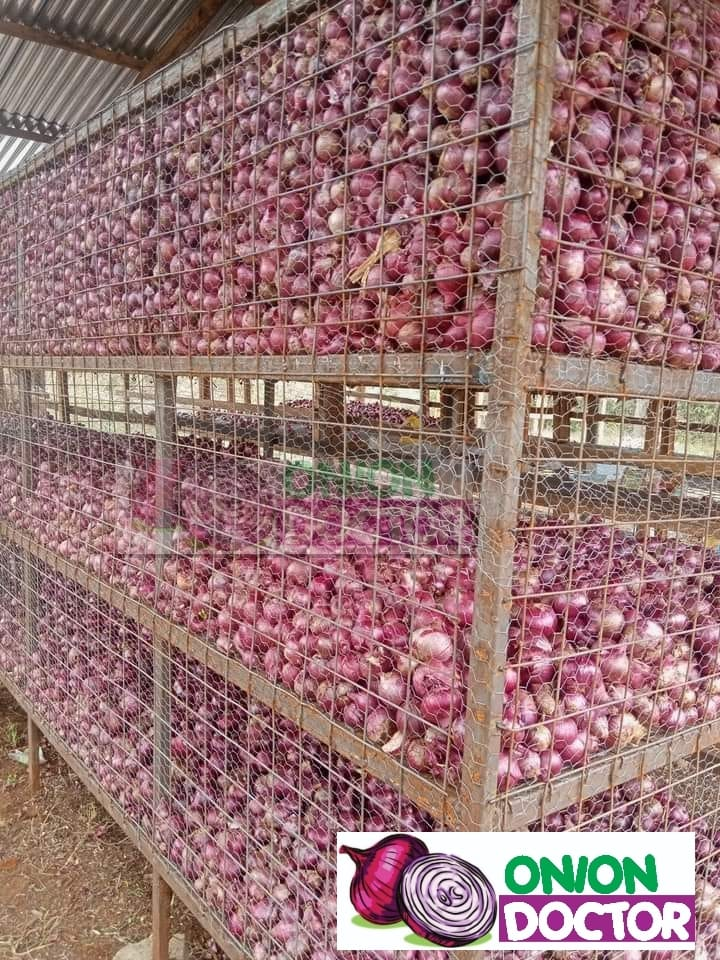
For serious onion farming in Kenya, dedicated curing and storage is a game-changer. Options range from simple shaded, ventilated structures with raised wooden racks to modern cold rooms. Well-cured Neptune can store 4–6 months, allowing you to sell when prices peak. Never store damaged.
Are you in need of in-depth knowledge on onion and garlic production? If yes, we are a call away. Contact us for: Onion seedlings, Garlic seedlings, Germinated garlic cloves, Farm planning services, Soil testing, training on onion and garlic growing, Drip irrigation installation and maintenance, Agronomic support, Onion and Garlic value pack and Farm management. For free consultation, placing orders or booking a visit with an agronomist, please contact us via Call or what’s app +254703982228, Email: info@oniondoctor.co.ke You can also check out our social media handles for daily updates on TikTok: https://www.tiktok.com/@oniondoctorke0706252490?_r=1&_t=ZS-96UPUyx6ESL Instagram:https://www.instagram.com/oniondoctorke?igsh=MW5sZzJ6c3BnZ3Z0dw==Facebook:https://www.facebook.com/share/1HouRgLCwS/Twitter:https://x.com/OnionDoctorKe?s=20