
Here is the truth most farmers learn the hard way: transplanting is not the finish line, its the starting gun. Those fragile seedlings you just moved from the nursery? They are in shock. Their roots are damaged. They are vulnerable to heat, pests and competition from weeds. But get the next three weeks right and you will set the bar for bulbs so impressive buyers will fight over them. At Onion Doctor, we have walked thousands of farmers through this critical window. From the red soils of Machakos to the highlands of Nyandarua, the principles are the same: water smart, weed early, feed right , scout often. Lets break down exactly how to do it.
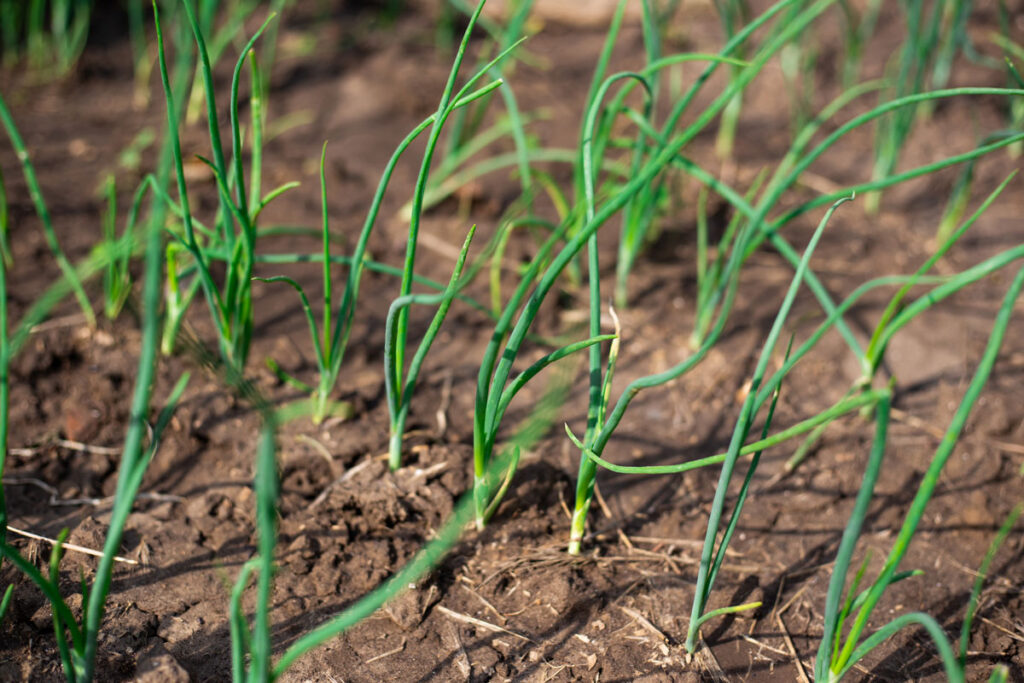
MANAGEMENT PRACTICES AFTER TRANSPLANTING
WATERING:
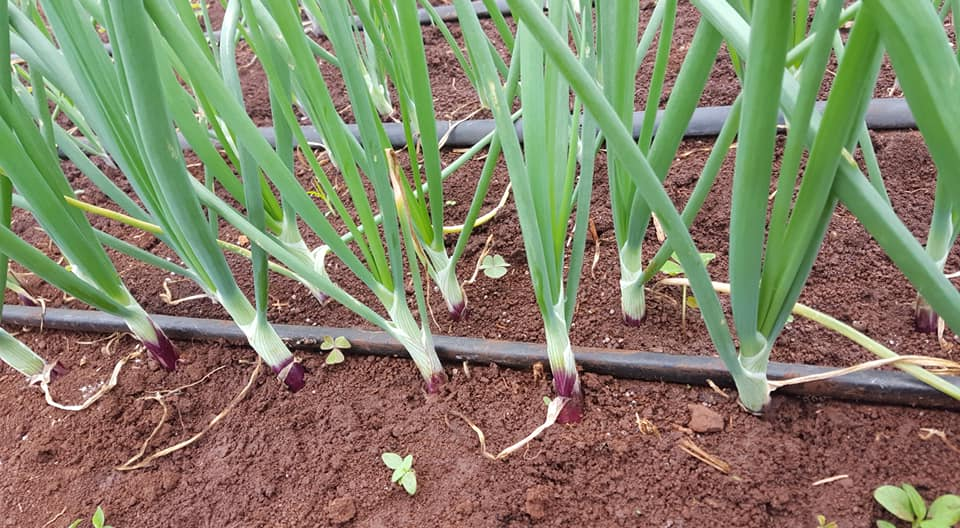
Watering is very crucial when it comes to onion farming. Onions are thirsty but they are also picky. Onions need 350-550mm of water over the entire growing season for optimum yield. The golden rules of Onion irrigation:
- Water very early in the morning( 5:00-7:00am) to prevent evaporation.
- Water late evening( after 5 pm)
- Use drip irrigation from Onion Doctor for precision delivery.
WEEDING
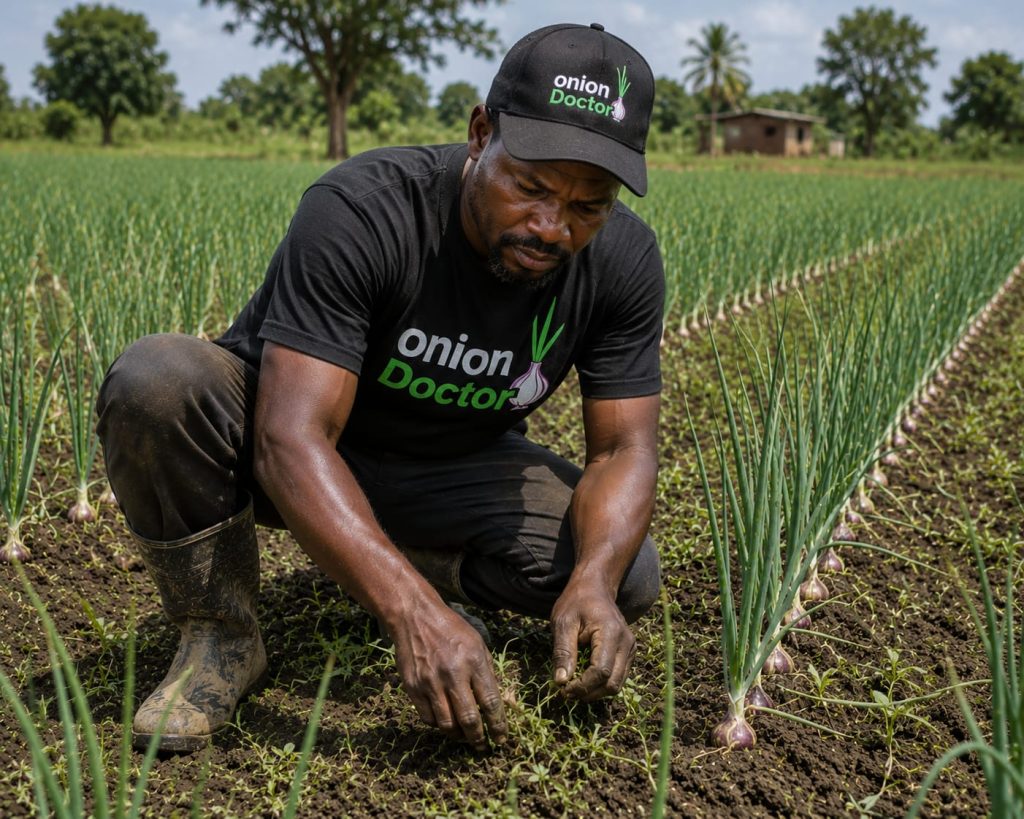
Weeds are the silent thieves of onion farming. They don’t just compete for nutrients they surpass onions especially in the first three weeks when your seedlings are still establishing. Why weeds explode after transplanting:
- Fertile soil from goat manure application during land preparation is a feast for weeds.
- Regular watering creates the perfect germination conditions for weeds.
- Onion seedlings take time to germinate at first giving weeds a head start.
The correct two phase Weeding strategy
Phase 1: Chemical control(Day 0-14):
Apply selective herbicides within 2 days after transplanting or an early post- transplant herbicide within 2-14 days after transplanting. This knocks down broadleaf weeds and annual grasses without harming your onion crop when it is still young.
Phase 2: Manual weeding( Week 2-3 onwards):
Carry out the first manual weeding 2-3 weeks after transplanting, then repeat every 3-4 weeks until full leaf canopy develops. Use shallow hand hoeing to avoid damaging onion roots which sit close to the surface. Mulching also suppresses weeds and conserves moisture.
FERTILIZER APPLICATION : THE FEEDING PROGRAM
Onions are heavy feeders but they need nutrients in the right order and at the right time. Dump everything at once and you will waste money through leaching and you will leave your onions high and dry.
| Nutrient | Function |
| Nitrogen | Leaf development, |
| Phosphorus | Root development. |
| Potassium | Promotes bulb firmness and color |
| Calcium | Encourages shelf life |
Pro Tip: Incorporate micronutrients like zinc, boron and Calcium early they are often overlooked, but they are the difference between soft, rotting bulbs and firm, market-grade produce that store well and fetches premium prices.
FIELD SCOUTING:
The best farmers are not the ones with the most chemicals they are the ones who sees problems before they require professional intervention. Onion thrips, cutworms and fungal diseases can destroy a crop in days if missed. What to check for when scouting:
- Check plant stand for uniform emergence, gaps, and stunted growth across the field.
- Inspect leaves for yellowing, spots, wilting, or streaks that indicate diseases or nutrient deficiencies.
- Monitor pests like Thrips and Onion Maggot by examining leaves and bulb bases.
- Pull sample plants to assess bulb size, firmness, shape, and root health.
- Observe soil moisture, drainage, irrigation uniformity, and weed pressure since onions have shallow roots.
- Scout regularly using a zigzag pattern, recording problem areas early to protect yield and bulb quality.
The Onion Doctor scouting routine:
- Walk your field twice a week minimum.
- Check random samples from different zones (problems often start in wet or dry pockets)
- Document everything photos, dates, symptoms.
- Act within 48 hours of spotting an issue.
- Consult an agronomist when in doubt, Onion Doctor is always a call away.
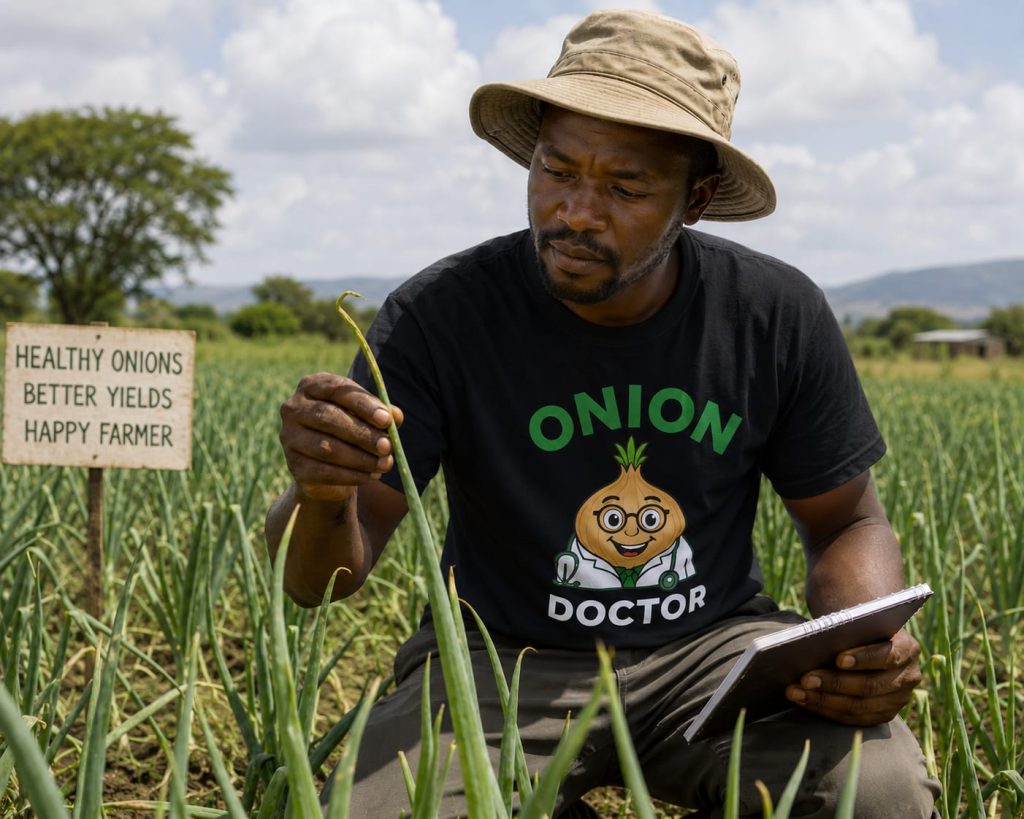
Here is what happens when you get post-transplant management right:
- Bigger bulbs with uniform size and shape
- Firmer texture that stores longer and transports better
- Higher market prices because buyers pay premium for quality
- Lower input costs because prevention beats expensive curative treatments
- Sustainable farming that protects your soil for the next season
The reward of proper post-transplant onion care: a bountiful harvest of firm, market-ready bulbs that command top prices in Kenyan.
Contact us for: Onion seedlings, Garlic seedlings, Germinated garlic cloves, Farm planning services, Soil testing, training on onion and garlic growing, Drip irrigation installation and maintenance, Agronomic support, Onion and Garlic value pack and Farm management. For free consultation, placing orders or booking a visit with an agronomist, please contact us via Call or what’s app +254703982228, Email: Info@oniondoctor.co.ke. You can also check out our social media handles for daily updates on TikTok: https://www.tiktok.com/@oniondoctorke?_t=ZM-8wmsTu0qumO&_r=1 Instagram: https://www.instagram.com/oniondoctorke?igsh=MTVoaHF3aWUydTJzaQ==Facebook:https://www.facebook.com/share/16SwgYn2dG/ Youtube:https://youtube.com/@oniondoctorke?si=u5Jnd-r0qU9UDYqL and Twitter: https://x.com/OnionDoctorKe?t=FR3JXlS_oN1vjjUgAtfyzg&s=09.