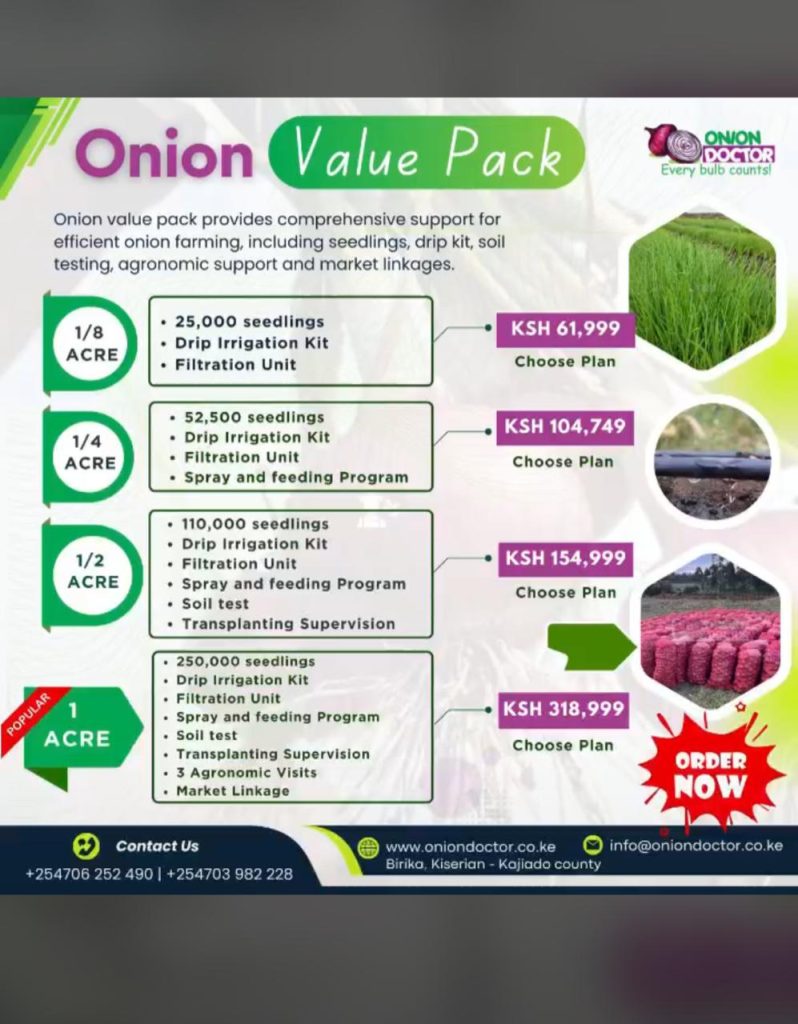
Welcome to Onion Doctor’s corner, where we dig deep into the secrets of growing healthy, high-yield onions in Kenya. Whether you’re a first-time farmer or a seasoned grower, mastering the art of proper planting and spacing is the foundation of a thriving onion crop. In this guide, we’ll walk you through the best practices tailored to Kenya’s climate and soils—ensuring your onions get the right start, grow uniformly, and reward you with bigger bulbs and better market prices. Let’s plant smart, space right, and watch your onion farm flourish!
Are you in need of in-depth knowledge on onion and garlic production? If yes, we are a call away. Contact us for: Onion seedlings, Garlic seedlings, Germinated garlic cloves, Farm planning services, Soil testing, training on onion and garlic growing, Drip irrigation installation and maintenance, Agronomic support, Onion and Garlic value pack and Farm management. For free consultation, placing orders or booking a visit with an agronomist, please contact us via Call or what’s app +254703982228, Email: Info@oniondoctor.co.ke. You can also check out our social media handles for daily updates on TikTok: https://www.tiktok.com/@oniondoctorke?_t=ZM-8wmsTu0qumO&_r=1 Instagram: https://www.instagram.com/oniondoctorke?igsh=MTVoaHF3aWUydTJzaQ==Facebook:https://www.facebook.com/share/16SwgYn2dG/ Youtube:https://youtube.com/@oniondoctorke?si=u5Jnd-r0qU9UDYqL and Twitter: https://x.com/OnionDoctorKe?t=FR3JXlS_oN1vjjUgAtfyzg&s=09.
When to Plant Onions
- Plant onion sets (dormant bulbs) that can be planted directly into the ground in early rainy season, as soon as the land have been prepared and the rains has started or depending on the irrigation system that has been used.
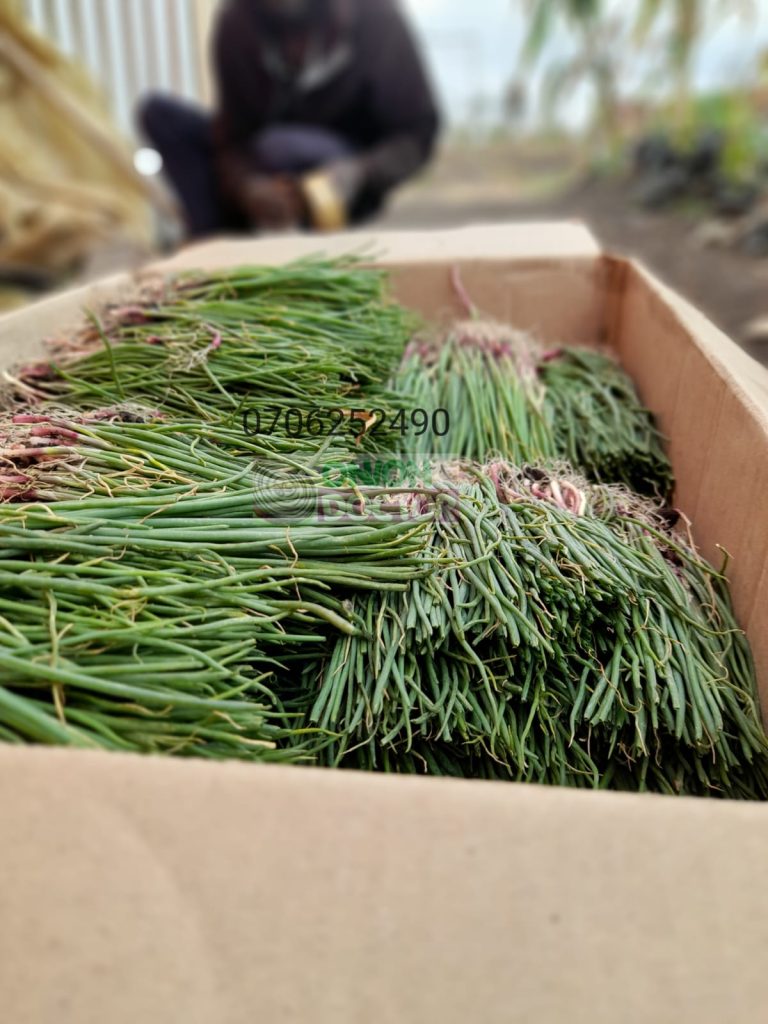
- Start onion seeds – When starting your own nursery propagation of onion seedlings, good management practices should be done, from nursery bed setup, racking, sowing and irrigation in order to produce high quality seedling at the end of 45 days ready for transplanting.
- Transplant seedlings– Onion seedlings are transplanted at the end of 45 days in the nursery, they are transplanted at a spacing of 7 cm to 10cm depending on the bulb size needed by the farmer. Management practices should be done like irrigation is very crucial at early weeks after transplanting.
- A fall-planted crop of onions needs at least 4 to 6 weeks of warm temperatures to become established in the ground. They will remain dormant during the cool season; as the temperatures and soil warm again in early spring, the onions return to life.
How to Plant Onions Indoors
Whether you’re planting seeds or sets, get a shallow tray and fill it with compost to the top. Trays with a small section for each bulb are ideal.
- Plant seeds 1/4 to 1/2 inch deep, or plant the onion bulbs so that the pointy end is just peeking over the top of the soil.
- Lightly water the tray and let it drain through.
- Set onions in a warm place, such as a well-lit windowsill.
- Thin to 3 to 4 inches.
How to Plant Onions Outdoors
Onion plants are heavy feeders and require constant nourishment to produce big bulbs. At planting time, add nitrogen fertilizer. Many organic gardeners will add an inch of compost to the bottom of each row before planting or dig a trench in the soil about 2 inches deep and 3 inches wide, and then fill the trench back in with about an inch of compost.
- If planting onion sets outdoors, bury them 2 to 6 inches apart, gently pressing them 1 to 2 inches deep into loose soil. (Use the closer spacing if you want to pull immature onions as scallions.) Don’t bury them more than 2 inches under the soil. Onions mustn’t be planted too deep, as this can affect bulb development.
- If you are direct seeding outdoors, sow seeds 1/4 to 1/2 inch deep once the soil is workable.
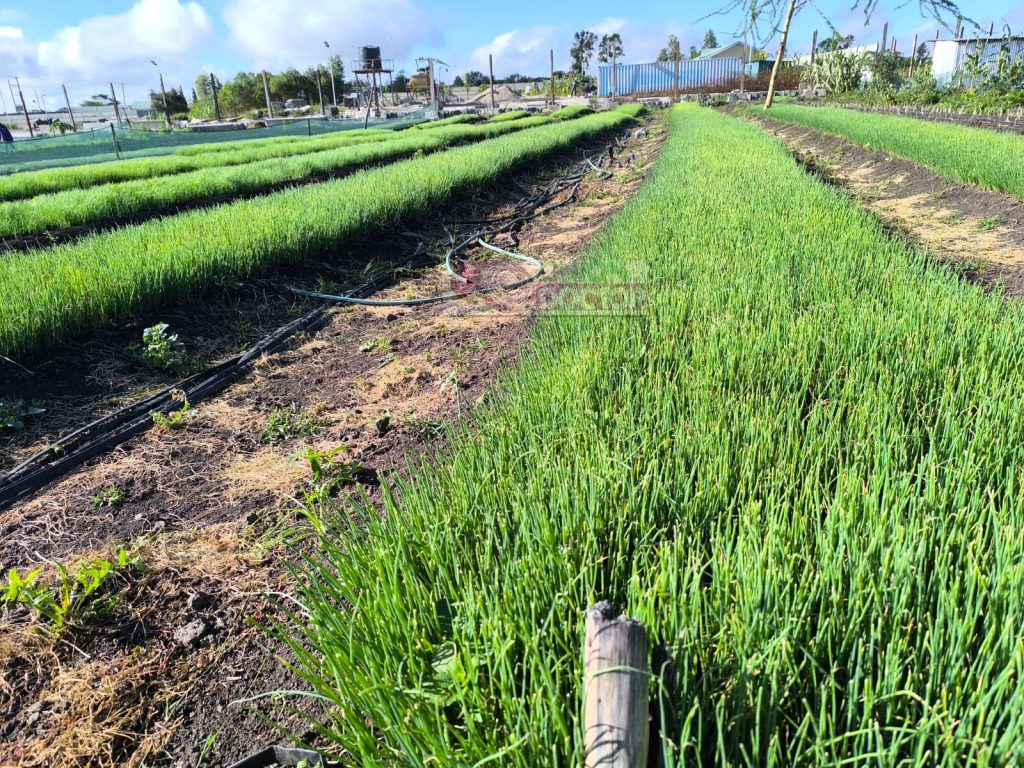
- Once onions begin to grow, thin them to 3 to 4 inches apart. Plants thinned from the row to create room can be used as green onions. Space the seedlings in rows 12 to 18 inches apart.
- If you are transplanting from indoors, don’t forget to hardening off the young plants for at least a week.
Spacing Of Onion Seedlings During Planting
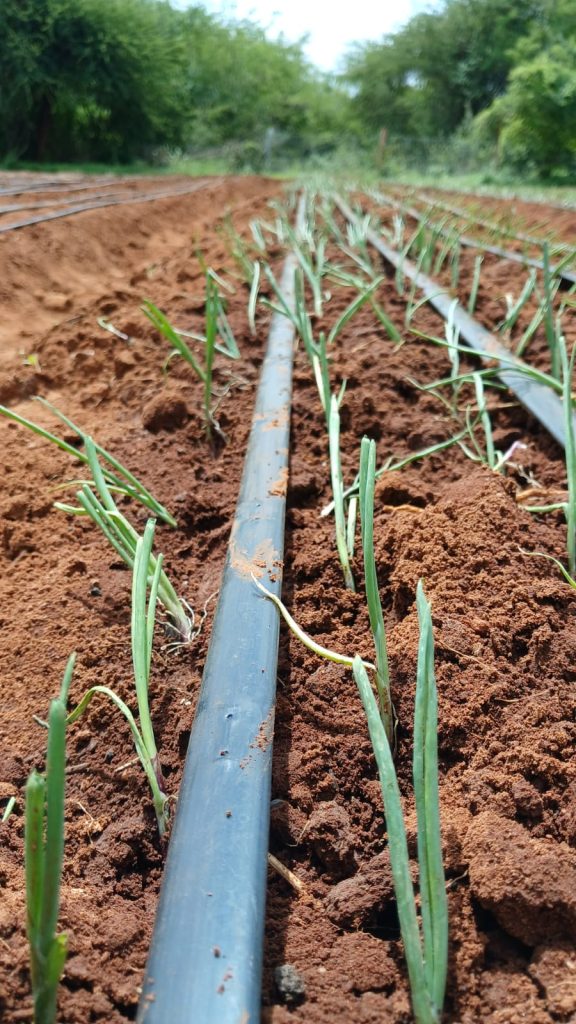
In onion farming, proper spacing is more than just a planting guideline—it’s the secret to healthier crops, bigger bulbs, and higher profits. In Kenya’s diverse climatic zones, maintaining an ideal distance of 15–20 cm between plants and 30 cm between rows allows each onion enough room to access sunlight, nutrients, and water without competing with its neighbors.
This spacing also improves air circulation, which helps reduce the risk of fungal diseases and pest infestations, especially during the humid months. Farmers who overcrowd their onions often end up with smaller bulbs and lower yields, while those who space correctly enjoy uniform growth and easier weeding, irrigation, and harvesting. Whether you’re planting during the long rains of March–May or the short rains of October–December, consistent spacing ensures your onions develop strong root systems and mature evenly, giving you a market-ready harvest that stands out for its size, quality, and shelf life. In short, spacing isn’t just about where you plant—it’s about setting your onions up for success from day one.
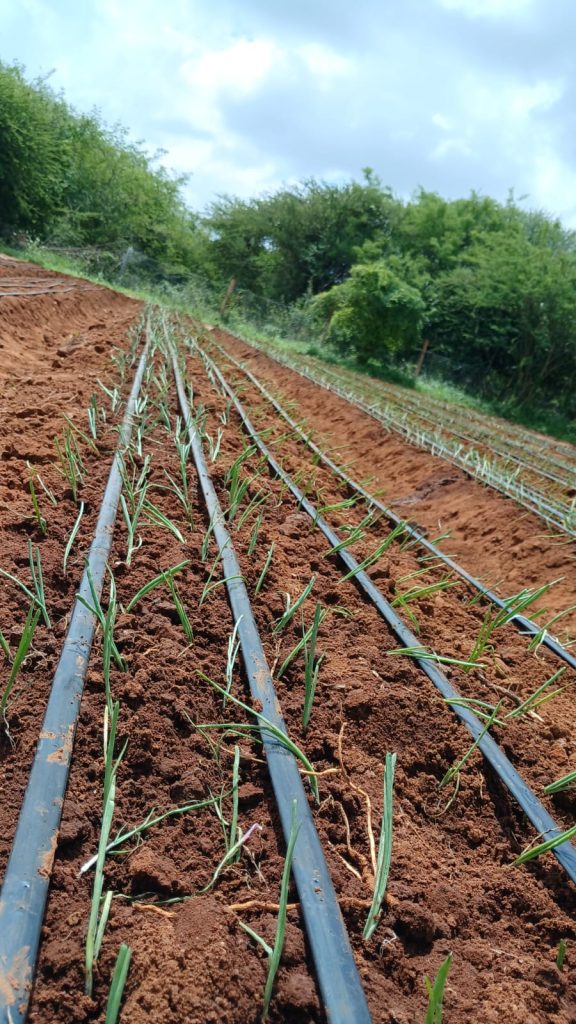
In the end, the secret to a thriving onion farm in Kenya lies not only in selecting the right seed variety but also in mastering the art of spacing a detail that often separates average harvests from exceptional ones. Proper spacing is more than just a guideline; it is a deliberate strategy that ensures each onion plant has the freedom to develop strong roots, lush green leaves, and bulbs that reach their full size and flavor potential.
When onions are planted too closely, they compete fiercely for water, nutrients, and sunlight, leading to stunted growth and reduced yields. But when given the right distance, they grow uniformly, resist pests and diseases more effectively, and produce bulbs that are easier to harvest and store. This careful arrangement also improves airflow between plants, reducing the risk of fungal infections, while making weeding and pest control more manageable.
Whether you are tending a small backyard plot or managing a large-scale commercial farm, remember that every centimeter of space you allocate is an investment in healthier plants, higher yields, and better market prices. In onion farming, spacing is not just a step in the process, it is the heartbeat of a successful harvest, turning your hard work into a crop that truly pays off season after season.