Growing onions is a journey filled with promise, but like any adventure, it comes with challenges. One of the most common hurdles farmers face is fungal disease—a quiet but persistent threat that can weaken plants and reduce harvests. The good news is that with awareness, care, and the right practices, these diseases can be managed effectively. This blog is here to walk alongside you, offering friendly guidance and practical tips to help your onions stay healthy, your fields flourish, and your farming journey remain rewarding
Onion farmers, welcome to another episode from onion doctor. If you are an onion farmer or you are new in onion farming, as onion doctor we are here help farmers to increase their production in onion fields by providing agronomical support, quality onion seedlings, onion value pack and agronomic package, germinated garlic cloves, soil testing, land planning, drip irrigation kit and installation and market linkages to onion farmers. We’re located in Birika, town along Kiserian-Isinya road in Kajiado County.
What is fungal disease?
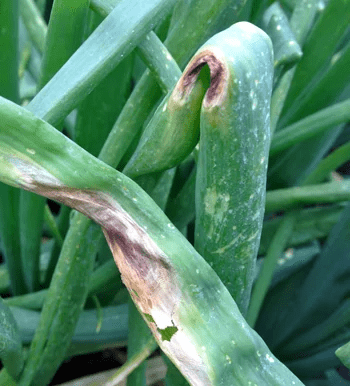
Onion cultivation faces significant challenges from fungal diseases that can devastate entire crops within days if left uncontrolled.
Among the most destructive are downy mildew and white rot, two pathogens that have plagued onion growers worldwide for decades.
Understanding these diseases and implementing effective prevention strategies is crucial for maintaining healthy onion crops and ensuring profitable harvests.
Understanding Onion Fungal Diseases
Fungal diseases represent one of the most serious threats to onion production globally.
These microscopic organisms thrive in specific environmental conditions and can spread rapidly through fields, causing substantial economic losses.
The key to successful onion cultivation lies in recognizing early symptoms, implementing preventive measures, and maintaining optimal growing conditions that discourage fungal development.
Downy Mildew
What Causes Downy Mildew in Onions
The disease can spread quickly once it infects a plant, producing additional spores within 4 to 10 days after infection . What plants does downy mildew affect? The disease affects a variety of economically important crops, including cucurbits, brassicas, grapes, spinach, basil, and hops, potentially leading to substantial yield losses if left unchecked.
Downey mildew vs. powdery mildew
The difference between downy mildew and powdery mildew is that the former prefers high humidity and wet conditions, while the latter prefers drier conditions. The characteristic white, flour-like spots on the upper leaf surfaces also make powdery mildew easily distinguishable.
Moderate temperatures combined with high moisture — particularly during spring and early summer — provide the perfect conditions for downy mildew pathogens to multiply and penetrate plant tissues. Farmers will recognize the disease by distinct yellow-mottled leaf patterns and white fungal-like growth on leaf undersides, which can quickly compromise crop health and productivity
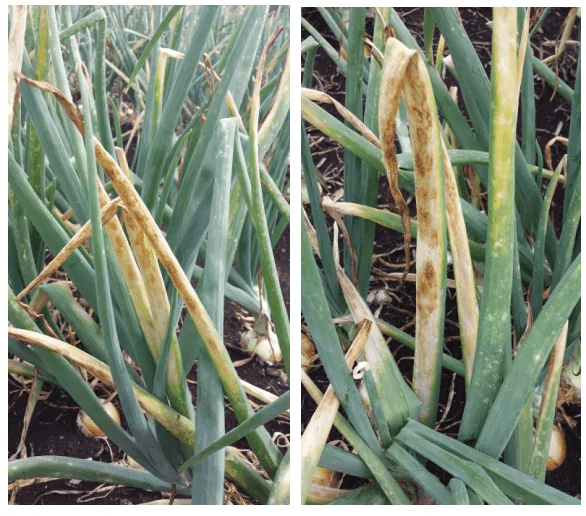
Downey mildew on onion crop
White Rot
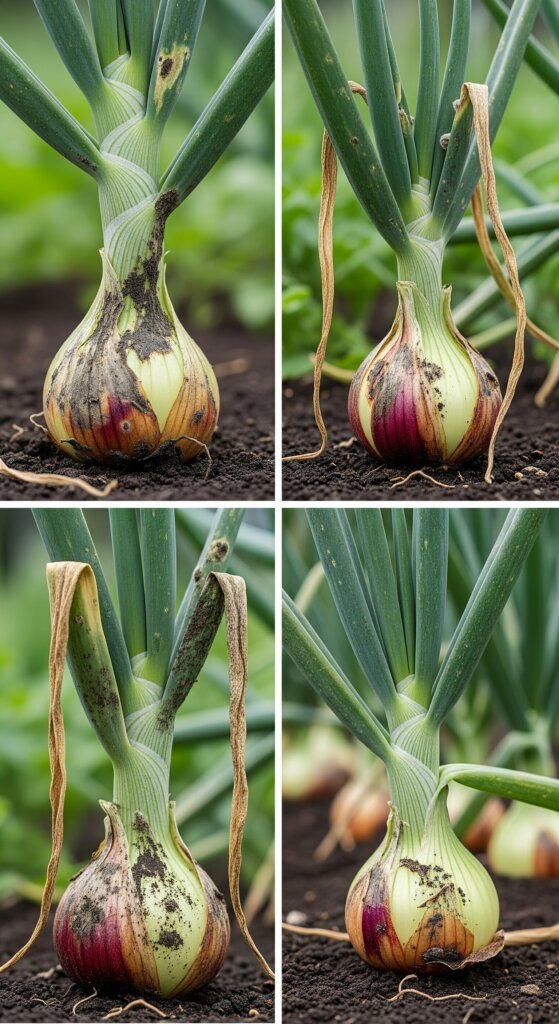
White rot, caused by the fungus Sclerotium cepivorum (Stromatinia cepivora), affects Allium species like onions, leeks, and garlic. Infected plants show yellowing, leaf dieback, and wilting from the base, while bulbs decay with a semi-watery rot. Roots rot, leading to easy uprooting. Infected plant material may display small fluffy white mycelium and pinhead-sized black sclerotia. The disease thrives in cool, moist soil condition and poses a significant threat to crop health and yield.
Comprehensive Prevention Strategies
Cultural control methods
Want to beat downy mildew and white rot without going full Breaking Bad on your onions? It all starts with how you grow.
To prevent white rot disease in onions, cultural methods include:
Using overhead irrigation: This can introduce water into the soil, creating conducive conditionfor bacterial growth.
Reducing(N)fertilizer application rates: High rates can increase bacterial disease pressure.
Adjusting irrigation application rates: Reducing total irrigation can help maintain desired yield.
Timing of lifting bulbs: Undercutting to sever roots and speeding field curing can reduce the risk of bacterial bulb rots.
Integrated pest management (IPM)
Integrated Pest Management (IPM) offers a well-rounded approach to controlling onion white rot by combining multiple strategies:
Monitoring and early detection
Regularly checking fields for early signs of white rot is crucial.
This proactive approach allows farmers to act quickly, reducing the chances of the disease spreading.
Combining cultural, chemical, and biological controls
By using a mix of different practices—such as crop rotation, soil solarization, biofungicides, and careful application of fungicides—farmers can create a strong defense against onion white rot.
This integrated strategy maximizes effectiveness while minimizing reliance on any single method.
Field mapping and planning
Keeping detailed records of areas affected by white rot helps farmers plan better for the future.
By mapping out infected zones and organizing crop rotations accordingly, they can reduce the impact of the disease over time.
Chemical control
Using chemicals can be an effective way to manage onion white rot, but it’s important to use them carefully.
Here are some options:
Fungicides
Fungicides with active ingredients like tebuconazole and fludioxonil have proven to be effective against onion white rot.
These chemicals can be applied to the soil before planting or as seed treatments to help protect young plants from infection.
Sulfur treatments
Sulfur-based products can also help reduce fungal activity when applied to the soil.
However, it’s crucial to follow the recommended application guidelines to ensure effectiveness.
Additionally, rotating different chemicals is important to prevent the fungus from developing resistance.
With fungal diseases threatening onion yields, farmers need more than just traditional remedies—they need a trusted partner. That’s where Onion Doctor steps in: a smart, reliable solution designed to protect your crop, boost productivity, and secure your harvest. By combining modern science with farmer-friendly application, Onion Doctor empowers growers to fight back against disease and achieve healthier, more profitable fields. Don’t let fungal challenges hold your farm hostage—choose Onion Doctor today and give your onions the protection they deserve.
Are you in need of in-depth knowledge on onion and garlic production? If yes, we are a call away. Contact us for: Onion seedlings, Garlic seedlings, Germinated garlic cloves, Farm planning services, Soil testing, training on onion and garlic growing, Drip irrigation installation and maintenance, Agronomic support, Onion and Garlic value pack and Farm management. For free consultation, placing orders or booking a visit with an agronomist, please contact us via Call or what’s app +254703982228, Email: Info@oniondoctor.co.ke. You can also check out our social media handles for daily updates on TikTok: https://www.tiktok.com/@oniondoctorke?_t=ZM-8wmsTu0qumO&_r=1 Instagram: https://www.instagram.com/oniondoctorke?igsh=MTVoaHF3aWUydTJzaQ==Facebook:https://www.facebook.com/share/16SwgYn2dG/ Youtube:https://youtube.com/@oniondoctorke?si=u5Jnd-r0qU9UDYqL and Twitter: https://x.com/OnionDoctorKe?t=FR3JXlS_oN1vjjUgAtfyzg&s=09.