
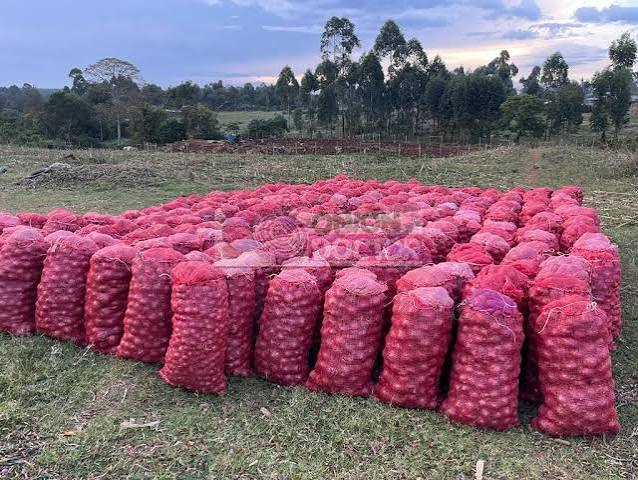
If there is one truth seasoned growers will tell you, it is this: onion farming in Kenya lives or dies in the soil. Bulb onions are among the most fertilizer-responsive crops in Kenyan horticulture, yet they are also among the most unforgiving. Skimp on a single nutrient application, and you get small bulbs. Overdo the nitrogen, and you get lush green tops with tiny, poorly storing bulbs. Misdiagnose a thrips infestation by two weeks, and you can lose 40% of your crop before you even see the damage. This guide is the most comprehensive resource on fertilizers and agrochemicals for onion farming in Kenya you will find anywhere. Whether you are a smallholder, a commercial grower, or an exporter targeting the regional market , this guide covers soil testing, fertilization schedules, organic options, pest and disease control, and the exact agrochemical products registered for use. Every recommendation here is calibrated to Kenyan soils, Kenyan climates, and Kenyan market realities.
1. Understanding Kenyan Onion Soils:
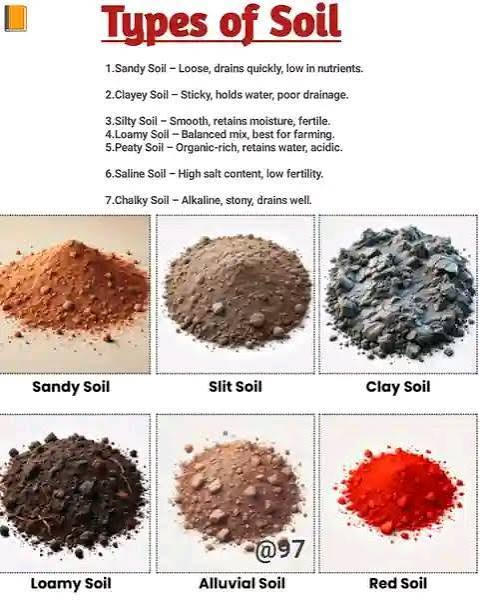
Before you apply a single gram of fertilizer, understand what you are working with. Most of the land used for onion farming in Kenya particularly in the Rift Valley, Eastern, and Central regions falls into two broad categories: acidic volcanic soils and semi-arid alluvial or sandy loams.
- Volcanic soils are rich in organic matter but tend to be acidic (pH 4.5–5.5). Onions prefer pH 6.0–6.8. Below pH 5.5, phosphorus becomes locked up and molybdenum deficiency appears.
- Semi-arid sandy loams drain well (good for bulbs) but leach nitrogen and potassium rapidly. These soils are the backbone of large-scale onion farming in Kenya in Kajiado and Loitoktok, and they demand split fertilizer applications.
Onions are shallow-rooted (most roots sit in the top 30 cm), so nutrients must be placed where the roots can reach them, not buried deep.
Skipping soil testing is the single most expensive mistake in onion farming in Kenya. It leads to blind fertilizer use, wasted money, and fertilizer-driven pollution of waterways.
Basal Fertilizers: Building the Foundation:
The basal (planting) application sets the stage for the entire season. For onion farming in Kenya, the standard recommendation is approximately N:P:K at a ratio of 120:60:90 kg per hectare (roughly 48:24:36 kg per acre), but this must be adjusted based on your soil test.
Popular Basal Options:
| Fertilizer | Composition | Typical Rate (per acre) | Notes |
| DAP (Di-ammonium Phosphate) | 18:46:0 | 50–60 kg | |
| NPK 17:17:17 | 17:17:17 | 50 kg | Balanced starter, good on tested soils |
| TSP (Triple Super Phosphate) | 0:46:0 | 25–30 kg + N source | Low cost, needs separate nitrogen |
| Compost/FYM | Variable | 2–4 tonnes | Improves structure and water retention |
Top-Dressing: The NPK Strategy That Matters:
Nitrogen management separates profitable onion farming in Kenya from disappointing harvests. Onions need steady nitrogen for leaf growth in the first 8–10 weeks, then almost none during bulb swelling excess late nitrogen produces thick-necked bulbs that store poorly and sprout in transit.
Recommended Top-Dress Schedule:
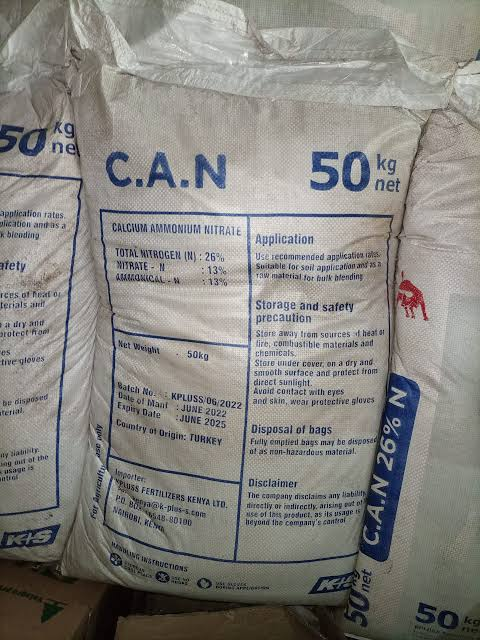
- Weeks 3–4 after transplanting: Apply CAN (Calcium Ammonium Nitrate, 26% N) at 25–30 kg/acre, or urea at 15–20 kg/acre. Side-dress 10 cm from the row and water in.
- Weeks 6–7: Second application of CAN at 20–25 kg/acre. This drives canopy closure, which shades out weeds and fuels bulb initiation.
- Weeks 9–10 (bulb initiation): Stop nitrogen entirely. From this point, potassium (via potassium sulfate or foliar K) supports bulb filling and skin quality.
Organic and Bio-Fertilizer Options:
Organic and bio-inputs are increasingly central to onion farming in Kenya, driven by export market demand and the high cost of synthetic fertilizers (which spiked after 2020 global price shocks).
Effective Organic Inputs:
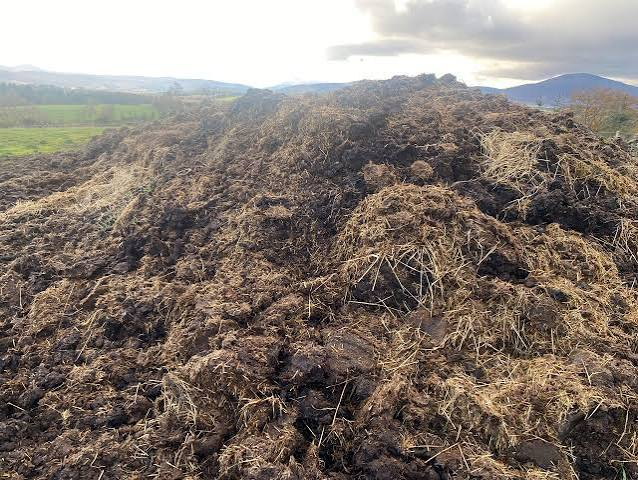
- Well-rotted farmyard manure or compost: 2–4 tonnes/acre, applied and incorporated 2–4 weeks before planting. Must be fully decomposed fresh manure burns seedlings and introduces weed seeds and pathogens.
- Vermicompost: 500–1,000 kg/acre; excellent microbial stimulation of the rhizosphere.
- Bio-fertilizers: Rhizobium and phosphorus-solubilizing bacteria (PSB) inoculants improve nutrient uptake.
- Chicken manure: Nutrient-dense but hot; apply at 1 tonne/acre, fully composted, at least 3 weeks before transplanting.
- Many progressive growers practicing onion farming in Kenya now integrate organic matter as the foundation and synthetic fertilizer as a targeted supplement the best of both worlds for soil health and yield.
Micronutrients and Foliar Feeds:
Micronutrient deficiencies are the hidden yield limiter in onion farming in Kenya, especially on intensively farmed or sandy soils.
- Boron (B): Critical for bulb development and skin integrity. Deficiency shows as cracked, rough bulbs. Apply borax at 5–10 kg/ha at planting, or foliar boron sprays during bulb initiation.
- Zinc (Zn): Deficiency causes stunted, twisted leaves. Common on high-pH or heavily limed soils. Foliar zinc sulfate at 0.5% during early growth.
- Sulfur (S): Onions need more sulfur than most vegetables it directly influences pungency and flavor compounds. Ammonium sulfate or potassium sulfate top-dresses serve double duty (K + S).
- Molybdenum (Mo): Needed for nitrate reduction; deficient in strongly acidic soils another reason to lime before onion farming in Kenya on acidic land.
Recommended foliar feeds (applied every 2–3 weeks from week 3 onward): balanced NPK foliar at 0.5–1% concentration, plus chelated micronutrient blends (look for products with Fe, Zn, Mn, B, Mo). Avoid foliar feeding during the heat of midday; early morning or late afternoon maximizes uptake.
Common Mistakes to Avoid in Onion Farming in Kenya:
- No soil test: fertilizing blind.
- Late nitrogen: thick necks and storage rot.
- Planting in waterlogged soil: instant rot losses.
- Ignoring thrips until visible damage: by then, yield is gone.
- Continuous allium cropping: building up white rot and Fusarium inoculum.
- Wrong variety for the season: short-day varieties for lowlands, long-day varieties for highlands; matching variety to photoperiod is fundamental in onion farming in Kenya.
- Overhead late-day irrigation disease incubator.
Are you in need of in-depth knowledge on onion and garlic production? If yes, we are a call away. Contact us for: Onion seedlings, Garlic seedlings, Germinated garlic cloves, Farm planning services, Soil testing, training on onion and garlic growing, Drip irrigation installation and maintenance, Agronomic support, Onion and Garlic value pack and Farm management. For free consultation, placing orders or booking a visit with an agronomist, please contact us via Call or what’s app +254703982228, Email: info@oniondoctor.co.ke You can also check out our social media handles for daily updates on TikTok: https://www.tiktok.com/@oniondoctorke0706252490?_r=1&_t=ZS-96UPUyx6ESL Instagram:https://www.instagram.com/oniondoctorke?igsh=MW5sZzJ6c3BnZ3Z0dw==Facebook:https://www.facebook.com/share/1HouRgLCwS/Twitter:https://x.com/OnionDoctorKe?s=20