
Onion farming in Kenya has emerged as one of the most profitable agribusiness ventures for smallholder and commercial farmers alike. With national demand consistently outstripping local supply, Kenya still imports nearly 50% of its red onions from Tanzania. This massive supply gap makes onion farming in Kenya a lucrative opportunity for farmers who adopt best practices and strategic timing. The beauty of this enterprise lies in its fast turnaround just 3 to 4 months from transplanting to harvest and strong market prices across local markets, supermarkets, hotels, and even export channels. Well-managed onion farming in Kenya can generate gross revenues of KSh 500,000 per acre per cycle, with net profits ranging from KSh 300,000 depending on timing and market conditions. For farmers with irrigation infrastructure, this crop allows for two cycles annually, effectively doubling income potential. The structural undersupply of the Kenyan market means that farmers who time their harvests during import-gap windows particularly January through February when Tanzanian supply is low can capture premium prices of KSh 100–150 per kilogram. Red onions specifically dominate the Kenyan market, accounting for over 90% of consumption due to their pungent flavor, deep color, and longer shelf life compared to white or yellow varieties. Whether you are a beginner looking to start your first agribusiness or an experienced farmer diversifying your crops, red onion farming in Kenya offers a proven pathway to profitability.
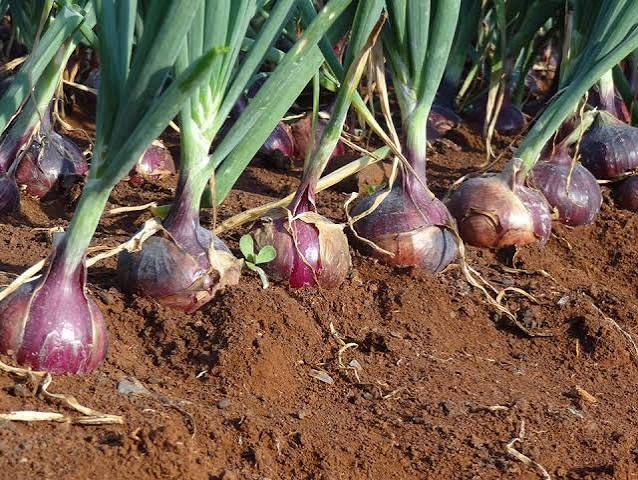
Understanding the Kenyan Onion Market:
Before diving into production, understanding market dynamics is essential for successful onion farming in Kenya. The country consumes approximately 148,000 tonnes of onions annually, yet local production meets only about half of this demand. The deficit is filled primarily by imports from Tanzania, with smaller quantities coming from India and South Africa. This import dependency creates both vulnerability and opportunity. When regional supply chains are disrupted due to export restrictions, weather events, or logistical challenges local prices surge dramatically. In 2024 and 2026, retail prices in Nairobi reached KSh 150–200 per kilogram during scarcity periods, compared to KSh 60–80 during harvest abundance.
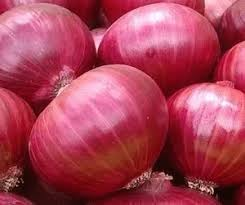
Key market insights for onion farming in Kenya:
- Retail prices range from KSh 60–150 per kg depending on season and location
- Wholesale prices span KSh 30–70 per kg
- Farm gate prices average KSh 30–60 per kg during abundant harvest periods
- Red onions command a 10–20% premium over white varieties
- Best selling windows: January–February (post-short rains) and April–May (post-long rains)
Farmers near urban centers like Nairobi, Mombasa, and Kisumu enjoy logistical advantages, while those in remote areas can still profit by targeting bulk aggregators and export markets. Understanding these dynamics is crucial for anyone considering onion farming in Kenya.
Climate and Soil Requirements:
Successful onion farming in Kenya begins with matching your crop to the right environment. Onions are cool-season biennials grown as annuals, and they thrive under specific temperature, rainfall, and soil conditions.
Temperature Requirements:
The optimal temperature range for onion farming in Kenya is between 15°C and 25°C during the vegetative growth stage. However, bulb formation is triggered by longer daylight hours and slightly warmer temperatures between 20°C and 25°C. This is why the crop is most successful during the dry seasons when day-length and temperature conditions align perfectly with physiological needs. Extreme heat above 35°C can cause bolting, while frost can damage young seedlings. Most regions of Kenya fall within the suitable range, making this enterprise viable across diverse agro-ecological zones
Rainfall and Altitude:
While onions need consistent moisture for establishment and early growth, excessive rainfall promotes fungal diseases like downy mildew and purple blotch. The best regions for onion farming in Kenya receive moderate, well-distributed rainfall (500–750mm per season) or have access to reliable irrigation. Ideal altitudes range from 0 to 1,900 meters above sea level, which covers most of Kenya’s agricultural land. Highland areas like Nyeri and Meru benefit from cooler temperatures, while lowland areas like Kajiado and Makueni can succeed with proper irrigation management.
Soil Requirements:
The soil is the engine of profitable onion farming in Kenya. Onions demand:
- Soil type: Well-drained, fertile sandy loam soils
- Soil pH: 6.0 to 6.8 (slightly acidic to neutral)
- Organic matter: High content for water retention and nutrient supply
- Drainage: Excellent waterlogging causes root rot and anthracnose
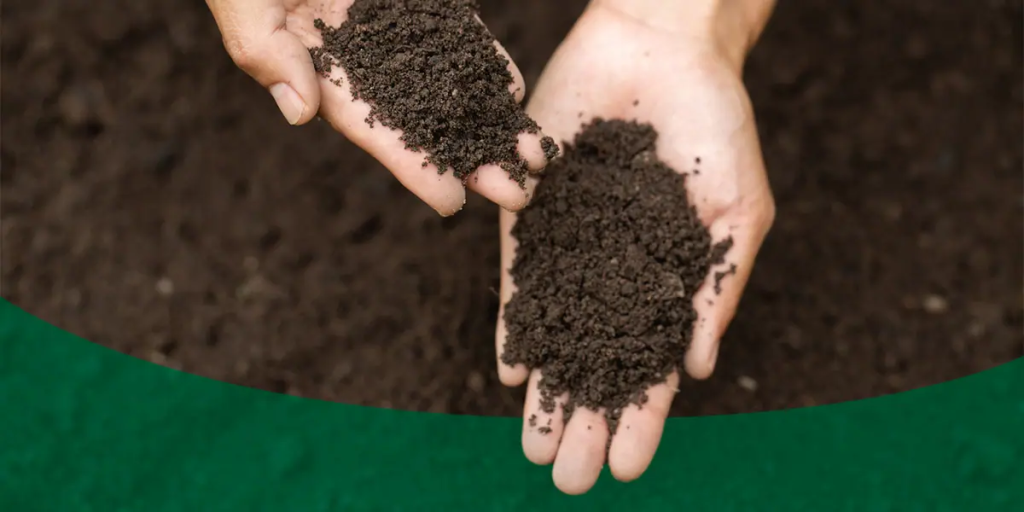
Heavy clay soils should be avoided unless amended with organic matter, sand, and proper raised bed construction. Before starting onion farming in Kenya, conduct a professional soil test to determine pH, nitrogen, phosphorus, potassium, and micronutrient levels. Apply agricultural lime if pH is below 6.0, ideally 30 days before planting.
Best Red Onion Varieties for Kenya:
Variety selection is the single most important decision in onion farming in Kenya. The wrong variety for your climate zone or market window can mean the difference between profit and loss. Kenyan farmers can choose between Open-Pollinated Varieties (OPVs) and Hybrid F1 varieties.
Open-Pollinated (Heirloom) Varieties:
These are cost-effective and well-adapted to local conditions, making them ideal for beginners in onion farming in Kenya:
| Variety | Maturity | Yield (per acre) | Best For |
|---|---|---|---|
| Red Creole | ~110 days | 6–8 tons | Hot & dry areas; excellent storage; long shelf life; resistant to pink root rot |
| Red Pinnoy | 120–150 days | Up to 30 tons | Tropical areas; disease resistant; adaptable to short-day regions |
| Red Bombay | ~150 days | 16–17 tons | Warm climates; bold pungent flavor; deep red color; good disease tolerance |
Hybrid F1 Varieties:
Hybrids offer higher yields, uniformity, and disease resistance preferred for commercial onion farming in Kenya:
| Variety | Maturity | Yield (per acre) | Best For |
|---|---|---|---|
| Jambar F1 | ~90 days | 20–25 tons | Hot zones; heat-tolerant; deep red color; excellent storage |
| African Red F1 | Medium | Up to 15 tons | Hot zones; pink rot tolerant; maintains quality after drying |
| Malbec F1 | Early | 10–15 tons | Cold zones; bolt and downy mildew tolerant; good skin retention |
| Red Coach F1 | 80–90 days | 10–15 tons | Premium markets; dark red flat-globe shape; early maturity |
| Neptune F1 | 90–100 days | Up to 20 tons | Humid/highland areas; robust disease resistance; excellent skin retention |
| Russet F1 | Medium | High | cold regions; medium bulbs; long shelf life |
Pro Tip for onion farming in Kenya: If you are targeting the January–February premium market window when Tanzanian imports are low, choose early-maturing varieties like Red Coach F1 or Jambar F1. For high-altitude, humid areas like Nyeri and Meru, Neptune F1 offers superior disease resistance and yield stability.
Land Preparation and Nursery Management:
Proper land preparation sets the foundation for successful onion farming in Kenya. Onions have shallow, fibrous root systems that require fine, well-aerated soil for optimal bulb development.
Land Preparation Steps:
- Plough and harrow the field to eliminate debris, soil clods, and perennial weeds
- Incorporate organic manure equivalent to 75 kg N/ha (approximately 15 tonnes of farmyard manure or 7.5 tonnes of poultry manure per hectare) during the final ploughing
- Level the field and prepare raised beds or broad bed furrows (BBF) to improve drainage
- For rainy season production, use BBF of 15 cm height and 120 cm top width with 45 cm furrows to prevent waterlogging and anthracnose
Nursery Establishment:
Most production in the country uses transplanting rather than direct seeding, as it improves establishment uniformity and reduces seed costs. Quality seedlings are the foundation of profitable onion farming in Kenya.
Nursery preparation:
- Select a well-drained site near a water source
- Prepare fine seedbeds 1 meter wide and convenient length
- Mix soil with well-decomposed manure and sand (1:1:1 ratio)
- Apply a light dressing of DAP fertilizer
Sowing:
- Sow seeds thinly in rows 10–15 cm apart
- Cover lightly with fine soil or compost
- Mulch with dry grass to conserve moisture
- Water gently twice daily until germination
Nursery management:
- Germination occurs in 7–10 days
- Remove mulch after emergence to prevent damping off
- Control pests like aphids and thrips early
- Harden seedlings by reducing water 7 days before transplanting
Seedlings are ready for transplanting at 6–8 weeks old, or when they have 4–5 true leaves and pencil-thick stems.
Transplanting and Spacing:
Transplanting is a critical phase that determines plant population, bulb size, and ultimate yield in onion farming in Kenya.
Optimal Transplanting Time:
The best planting windows for onion farming in Kenya are:
- Long Rains: March–May (harvest July–October)
- Short Rains: September–November (harvest January–February)
- Irrigated Dry Season: Year-round production possible
The short rains cycle is particularly profitable because harvest falls in January–February when Tanzanian imports are lowest and local prices peak.
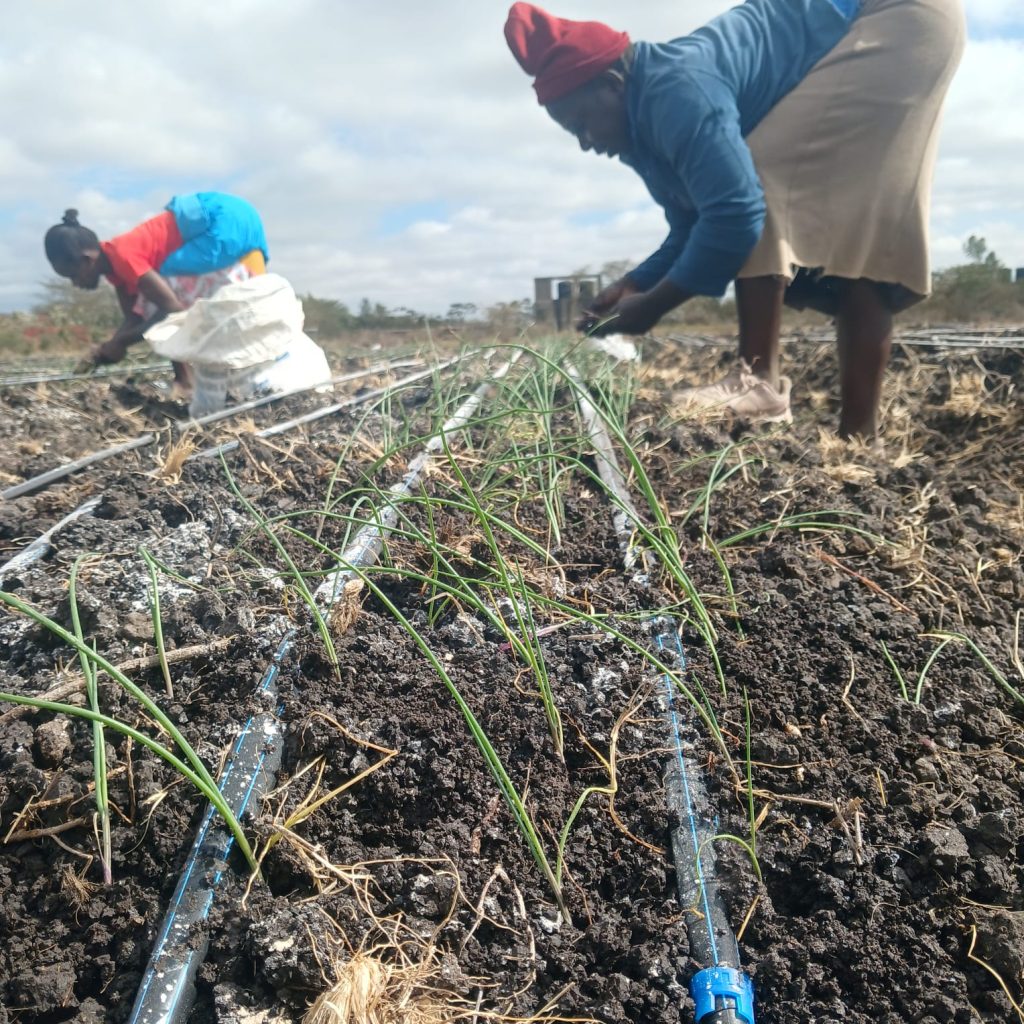
Transplanting Best Practices:
- Select healthy, uniform seedlings avoid over-aged or under-aged plants
- Cut one-third of the seedling top to reduce transpiration stress
- Dip roots in a carbendazim solution (0.1%) for 2 hours to prevent fungal diseases
- Transplant in the evening or on cloudy days to minimize shock
- Water immediately after transplanting
Spacing Guidelines:
Proper spacing balances yield quantity versus bulb quality:
- Row spacing: 15 cm between rows
- Plant spacing: 10 cm within rows
- Plant population: Approximately 200,000–250,000 plants per acre
Closer spacing (8 cm) produces smaller bulbs ideal for local “soko” markets, while wider spacing (12–15 cm) produces larger bulbs preferred by supermarkets and exporters.
Fertilizer and Nutrient Management:
Onions are heavy feeders, and proper nutrition is non-negotiable for profitable onion farming in Kenya. The crop requires high nitrogen, high phosphorus, and medium potassium, plus essential micronutrients like sulfur, zinc, and boron.
Basal Fertilizer Application:
At planting, apply a balanced basal fertilizer to support root establishment:
- DAP (18:46:0) or NPK 17:17:17 at 100–150 kg per acre
- Incorporate into the soil before transplanting
- Ensure phosphorus is adequate it is critical for root development and early growth
Top-Dressing Schedule:
| Growth Stage | Timing | Fertilizer | Rate per Acre |
|---|---|---|---|
| Early vegetative | Week 3–4 after transplanting | CAN (26% N) | 50 kg |
| Bulbing initiation | Week 6–8 | NPK 17:17:17 | 50 kg |
| Bulb expansion | Week 10–12 | NPK 17:17:17 or sulfate of potash | 50 kg |
Critical note for onion farming in Kenya: Stop all nitrogen application once bulbs begin to mature (leaves start yellowing). Excess nitrogen at this stage delays maturity, reduces storage life, and increases susceptibility to diseases.
Micronutrient Management:
- Sulfur: Essential for pungency and flavor; apply gypsum if deficient
- Zinc: Apply zinc sulfate if soil tests indicate deficiency
- Boron: Critical for cell wall development; deficiency causes bulb cracking
- Calcium: Improves skin quality and reduces storage rot
Always base fertilizer programs on soil test results rather than blanket recommendations for optimal results in onion farming in Kenya.
Irrigation Strategies:
Water management can make or break your crop. Onions require consistent moisture but are extremely sensitive to waterlogging.
Water Requirements:
- Critical stages: Transplant establishment, bulb initiation, and bulb expansion
- Sensitivity: Highest during bulb formation inconsistent watering causes splitting and double bulbs
Irrigation Methods:
Drip irrigation is the gold standard for commercial onion farming in Kenya because it:
- Delivers water directly to the root zone
- Reduces fungal diseases by keeping foliage dry
- Enables precise fertigation (fertilizer + irrigation)
- Saves 40–60% water compared to overhead systems
- Allows production during dry seasons when prices are highest
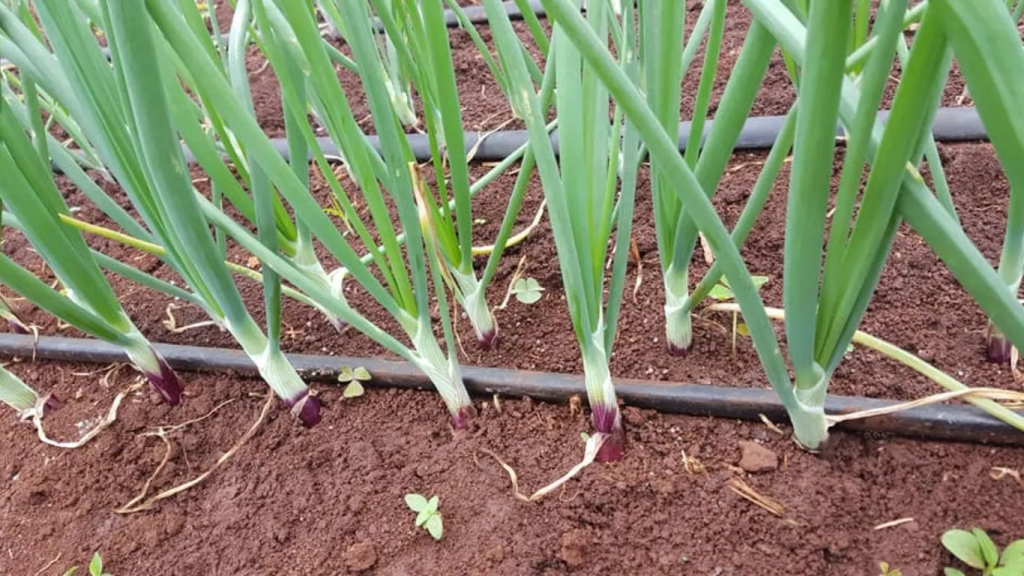
Furrow irrigation is suitable for flatbed systems but requires careful management to avoid waterlogging. Overhead sprinklers are less ideal as wet foliage increases disease pressure.
Pest and Disease Control:
Pests and diseases represent the biggest threat to profitable onion farming in Kenya. An integrated pest management (IPM) approach combining cultural, biological, and chemical methods delivers the best results.
Major Pests:
| Pest | Damage | Control Measures |
|---|---|---|
| Thrips | Silvering and scarring of leaves; vector for viruses | Scout weekly; use blue sticky traps; apply insecticides |
| Cutworms | Seedling death by cutting stems at soil level | Use Insecticide, hand-pick at night |
| Onion maggot / fly | Larvae tunnel into bulbs causing rot | Crop rotation; apply recommended insecticides; avoid fresh manure |
| Aphids | Vector for viral diseases; sap sucking | Biological control with ladybugs; insecticidal soaps |
| Red spider mite | Yellow stippling, webbing under leaves | Maintain humidity; apply miticides; remove weed hosts |
Major Diseases:
| Disease | Symptoms | Control Measures |
|---|---|---|
| Downy mildew | Pale green/yellow patches on leaves; fuzzy growth | Use fungicide; ensure proper spacing for airflow; avoid overhead irrigation |
| Purple blotch | Purple lesions on leaves; causes defoliation | Apply Fungicide remove infected debris |
| Bacterial soft rot | Water-soaked, foul-smelling bulb decay | Ensure proper drainage; avoid mechanical injury; practice crop rotation |
| Neck rot | Gray mold at neck; internal bulb decay | cure bulbs thoroughly; avoid harvesting in wet conditions |
| Pink root rot | Pink discoloration of roots; stunted growth | Use resistant varieties (Red Coach, Neptune F1); soil solarization; improve drainage |
| Stemphylium blight | Brown leaf spots with concentric rings | Fungicide application; crop rotation; balanced nutrition |
IPM Best Practices for onion farming in Kenya:
- Use certified, disease-free seeds from reputable suppliers
- Practice strict crop rotation (3–4 years away from alliums)
- Maintain proper plant spacing for ventilation
- Scout fields twice weekly for early pest detection
- Apply pesticides strictly according to label instructions and pre-harvest intervals
- Keep detailed spray records for market compliance
Weed Management:
Weeds compete aggressively with onions for nutrients, water, and light. Because onions are shallow-rooted and slow to establish, early weed control is critical in onion farming in Kenya.
Weed Control Strategies:
1. Cultural Control:
- Prepare land thoroughly to destroy perennial weeds before planting
- Use mulch to suppress weed emergence and conserve soil moisture
- Maintain proper spacing to allow cultivation between rows
2. Manual Weeding:
- First weeding: 2–3 weeks after transplanting
- Second weeding: 5–6 weeks after transplanting (before bulbs enlarge)
- Caution: Avoid deep cultivation that damages shallow onion roots
3. Chemical Control:
- Apply pre-emergence herbicides immediately after transplanting
- Selective post-emergence herbicides can be used for grass control
- Always follow label rates and safety precautions
4. Crop Rotation:
- Rotating with non-allium crops breaks weed cycles, especially for difficult grasses
Effective weed management can improve yields by 20–30% in onion farming in Kenya, making it a high-return management practice
Harvesting and Post-Harvest Handling:
Harvest timing and handling directly impact the price you receive for your crop. Poor post-harvest practices can destroy months of careful work in onion farming in Kenya.
When to Harvest:
Onions are ready for harvest when:
- 50–80% of leaves have yellowed and fallen over
- Neck tissues soften and bulbs develop a papery skin
- For storage onions: wait until tops are completely dry
In Kenya, harvesting typically occurs 90–120 days after transplanting, depending on variety and growing conditions.
Harvesting Techniques:
- Hand harvesting: Loosen soil with a fork, then pull bulbs gently
- Mechanical harvesting: Available for large-scale operations
- Timing: Harvest in the morning after dew has dried, or during dry weather
- Avoid: Harvesting in wet conditions or when bulbs are immature
Curing Process:
Curing is essential for long-term storage and marketability in onion farming in Kenya:
- Field curing: Leave bulbs in the field for 3–5 days with tops covering them (if weather permits)
- Shade curing: Move to a well-ventilated shaded area for 7–14 days
- Trimming: Cut roots and trim necks to 2–3 cm after curing
- Sorting: Grade by size, color, and quality; remove damaged or diseased bulbs
- Storage: Store in well-ventilated, dry, cool facilities; avoid stacking too high
Properly cured red onions can store for 3–6 months, allowing farmers to sell during high-price windows.
Are you in need of in-depth knowledge on onion and garlic production? If yes, we are a call away. Contact us for: Onion seedlings, Garlic seedlings, Germinated garlic cloves, Farm planning services, Soil testing, training on onion and garlic growing, Drip irrigation installation and maintenance, Agronomic support, Onion and Garlic value pack and Farm management. For free consultation, placing orders or booking a visit with an agronomist, please contact us via Call or what’s app +254703982228, Email: info@oniondoctor.co.ke You can also check out our social media handles for daily updates on TikTok: https://www.tiktok.com/@oniondoctorke0706252490?_r=1&_t=ZS-96UPUyx6ESL Instagram:https://www.instagram.com/oniondoctorke?igsh=MW5sZzJ6c3BnZ3Z0dw==Facebook:https://www.facebook.com/share/1HouRgLCwS/Twitter:https://x.com/OnionDoctorKe?s=20