
Onion farming has entered a new era of precision agriculture, and drip irrigation sits at the center of this transformation. Traditional flood and furrow irrigation methods waste water, promote disease, and deliver inconsistent results. In contrast, drip irrigation delivers water directly to the root zone, giving farmers unprecedented control over soil moisture, nutrient delivery, and bulb development. Across Kenya, India, Texas, and Ethiopia, commercial onion growers are reporting yield increases of 20% to 90% after switching to drip irrigation systems. Whether you are a smallholder with a quarter-acre plot or a large-scale producer managing hundreds of hectares, drip irrigation offers a scalable, profitable, and sustainable path to premium onion production.
2. Understanding Onion Root Physiology & Water Needs:
Before designing a drip irrigation system, you must understand why onions are uniquely suited to this technology.
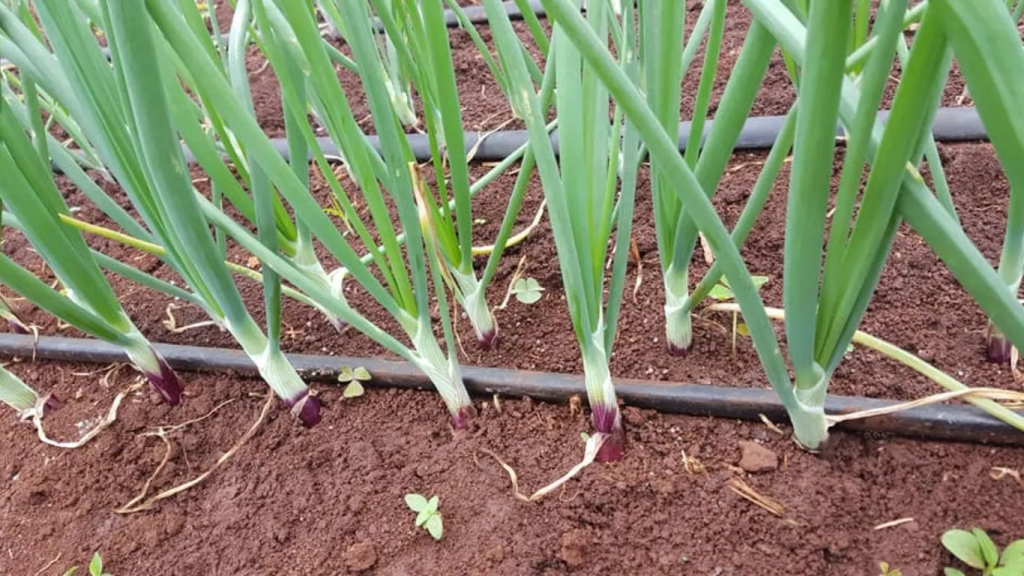
Onions possess a shallow, fibrous root system that rarely penetrates beyond 15–20 cm deep. This means:
- Frequent, light irrigation is superior to deep, infrequent watering
- Nutrients applied at the surface can easily leach below the root zone with heavy rainfall or flood irrigation
- Water stress during bulb formation causes irreversible yield loss and smaller bulb size
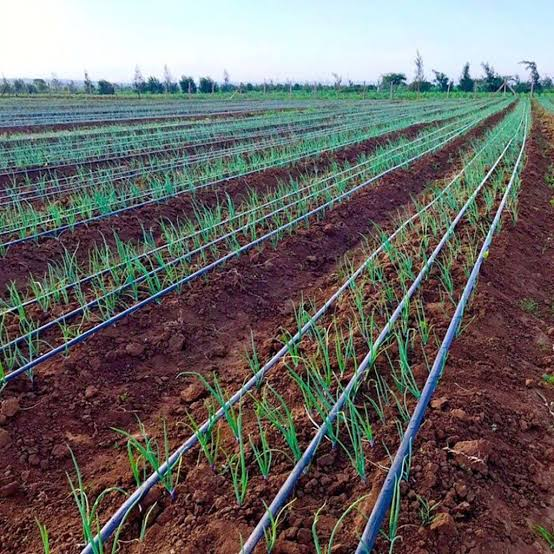
Because drip irrigation applies water slowly and precisely at the soil surface or subsurface, it maintains optimal moisture in the exact zone where onion roots are active. This is why drip irrigation is considered a “no-brainer” for onion cultivation by agronomists worldwide.
3. Top 10 Benefits of Drip Irrigation for Onion Crops:
1. Massive Yield Increases:
Studies demonstrated that drip irrigation more than doubled onion yields compared to furrow systems, with a 119% higher yield recorded.
2. Water Conservation:
Drip irrigation achieves approximately 90% water use efficiency, compared to 30–35% for traditional surface irrigation. Research shows drip irrigation can save 32.8% to 50% of water while maintaining or increasing yields.
3. Disease Reduction:
By keeping onion foliage dry, drip irrigation drastically reduces foliar diseases such as Downy Mildew, purple blotch, and bacterial rot. Wet leaves create the humid microclimate these pathogens need to thrive.
4. Uniform Bulb Size & Marketability:
Consistent moisture delivered by drip irrigation produces uniform bulb sizing, which commands premium prices in export markets. Uniformity is nearly impossible to achieve with overhead sprinklers or flood irrigation.
5. Precision Fertigation:
Onions require soluble phosphorus, yet phosphorus has low mobility in soil. Drip irrigation enables fertigation applying small, frequent doses of fertilizer directly to the root zone, boosting nutrient uptake efficiency by 40–50%.
6. Weed Suppression:
Because drip irrigation wets only the planted row, inter-row spaces remain dry, suppressing weed germination and reducing herbicide costs and manual weeding labor.
7. Prevents Bulb Splitting & Rot:
Inconsistent watering causes bulbs to split or develop rot. Drip irrigation maintains steady soil moisture, eliminating the expansion-contraction cycles that damage bulb integrity.
8. Adaptability to Marginal Soils:
Drip irrigation performs exceptionally well on sandy, rolling, or irregular topography where flood irrigation fails. Sandy soils, in particular, benefit from the frequent, low-volume application that drip irrigation provides.
9. Labor Savings:
Once installed, drip irrigation systems operate automatically. Valves, timers, and smart controllers eliminate the need for manual watering, freeing labor for other farm tasks.
10. Higher Water Productivity:
Studies confirm that drip irrigation improves water productivity (kg of onion per cubic meter of water) by ensuring every drop reaches the root system with minimal evaporative or runoff loss.
4. Step-by-Step Drip Irrigation Installation Guide:
Follow this proven process to install your drip irrigation system correctly:
Step 1: Water Source & Filtration:
Ensure a clean, reliable water source (tank, borehole, or reservoir). Install a sand media filter, screen filter, or disc filter. Drip irrigation emitters are precision devices; even small particles can block flow.
Step 2: Lay Mainline & Sub-mains:
Run HDPE or PVC mainline pipes from the source across the field. Install isolation valves to create control zones.
Step 3: Position Drip Lines:
Roll out drip irrigation laterals along each onion bed. Space them according to your bed width (typically 3–4 lines per bed). Ensure emitters face upward.
Step 4: Connect Fittings:
Use barbed tees, elbows, and end caps to connect laterals to sub-mains. Install flush valves at the end of each lateral to allow periodic cleaning.
Step 5: Pressure Regulation:
Add pressure regulators at the head of each zone to maintain the 10–20 PSI optimal for drip irrigation laterals.
Step 6: Flush & Test:
Before planting, run the drip irrigation system for 30 minutes to flush debris. Check for leaks, kinks, or blocked emitters. Repair immediately.
5. Drip Irrigation Maintenance & Troubleshooting:
A drip irrigation system is only as good as its maintenance. Neglect leads to clogging, uneven watering, and yield loss.
Daily Checks
- Monitor system pressure at the filter inlet and lateral ends
- Walk the field and visually inspect for leaks, burst laterals, or pooling water
Weekly Maintenance
- Flush lateral lines: Open end caps and run water for 5–10 minutes to expel sediment
- heck filter pressure differential: The filter needs cleaning
- Inspect emitters: Look for reduced flow or dry spots in the drip irrigation wetting pattern
Monthly Maintenance:
- Acid flush: If emitters show scaling (white mineral deposits), inject food-grade citric acid or vinegar through the drip irrigation system at pH 4.0, then flush thoroughly.
- Chlorine treatment: For biological clogging (algae, bacteria), inject sodium hypochlorite to achieve free chlorine at the lateral end for 30 minutes.
- Check pressure regulators and valves for proper function
End-of-Season Care:
- Flush all drip irrigation lines thoroughly
- Drain and store filters, valves, and portable components indoors
- For seasonal drip irrigation tape (T-Tape), roll up and recycle; for multi-season systems, bury or protect from UV damage
Are you in need of in-depth knowledge on onion and garlic production? If yes, we are a call away. Contact us for: Onion seedlings, Garlic seedlings, Germinated garlic cloves, Farm planning services, Soil testing, training on onion and garlic growing, Drip irrigation installation and maintenance, Agronomic support, Onion and Garlic value pack and Farm management. For free consultation, placing orders or booking a visit with an agronomist, please contact us via Call or what’s app +254703982228, Email: info@oniondoctor.co.ke You can also check out our social media handles for daily updates on TikTok: https://www.tiktok.com/@oniondoctorke0706252490?_r=1&_t=ZS-96UPUyx6ESL Instagram:https://www.instagram.com/oniondoctorke?igsh=MW5sZzJ6c3BnZ3Z0dw==Facebook:https://www.facebook.com/share/1HouRgLCwS/Twitter:https://x.com/OnionDoctorKe?s=20