
Purple blotch is one of the most destructive fungal diseases affecting onion crops worldwide. Caused by the fungus Alternaria porri, it can slash yields by 20–70% if left unmanaged. This in-depth guide covers identification, causes, symptoms, life cycle, prevention, and control strategies so growers can protect their crop. Throughout this article you will also see practical insights tailored to onion farming in Kenya, a major production region where the disease is especially problematic during humid periods.Purple blotch is a foliar disease of onions, garlic, leeks, shallots, and other alliums. The pathogen Alternaria porri survives on crop debris and volunteer plants. In warm, moist conditions it produces spores that infect leaves and seed stalks. Once established, it reduces photosynthetic area, weakens plants, and can move into bulbs through the neck, causing storage rot. Successful onion farming in Kenya depends heavily on early recognition and management of this disease because Kenya’s climate often favors its spread.
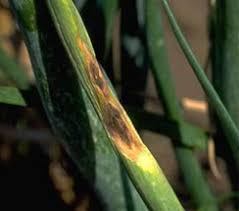
Symptoms of Purple Blotch:
- Early symptoms: Small, sunken, water-soaked lesions with white/light centers appear on older leaves.
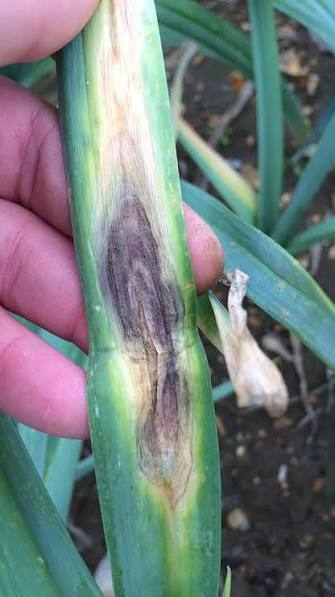
- Lesion development: Lesions enlarge into oval or elliptical brown-to-purple spots.
- Characteristic pattern: Often show concentric rings (bull’s-eye/target-spot pattern) with a yellow halo.
- Spore formation: In moist conditions, lesions develop dark brown to black spore masses.
- Leaf damage: Lesions may girdle leaves, causing tip dieback and leaf collapse.
- Seed stalk damage: Similar lesions develop on seed stalks, causing lodging and poor seed set.
- Bulb infection: The fungus can enter through the neck or wounds.
- Bulb symptoms: Infected tissue changes from yellow to wine-red or dark reddish-purple, eventually becoming dry and papery.
- Yield losses in Kenya: Unprotected fields can experience 30% or more losses.
- Severe outbreaks: Losses of 50–70% have been reported in onion farming in Kenya.
Conditions Favoring Purple Blotch:
- Temperature: 21–30°C; optimum around 25°C.
- High humidity: Relative humidity of 80–90% favors disease development.
- Leaf wetness: More than 8–12 hours encourages infection.
- Spore formation: Spores develop overnight under humid conditions.
- Disease spread: Spores spread through wind, rain splash, and irrigation water.
- Plant injuries: Thrips feeding, hail, sandblasting, and mechanical damage increase infection.
- Kenyan conditions: Disease is most severe during rainy seasons.
- Overhead irrigation: Frequent overhead irrigation increases disease risk.
- Dense planting: Poor air circulation in densely planted fields favors the disease.
- Continuous onion cropping: Growing onions continuously without rotation allows inoculum to build up in soil and crop debris.
Why Purple Blotch Matters in Onion Farming in Kenya:
Kenya is a significant onion producer, with major growing areas in Kajiado, Narok, Kirinyaga (Mwea), Nyeri, and parts of the Rift Valley. Hybrid varieties such as Red Coach F1, Russet F1, Neptune F1, and Red Pinoy F1 are widely grown. Purple blotch ranks among the top fungal threats alongside downy mildew and rust. Many smallholder and commercial growers practicing onion farming in Kenya report reduced bulb size, delayed maturity, and lower marketable yield when the disease is not controlled. Awareness surveys in counties such as Nyeri have shown that while farmers know diseases exist, specific knowledge of purple blotch identification and management is often limited. Integrating good practices into onion farming in Kenya is therefore essential for profitability.
Prevention Strategies:
Prevention is far more effective and economical than curing an established epidemic.
- Use clean planting material – Start with certified, pathogen-free seed or transplants. Seed treatment with fungicides reduces primary inoculum. This is a foundational step in successful onion farming in Kenya.
- Crop rotation – Rotate out of alliums for at least 3–4 years with non-host crops such as maize, beans, or cereals. Long rotations break the disease cycle and are a cornerstone of sustainable onion farming in Kenya.
- Field sanitation – Remove and destroy crop debris, cull piles, and volunteer onions after harvest. Plow under or bury residue deeply. Clean equipment between fields. Sanitation practices significantly lower disease pressure in onion farming in Kenya.
- Proper spacing and plant density – Avoid overcrowding. Wider spacing improves air movement, shortens leaf wetness periods, and reduces humidity around the canopy. Recommended spacing (often 15 cm × 10 cm or similar) supports healthy growth in onion farming in Kenya.
- Irrigation management – Prefer drip irrigation over overhead systems. Irrigate early in the day so foliage dries quickly. Excess moisture is the single biggest trigger for purple blotch in onion farming in Kenya.
- Balanced nutrition – Avoid excessive nitrogen, which produces soft, susceptible tissue. Adequate potassium and phosphorus support stronger plants. Proper fertilization is critical for resilient onion farming in Kenya.
- Weed and thrips control – Weeds harbor inoculum and increase humidity. Thrips feeding wounds create entry points for the fungus. Integrated pest management protects foliage and is vital in onion farming in Kenya.
- Resistant or tolerant varieties – Some hybrids show partial resistance or thicker cuticles that slow infection. Choosing such varieties improves outcomes in onion farming in Kenya.
Cultural and Biological Control Options:
In addition to the preventive measures above:
- Harvest in dry weather and cure bulbs thoroughly before topping or storage to minimize neck infection.
- Store cured bulbs at cool temperatures with moderate humidity and good aeration.
Chemical Control:
When disease pressure is high, protective and systemic fungicides are necessary. Common active ingredients include mancozeb, chlorothalonil, difenoconazole, tebuconazole, azoxystrobin, and copper-based products. Begin sprays preventively or at the first sign of lesions and continue at 7–14 day intervals depending on weather. Always rotate fungicides with different modes of action to delay resistance. Follow label rates, pre-harvest intervals, and safety guidelines. In commercial onion farming in Kenya, products containing difenoconazole, mancozeb, or combinations are frequently recommended by agro-dealers and extension services. Timely application during wet periods is especially important for protecting yields in onion farming in Kenya.
Integrated Management for Maximum Success:
The most effective approach combines cultural practices, resistant varieties, biological tools, and judicious chemical use. Regular field scouting allows early detection. Record-keeping of weather, irrigation, and spray history helps refine decisions season after season. Farmers practicing onion farming in Kenya who adopt integrated management consistently report better bulb quality, larger size, and higher marketable yields. Training programs and extension support further strengthen disease knowledge among growers involved in onion farming in Kenya.
Practical Checklist for Growers:
- Source clean seed/transplants every season.
- Rotate crops for 3+ years.
- Maintain good sanitation and remove volunteers.
- Space plants properly and control weeds.
- Use drip irrigation and irrigate early.
- Balance fertilizer, especially nitrogen.
- Monitor for thrips and control them promptly.
- Scout regularly and apply fungicides preventively when risk is high.
- Cure and store bulbs correctly.
Following this checklist transforms disease management from reactive to proactive and supports consistent success in onion farming in Kenya.
Conclusion:
Purple blotch, caused by Alternaria porri, remains a major challenge, yet it is highly manageable with knowledge and disciplined practices. Understanding symptoms, environmental triggers, and the full suite of cultural, biological, and chemical tools empowers growers to protect foliage, maintain bulb quality, and maximize returns. In regions where climate and production intensity favor the disease, such as the key growing zones supporting onion farming in Kenya, these strategies are indispensable. By integrating the recommendations in this guide, farmers can reduce losses, improve productivity, and build more resilient systems for onion farming in Kenya. Continued learning, field observation, and adaptation to local conditions will further strengthen onion farming in Kenya against purple blotch and other threats. With the right approach, high yields and quality onions are achievable season after season in onion farming in Kenya.
Are you in need of in-depth knowledge on onion and garlic production? If yes, we are a call away. Contact us for: Onion seedlings, Garlic seedlings, Germinated garlic cloves, Farm planning services, Soil testing, training on onion and garlic growing, Drip irrigation installation and maintenance, Agronomic support, Onion and Garlic value pack and Farm management. For free consultation, placing orders or booking a visit with an agronomist, please contact us via Call or what’s app +254703982228, Email: info@oniondoctor.co.ke You can also check out our social media handles for daily updates on TikTok: https://www.tiktok.com/@oniondoctorke0706252490?_r=1&_t=ZS-96UPUyx6ESL Instagram:https://www.instagram.com/oniondoctorke?igsh=MW5sZzJ6c3BnZ3Z0dw==Facebook:https://www.facebook.com/share/1HouRgLCwS/Twitter:https://x.com/OnionDoctorKe?s=20