
Powdery mildew is one of the most destructive yet frequently misunderstood diseases threatening onion farming in Kenya today. Whether you’re a smallholder in Makueni, a commercial grower in Kajiado, or managing a nursery in Meru, understanding this pathogen can mean the difference between a profitable harvest and a devastating loss. At Onion Doctor, we’ve seen firsthand how powdery mildew can quietly destroy entire onion fields across Kenya’s key production regions. This blog is designed to be the most comprehensive, practical, and actionable resource on powdery mildew specifically tailored for onion farming in Kenya. We’ll cover everything from the science behind the pathogen to field-tested management strategies that work in Kenyan conditions.
Chapter 1: Understanding Powdery Mildew :The Silent Crop Killer:
What Is Powdery Mildew:
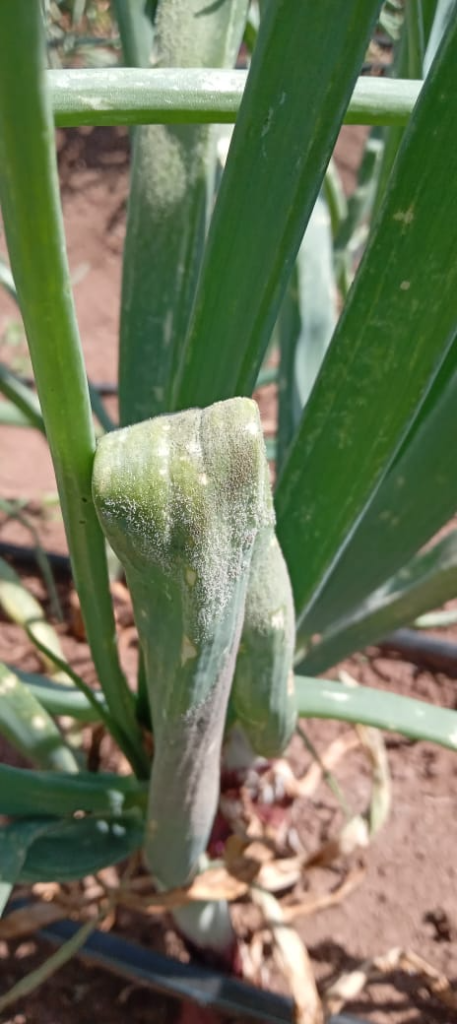
Powdery mildew in onions is caused by the fungus Leveillula taurica. Unlike the powdery mildew you might see on cucurbits or roses, onion powdery mildew has a unique “internal” or hemi-endophytic lifestyle that makes it particularly tricky to manage in onion farming in Kenya. This pathogen doesn’t just sit on the leaf surface it penetrates the leaf tissue and grows between the cells of the mesophyll, making it harder to reach with surface sprays. This biological characteristic is critical for farmers practicing onion farming in Kenya to understand, as it explains why some treatments fail.
Chapter 2: Identifying Powdery Mildew in Your Onion Field:
Early Symptoms to Watch For:
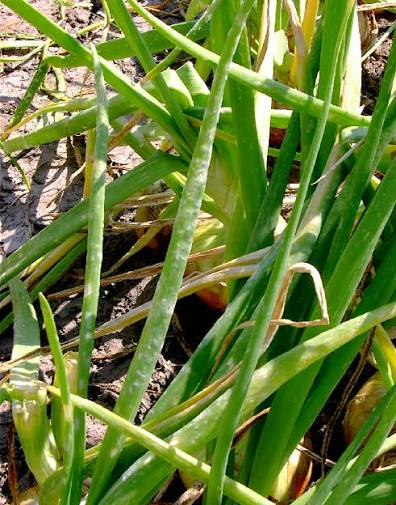
The first signs of powdery mildew in onion farming in Kenya are easy to miss if you don’t know what to look for. Early detection is your best defense.
On the Upper Leaf Surface:
- Small, light-green to yellowish spots that may appear water-soaked initially
- These spots gradually enlarge and may coalesce into larger chlorotic blotches
- As the disease progresses, the spots turn necrotic (brown/dead tissue)
On the Lower Leaf Surface:
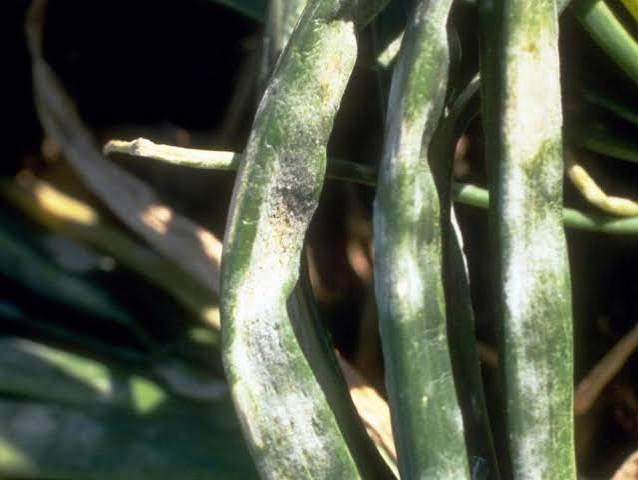
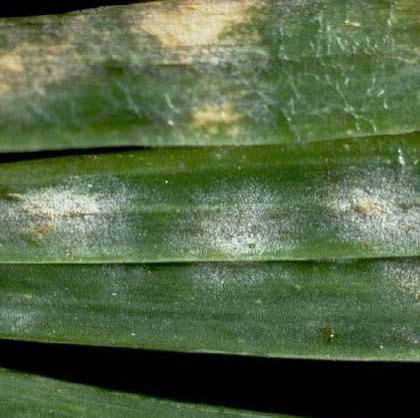
- White to grayish powdery growth this is the fungal sporulation
- The powdery coating consists of spores and Sporophore
- In humid conditions, this growth can become quite dense
Advanced Symptoms:
- Severe leaf curling and distortion
- Premature defoliation (leaves dropping off)
- Exposed bulbs susceptible to sunburn
- Reduced bulb size and poor skin quality
- Secondary infections by other pathogens
Why Onion Farming in Kenya Is Particularly Vulnerable:
The climate patterns in Kenya create ideal conditions for powdery mildew outbreaks. The pathogen thrives when daytime temperatures reach 26°C with relative humidity around 70-80% conditions common in many onion-growing regions of Kenya, particularly during the transition periods between rainy and dry seasons. The combination of hot, dry days followed by cool, humid nights a pattern frequently experienced in areas like Kajiado and Makueni during certain months is the perfect recipe for powdery mildew epidemics in onion farming in Kenya.
Chapter 3: The Disease Cycle:How Powdery Mildew Spreads:
Understanding the Pathogen’s Life Cycle:
Powdery Mildew pathogen can only survive and reproduce on living plant tissue. This has important implications for management in onion farming in Kenya.
Primary Sources:
- Infected volunteer onions from previous seasons
- Weeds that serve as alternative hosts.
- Nearby infected crops (pepper, tomato, eggplant, cucumber)
- Infected seedlings brought into the field
Infection Process:
- Spore germination occurs at relative humidity above 40%
- Direct penetration of the leaf cuticle or entry through stomata
- After approximately 20 days, spores emerge through stomata
- Sporulation produces new conidia that spread via wind
Favorable Conditions for Outbreaks in Onion Farming in Kenya:
| Factor | Optimal Range for Disease | Kenyan Context |
|---|---|---|
| Temperature | 10°C to 33°C | Common across all onion-growing regions |
| Relative Humidity | Below 40% for infection, 70-80% for spread | Prevalent during rainy seasons and early mornings |
| Dew on foliage | Promotes infection | Common in highland areas like Nyeri and Meru |
| Dense plantings | Reduces air circulation | A common mistake in small-scale onion farming in Kenya |
Chapter 4: Integrated Disease Management (IDM) for Powdery Mildew:
Effective management of powdery mildew in onion farming in Kenya requires an Integrated Disease Management (IDM) approach. No single method is sufficient on its own.
Strategy 1: Cultural Practices:
Crop Rotation Rotate onions with non-host crops for at least one year. Excellent rotation crops for onion farming in Kenya include:
- Maize
- Beans
- Irish potatoes
- Cabbage and other brassicas
Avoid rotating with solanaceous crops (tomato, pepper, eggplant) as these are also hosts for the pathogen.
Field Selection and Preparation:
- Choose well-ventilated, sunny locations
- Avoid fields adjacent to infected tomato or pepper plots
- Ensure proper drainage to prevent waterlogging
- In onion farming in Kenya, raised beds are particularly beneficial in heavy clay soils
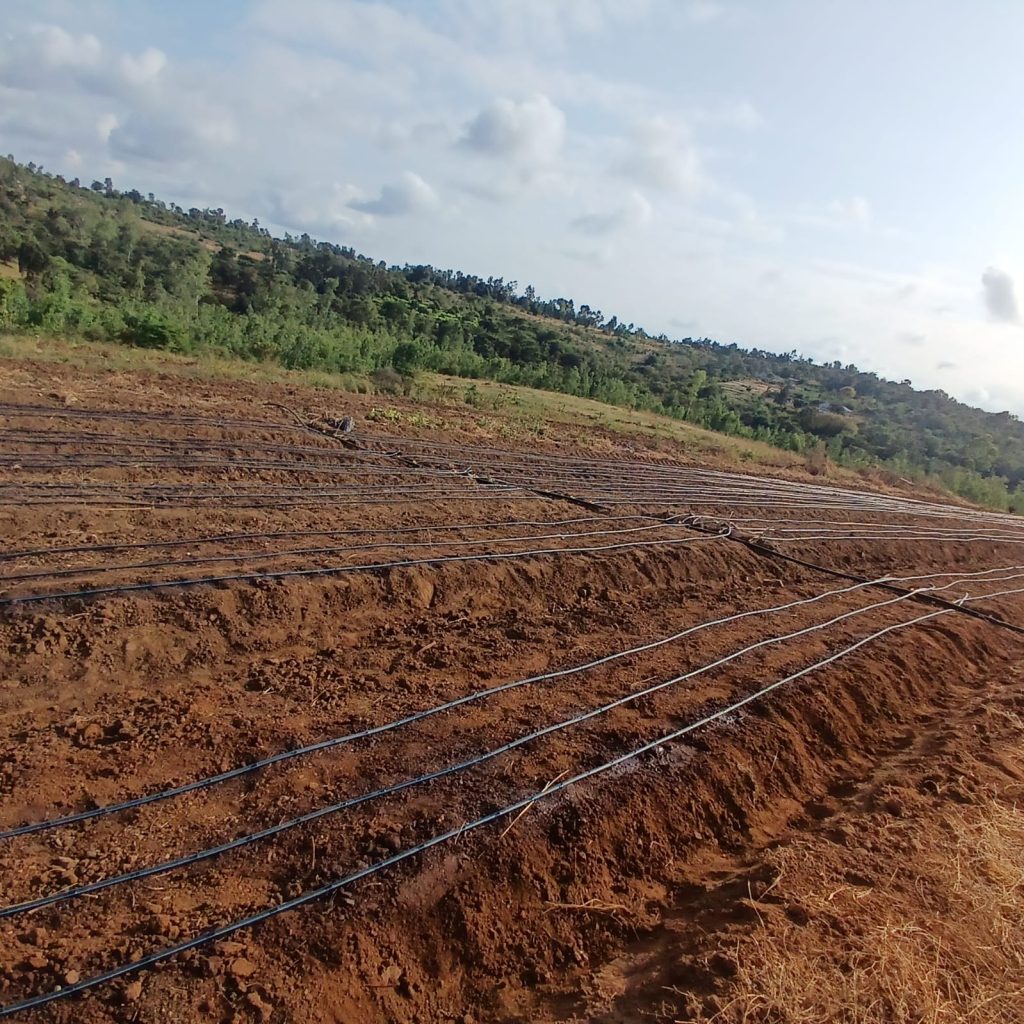
Spacing and Plant Density:
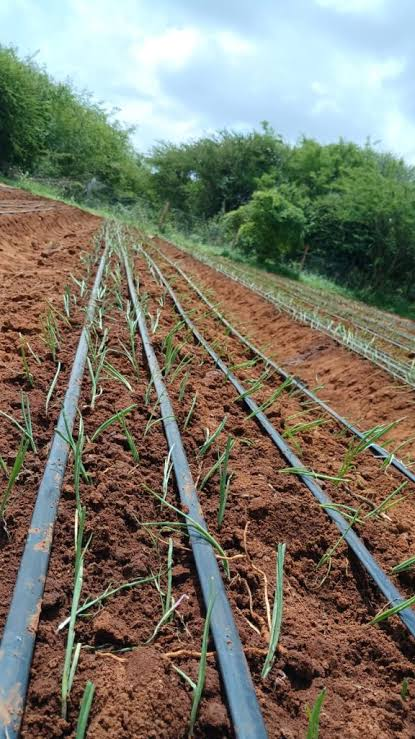
- Maintain 30 cm between rows and 8-10 cm between plants
- Avoid overcrowding, which reduces air circulation and increases humidity within the canopy.
- Proper spacing is one of the most cost-effective preventive measures in onion farming in Kenya
Irrigation Management:
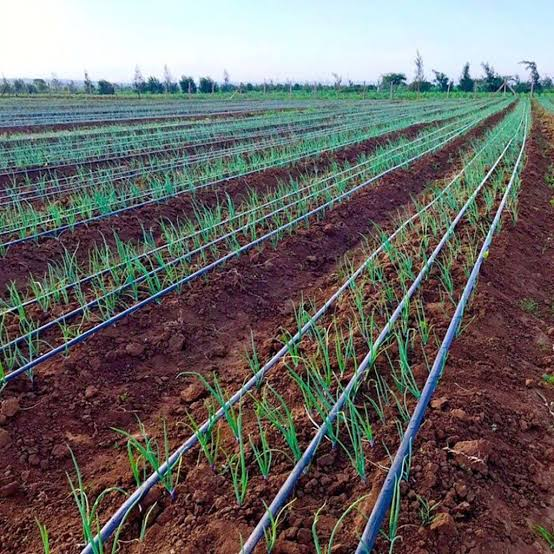
- Use drip irrigation instead of overhead sprinklers
- Overhead irrigation wets the foliage and creates ideal conditions for powdery mildew
- If you must use furrow irrigation, water early in the day so leaves dry quickly
- In arid and semi-arid regions where onion farming in Kenya is expanding, drip irrigation is both water-efficient and disease-preventive
Nutrient Management:
- Apply balanced fertilizers avoid excessive nitrogen
- Excessive nitrogen promotes lush, succulent growth that is more susceptible to powdery mildew
- Use DAP at transplanting as recommended for onion farming in Kenya
- Consider foliar applications this has shown both fertilizer and fungicidal effects.
Weed Control:
- Remove weeds before and during the growing season
- Many weeds serve as reservoirs for the powdery pathogen
- Use an appropriate herbicide after transplanting for effective weed control in onion farming in Kenya
Sanitation:
- Remove and destroy the first diseased leaves immediately
- Eliminate volunteer onions from previous crops
- After harvest, uproot and destroy all plant residues do not compost infected material
- Practice deep tillage to bury any remaining inoculum
Strategy 2: Resistant Varieties:
While specific powdery mildew-resistant onion varieties are still being researched globally, choosing the right variety for your region is crucial. In onion farming in Kenya, popular varieties include:
| Variety | Characteristics | Suitability |
|---|---|---|
| Red Coach F1 | High yield, good market color | Most popular in Kenya |
| Malbec F1 | Disease tolerant, high yielding | Good for various regions |
| African Red F1 | Early maturing, drought-tolerant | Ideal for ASAL regions |
| Neptune F1 | High yielding, disease tolerant | Suitable for multiple counties |
Strategy 4: Chemical Control:
When cultural and biological methods are insufficient, chemical fungicides remain an important tool. In commercial onion farming in Kenya, the following active ingredients are effective:
Sulfur-Based Fungicides
- Approved for organic farming
- Preventive action must be applied before infection or at very early stages
- Avoid application in temperatures above 30°C to prevent phytotoxicity
Application Guidelines:
- Scout fields regularly early detection is critical
- Apply fungicides at the first sign of disease
- Ensure thorough coverage of both leaf surfaces
- Follow manufacturer rates and pre-harvest intervals
- Rotate fungicides with different modes of action
- In most cases, only 1-2 applications per season are needed
Chapter 5: Common Mistakes in Managing Powdery Mildew:
Mistake 1: Waiting Too Long to Act:
Powdery mildew in onion farming in Kenya can explode from a few spots to a field-wide epidemic in 2-3 weeks. By the time you see heavy sporulation, significant damage has already occurred.
Solution: Scout your fields at least twice weekly during high-risk periods.
Mistake 2: Relying Only on Chemicals:
Spraying fungicides without addressing cultural factors is like treating symptoms without curing the disease.
Solution: Implement the full IDM package: cultural, biological, and chemical methods together.
Mistake 3: Using Overhead Irrigation:
Wetting the foliage creates perfect conditions for powdery mildew and other fungal diseases.
Solution: Switch to drip irrigation it’s both water-efficient and disease-preventive.
Mistake 4: Planting Too Densely:
Many farmers in onion farming in Kenya try to maximize yield by overcrowding, but this backfires by creating a humid microclimate.
Solution: Follow recommended spacing (30cm × 8-10cm) religiously.
Mistake 5: Ignoring Weeds and Volunteer Crops:
Weeds and volunteer onions are silent reservoirs of Powdery Mildew
Solution: Maintain clean fields and remove all volunteer plants.
Mistake 6: Using the Same Fungicide Repeatedly:
This selects for resistant pathogen populations.
Solution: Rotate fungicides with different modes of action.
Are you in need of in-depth knowledge on onion and garlic production? If yes, we are a call away. Contact us for: Onion seedlings, Garlic seedlings, Germinated garlic cloves, Farm planning services, Soil testing, training on onion and garlic growing, Drip irrigation installation and maintenance, Agronomic support, Onion and Garlic value pack and Farm management. For free consultation, placing orders or booking a visit with an agronomist, please contact us via Call or what’s app +254703982228, Email: info@oniondoctor.co.ke You can also check out our social media handles for daily updates on TikTok: https://www.tiktok.com/@oniondoctorke0706252490?_r=1&_t=ZS-96UPUyx6ESL Instagram:https://www.instagram.com/oniondoctorke?igsh=MW5sZzJ6c3BnZ3Z0dw==Facebook:https://www.facebook.com/share/1HouRgLCwS/Twitter:https://x.com/OnionDoctorKe?s=20