
Onion farming in Kenya has emerged as one of the most profitable agribusiness ventures for both small-scale and commercial farmers. With the demand for onions remaining consistently high throughout the year, onion farming in Kenya offers a reliable source of income for farmers across the country. Whether you’re in Nyeri, Kajiado, Meru, Nakuru, or Narok, onion farming in Kenya can transform your agricultural enterprise into a thriving business.The beauty of onion farming in Kenya lies in its versatility onions can be grown throughout the year with proper irrigation, and the crop commands excellent prices in both local and regional markets. However, success in onion farming in Kenya requires knowledge, precision, and the ability to manage diseases like Purple Blotch effectively. This is where the concept of the “Onion Doctor” becomes invaluable.
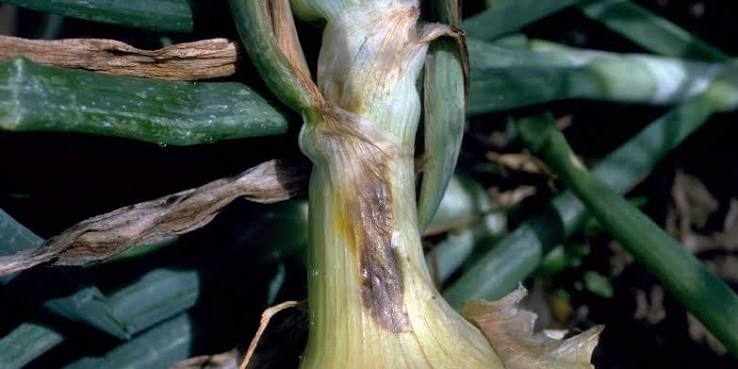
The Purple Blotch Menace: The Biggest Threat to Onion Farming in Kenya:
What is Purple Blotch?
Purple Blotch is caused by the fungus Alternaria porri and represents one of the most destructive diseases threatening onion farming in Kenya. This fungal infection can attack all above-ground parts of the onion plant, including the leaves and bulbs, causing significant economic losses for farmers engaged in onion farming in Kenya.The pathogen thrives in warm and moist environmental conditions that are common in many onion-growing regions of Kenya. For anyone serious about onion farming in Kenya, understanding Purple Blotch is not optional; it’s a necessity for survival in this business.
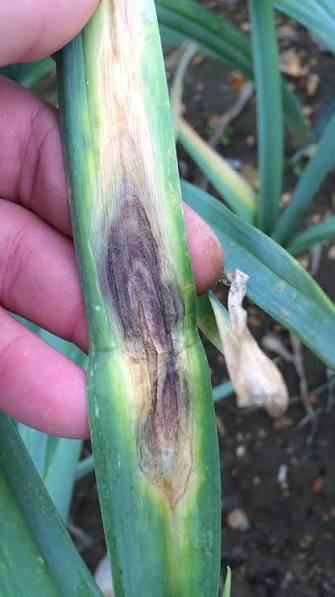
The Disease Cycle of Purple Blotch:
Understanding the disease cycle is crucial for effective onion farming in Kenya. The Purple Blotch pathogen overwinters in crop residue on or near the soil surface. Spores are produced at night and released in the morning as humidity decreases. These spores are spread by wind or splashing rain to healthy plants, initiating new infections. What’s alarming for onion farming in Kenya is the speed of this disease. Symptoms appear just 1-4 days after infection, and black spores are produced by fresh lesions within 5 days. This rapid cycle means that without the Onion Doctor’s vigilant monitoring, an entire field can be compromised in a matter of weeks.
Symptoms:
- Small, water-soaked lesions on leaves and stalks.
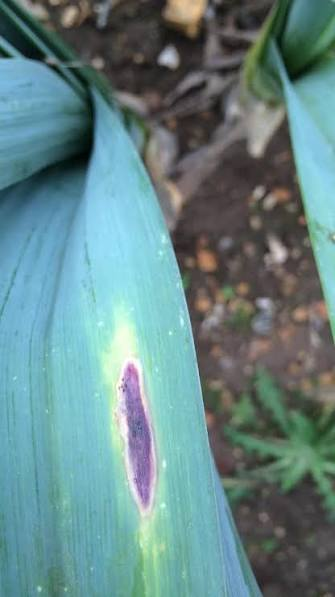
- Lesions expand into elliptical or irregular purple spots with yellow halos.
- In humid conditions, lesions may be covered with dark fungal spores.
- Leaves may wilt or die prematurely.
Conditions Favoring Infection:
- Warm, humid weather (25–30°C or 77–86°F).
- Leaf wetness (from dew, rain, or irrigation).
- Poor air circulation in dense plantings.
Best Practices for Onion Farming in Kenya: The Onion Doctor’s Prescription:
1. Selecting the Right Varieties for Onion Farming in Kenya:
The foundation of successful onion farming in Kenya begins with choosing the right varieties. Onion Doctor recommends several high-performing varieties:
- Red Coach: Early maturing, drought-tolerant, and popular for its pungent flavor and good storage quality
- Neptune: High-yielding with excellent market appeal
- African Red: Resistant to diseases and produces large bulbs
- Jambar : The most popular variety in Kenya, known for high yields and bigger bulb sizes
- Chui: High-yielding and disease-tolerant
2. Soil and Climate Requirements for Onion Farming in Kenya:
The Onion Doctor emphasizes that onion farming in Kenya requires specific environmental conditions:
- Soil Type: Well-drained, sandy loam soil rich in organic matter
- Soil pH: 6.0–7.0
- Temperature: 13°C to 30°C
- Rainfall: Moderate and well-distributed
- Sunlight: Good exposure essential for bulb development
Farmers engaged in onion farming in Kenya should always conduct soil testing before planting to understand nutrient deficiencies and optimize fertilizer application. Onion Doctor offers Soil Testing services at Ksh 5,000.
3. Land Preparation: The Foundation of Onion Farming in Kenya:
Proper land preparation is critical for root development and bulb expansion in onion farming in Kenya:
- Clear the land of weeds and previous crop residues
- Plough thoroughly 2-3 weeks before transplanting
- Harrow 1-2 times to obtain fine tilth
- Add organic manure or well-decomposed compost
- Prepare raised beds to improve drainage
- Ensure proper drainage to avoid waterlogging, which accelerates Purple Blotch.
Onion Doctor reminds you that onion farming in Kenya fails when farmers rush land preparation. Take time to prepare your field properly it’s an investment that pays dividends.
4. Nursery Management in Onion Farming in Kenya:
All onions in Kenya are raised in nurseries before transplanting. The Onion Doctor’s nursery management protocol for onion farming in Kenya includes:
- Nursery bed dimensions: 1 meter wide and 10-15 cm high
- Seed sowing: Make shallow drills 1-2 cm deep, spaced 15-20 cm apart
- Seed rate: 1-1.8 kg per acre depending on variety and irrigation method
- Germination: Occurs in 5-7 days with proper moisture
- Trimming: On the 6th week, trim seedlings and apply fungicide to prevent Downy Mildew and encourage root development
- Transplanting time: When seedlings have 3-5 well-formed leaves (usually 6-8 weeks)
For successful onion farming in Kenya, harden seedlings 10 days before transplanting by reducing water and exposing them to sunlight. This prepares them for field conditions.
The Onion Doctor’s Purple Blotch Management Protocol:
Cultural and Preventive Measures:
The Onion Doctor’s approach to managing Purple Blotch in onion farming in Kenya starts with prevention:
- Crop Rotation: Avoid planting onions in the same field season after season. A 3-4 year rotation program is recommended to prevent disease buildup .
- Field Sanitation: Remove and destroy crop residues after harvest to eliminate overwintering pathogens.
- Proper Spacing: Maintain 30 cm between rows and 8-10 cm between plants to ensure good airflow, which reduces humidity around plants.
- Water Management: Use drip irrigation instead of overhead irrigation to keep foliage dry. Stop irrigation 3-4 weeks before harvesting to facilitate neck drying .
- Certified Seeds: Always use disease-free, certified seeds to prevent introducing the pathogen to your field.
Chemical Control: The Onion Doctor’s Fungicide:
When preventive measures aren’t enough, the Onion Doctor recommends these for effective onion farming in Kenya:
- Always mix fungicides: a sticker, preventive and curative that improves efficacy
- Alternate fungicides throughout the season to prevent pathogen resistance
- Apply in the morning or evening when humidity is lower
- Ensure thorough coverage of both leaf surfaces
Biological and Innovative Control Methods:
Studies show that Datura stramonium extracts have shown potential as alternative disease control agents against Purple Blotch of onions in Kenya.For farmers practicing sustainable onion farming in Kenya, these biological approaches represent the future of disease management.
When to Harvest Onions in Kenya:
The Onion Doctor’s harvest indicators for onion farming in Kenya:
- 70-80% of tops fall over and begin to dry
- Leaves turn yellowish-brown
- Neck tissue softens
- Bulbs have reached full size (typically 90-150 days depending on variety)
Curing and Storage:
Proper post-harvest handling is where many onion farming in Kenya operations fail:
- Cure onions under shade for 7-14 days never in direct sunlight
- Trim roots and necks after curing
- Sort for market or storage quality
- Ensure complete dryness before storage to prevent rotting
- Store in well-ventilated, dry facilities with good air circulation
The Onion Doctor emphasizes that poor curing leads to neck rot and storage losses, turning a profitable onion farming in Kenya venture into a financial disaster.
Are you in need of in-depth knowledge on onion and garlic production? If yes, we are a call away. Contact us for: Onion seedlings, Garlic seedlings, Germinated garlic cloves, Farm planning services, Soil testing, training on onion and garlic growing, Drip irrigation installation and maintenance, Agronomic support, Onion and Garlic value pack and Farm management. For free consultation, placing orders or booking a visit with an agronomist, please contact us via Call or what’s app +254703982228, Email: info@oniondoctor.co.ke You can also check out our social media handles for daily updates on TikTok: https://www.tiktok.com/@oniondoctorke0706252490?_r=1&_t=ZS-96UPUyx6ESL Instagram:https://www.instagram.com/oniondoctorke?igsh=MW5sZzJ6c3BnZ3Z0dw==Facebook:https://www.facebook.com/share/1HouRgLCwS/Twitter:https://x.com/OnionDoctorKe?s=20