
Onion farming in Kenya has grown significantly over the past decade, becoming one of the most profitable horticultural ventures for smallholder and large-scale farmers alike. However, onion farming in Kenya faces numerous challenges, with downy mildew standing out as one of the most destructive diseases threatening yields and profitability. This comprehensive guide is designed to equip every farmer engaged in onion farming in Kenya with the knowledge needed to identify, prevent, and manage this devastating disease effectively. Whether you are a beginner just starting onion farming in Kenya or an experienced grower looking to refine your disease management strategies, understanding downy mildew is critical to your success. In onion farming in Kenya, where climatic conditions in highland regions like Timau, Molo, and parts of the Rift Valley create ideal environments for this pathogen, proactive management is not optional it is essential.
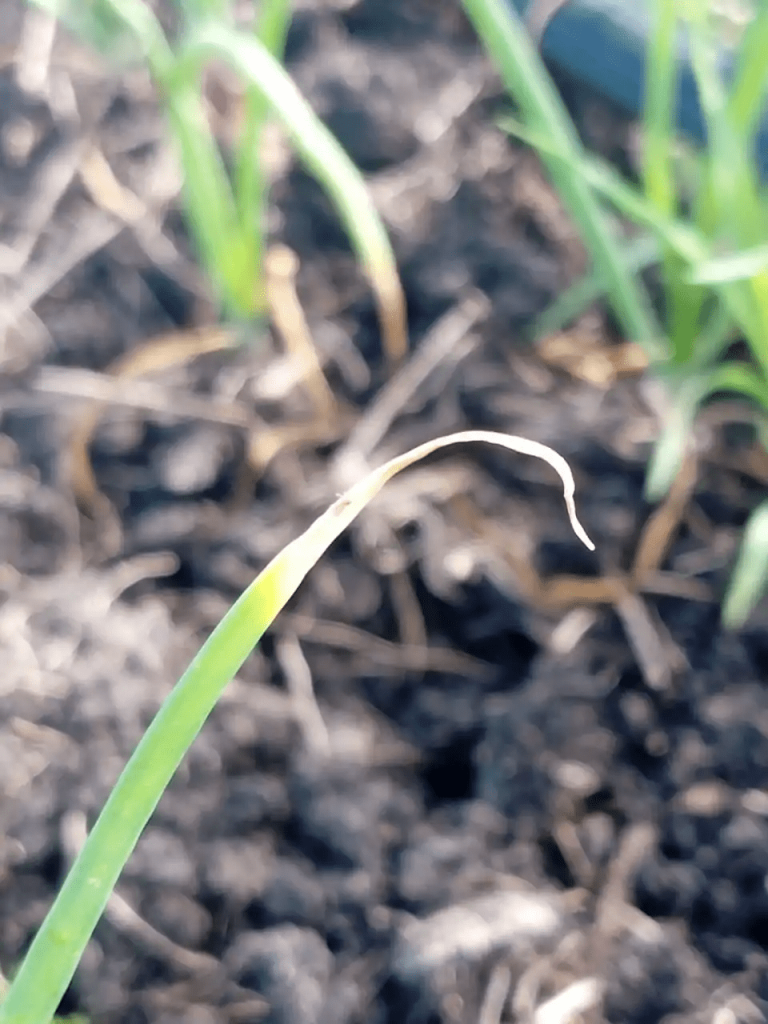
What is Downy Mildew?
Downy mildew is a fungal-like disease caused by the oomycete Peronospora destructor. Despite being commonly referred to as a fungus, it is actually a water mold that thrives in cool, humid conditions. In onion farming in Kenya, this disease is particularly problematic during the long rains and in irrigated fields where moisture levels remain high.The pathogen attacks the leaves first, destroying the photosynthetic capacity of the plant, and can later infect the bulbs, rendering them unmarketable or causing them to rot in storage. For farmers practicing onion farming in Kenya, where profit margins can be tight and market prices fluctuate, a downy mildew outbreak can mean the difference between a profitable season and total crop loss.
Why Downy Mildew Matters for Onion Farming in Kenya:
The economic impact of downy mildew in onion farming in Kenya cannot be overstated. Globally, yield losses from uncontrolled downy mildew can range from 30% to 75%, with extreme cases reporting losses of up to 80% in favorable disease conditions. In onion farming in Kenya, where many smallholder farmers rely on onion sales for household income and school fees, such losses are devastating. The disease not only reduces bulb size and quality. In onion farming in Kenya, where post-harvest handling infrastructure is often limited, these secondary infections can destroy an entire harvest during storage.Moreover, onion farming in Kenya is increasingly becoming export-oriented, with Kenyan onions finding markets in Tanzania, Uganda, and the Middle East. Export markets demand high-quality, disease-free bulbs. Downy mildew-infected onions fail to meet these standards, locking farmers out of premium markets. Therefore, mastering downy mildew management is a key competitive advantage in modern onion farming in Kenya.
How Downy Mildew Spreads: The Disease Cycle:
Understanding the disease cycle is the first step toward effective management in onion farming in Kenya. The pathogen has a complex life cycle with multiple survival strategies:
Primary Inoculum Sources:
- Infected crop residues: Spores can survive in soil for many years, even up to 25 years under certain conditions.
- Volunteer onions and weeds: Wild alliums and unharvested bulbs can harbor the pathogen between seasons.
- Infected seed and transplants: Using contaminated planting material introduces the disease directly into clean fields.
- Systemically infected bulbs: The fungus can remain dormant inside bulbs and activate during storage or after planting.
Disease Development:
Once conditions are favorable typically when nighttime temperatures range between 4°C and 24°C and relative humidity exceeds 95% the pathogen produces sporangia on infected leaves. These spores are dispersed by wind and splashing rain to neighboring plants. In onion farming in Kenya, the cool, wet conditions of the highlands and the heavy dews common in early morning create perfect conditions for spore production.The disease cycle can complete in as little as 11–15 days, meaning an outbreak can escalate from a few spotted leaves to a field-wide epidemic within two to three weeks. This rapid progression makes early detection and immediate action critical in onion farming in Kenya.
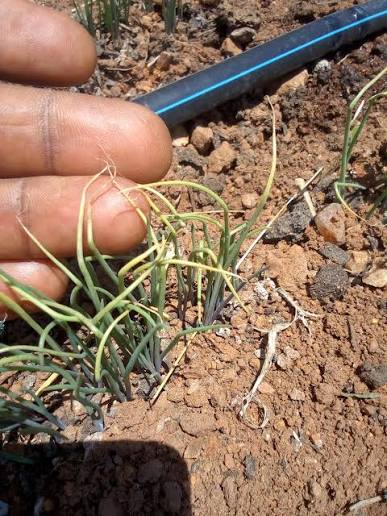
Recognizing the Symptoms: Early Detection Saves Crops:
Early identification of downy mildew is vital for successful onion farming in Kenya. Farmers should scout their fields at least twice a week, paying close attention to the following symptoms:
SYMPTOMS OF DOWNEY MILDEW:
- Pale or yellowish spots on leaves, which later turn brown and collapse.
- Leaf curling and tip dieback.
- Premature bulb ripening and reduced bulb size.
- Severely infected fields may show patchy stunted growth.
CONDITIONS THAT FAVOR DOWNEY MILDEW:
- Cool (10–22°C or 50–72°F), moist environments.
- Prolonged leaf wetness from dew, rain, or irrigation.
- Dense canopies that reduce airflow.
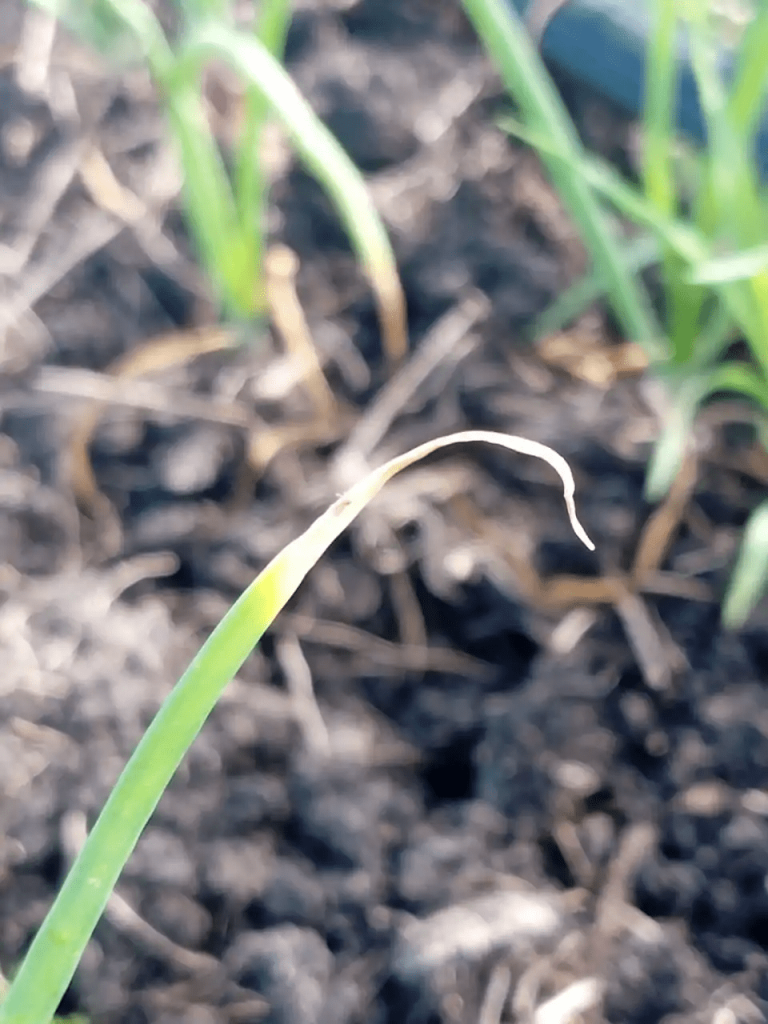
EFFECTS OF DOWNEY MILDEW IN ONION:
- Downy mildew in onions causes yellowing, curling, and collapse of leaves, reducing photosynthesis.
- It leads to stunted growth, premature bulb ripening, and smaller, lower-quality bulbs.
- Severely infected crops suffer 30–60% or more yield loss.
- The disease also increases vulnerability to secondary infections like soft rot.
- Economic impacts include reduced market value and higher costs for fungicides and crop management.
Integrated Disease Management: A Multi-Pronged Approach:
There is no single silver bullet for downy mildew in onion farming in Kenya. The most successful farmers use an Integrated Pest Management (IPM) approach combining cultural, biological, and chemical strategies.
1. Cultural Control Practices:
Crop Rotation Practice a minimum 3-year rotation away from allium crops (onions, garlic, leeks, chives) and allium-family weeds. In onion farming in Kenya, where land may be limited, this requires careful planning, but it is one of the most effective long-term strategies for reducing soil-borne inoculum.
Field Selection and Layout:
- Choose well-drained fields with good air movement.
- Align rows with prevailing winds to promote rapid leaf drying.
- Avoid low-lying, shaded areas where dew persists longer.
- In onion farming in Kenya, proper field selection can reduce disease pressure significantly.
Spacing and Plant Density:
- Avoid overcrowding. Proper spacing (typically 10–15 cm between plants and 30 cm between rows) improves air circulation and reduces canopy humidity.
- Thin dense stands promptly.
Irrigation Management:
- Avoid overhead sprinklers if possible. Use drip irrigation to keep foliage dry.
- If overhead irrigation is unavoidable, schedule applications to allow maximum leaf drying time before evening.
- In onion farming in Kenya, where drip irrigation is increasingly adopted, this practice offers dual benefits of water conservation and disease reduction.
Sanitation:
- Remove and destroy all onion crop residues after harvest. Do not compost infected material near fields.
- Eliminate volunteer onions and allium weeds, which act as reservoirs.
- Clean and disinfect storage facilities and equipment.
Nutrient Management:
- Avoid excessive nitrogen application, which produces soft, succulent leaves that are more susceptible to infection.
- Use balanced fertilization based on soil tests. In onion farming in Kenya, soil testing services are available through Onion Doctor.
2. Use of Certified, Disease-Free Seed and Transplants:
Always start with certified, disease-free seed or transplants. In onion farming in Kenya, using quality planting material from reputable suppliers like Onion Doctor is a foundational practice.
3. Biological Control:
For organic onion farming in Kenya, biological control options include:
- Bacillus subtilis-based products: These can suppress downy mildew and are approved for organic production.
- Copper-based formulations: While less effective than synthetic fungicides, products like copper sulfate offer some protection. However, they can cause phytotoxicity if overused.
Always verify organic certification status with your certifying body before applying any product in organic onion farming in Kenya.
5. Chemical Control: Fungicide Strategies:
Fungicides remain the most reliable method for managing downy mildew in conventional onion farming in Kenya. However, improper use leads to resistance, environmental contamination, and residue problems. Follow these principles:
Key Principles
- Start early: Apply at the first sign of disease or when weather conditions favor disease development.
- Rotate modes of action: Never use the same fungicide group repeatedly. Alternate to prevent resistance.
- Ensure thorough coverage: Good spray coverage of the leaf canopy is essential.
- Follow pre-harvest intervals (PHI): Respect label restrictions to avoid residue violations, especially for export-bound onion farming in Kenya.
In onion farming in Kenya, products(mancozeb-based) are commonly recommended for downy mildew control and are best applied between 0–6 weeks after planting. Always consult with a licensed agrovet and read product labels carefully.
Conclusion: Securing the Future of Onion Farming in Kenya:
Downy mildew is a formidable adversary in onion farming in Kenya, but it is not invincible. Through knowledge, vigilance, and integrated management, Kenyan farmers can protect their crops, secure their incomes, and contribute to the nation’s food security and export earnings.The future of onion farming in Kenya depends on adopting modern, science-based practices while respecting the environment and human health. By combining cultural practices, resistant varieties where available, biological controls, and judicious chemical use, farmers can keep downy mildew at bay and ensure that onion farming in Kenya remains a thriving, profitable industry for generations to come.
Are you in need of in-depth knowledge on onion and garlic production? If yes, we are a call away. Contact us for: Onion seedlings, Garlic seedlings, Germinated garlic cloves, Farm planning services, Soil testing, training on onion and garlic growing, Drip irrigation installation and maintenance, Agronomic support, Onion and Garlic value pack and Farm management. For free consultation, placing orders or booking a visit with an agronomist, please contact us via Call or what’s app +254703982228, Email: info@oniondoctor.co.ke You can also check out our social media handles for daily updates on TikTok: https://www.tiktok.com/@oniondoctorke0706252490?_r=1&_t=ZS-96UPUyx6ESL Instagram:https://www.instagram.com/oniondoctorke?igsh=MW5sZzJ6c3BnZ3Z0dw==Facebook:https://www.facebook.com/share/1HouRgLCwS/Twitter:https://x.com/OnionDoctorKe?s=20