
Onion farming in Kenya has emerged as one of the most lucrative agribusiness ventures for both small-scale and commercial farmers. With Kenya importing a significant portion of its onion consumption from Tanzania, the domestic market presents a massive, underserved opportunity. Whether you’re a first-time farmer or an experienced agricultural entrepreneur, onion farming in Kenya offers the potential to generate impressive returns up to KSh 1 million per acre in peak seasons. At the heart of this agricultural revolution is Onion Doctor, a pioneering climate-smart agricultural solutions provider dedicated to transforming how onion farming in Kenya is practiced. With their end-to-end support system from drought-resistant seedlings to IoT-powered pest monitoring. Onion Doctor is empowering thousands of smallholder farmers to turn arid lands into profitable onion-producing hubs. In this comprehensive guide, we’ll walk you through every aspect of onion farming in Kenya, from selecting the best varieties to post-harvest handling, with expert insights from Onion Doctor to help you maximize your profits.
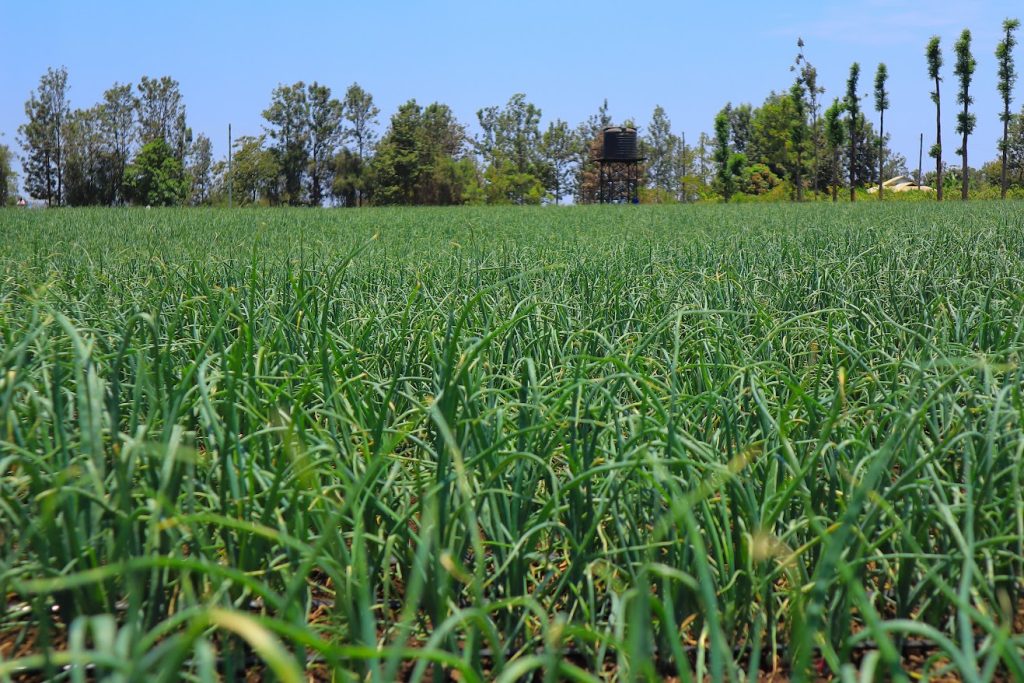
Understanding the Onion Market in Kenya:
Why Kenya Imports Onions:
Despite the profitability of onion farming in Kenya, the country still imports approximately 70,000–90,000 metric tonnes annually to meet domestic demand. This gap exists because:
- Seasonal production patterns leave supply gaps during certain months
- Limited adoption of irrigation restricts year-round production
- Post-harvest losses reduce available market supply
- Inconsistent quality from some local producers
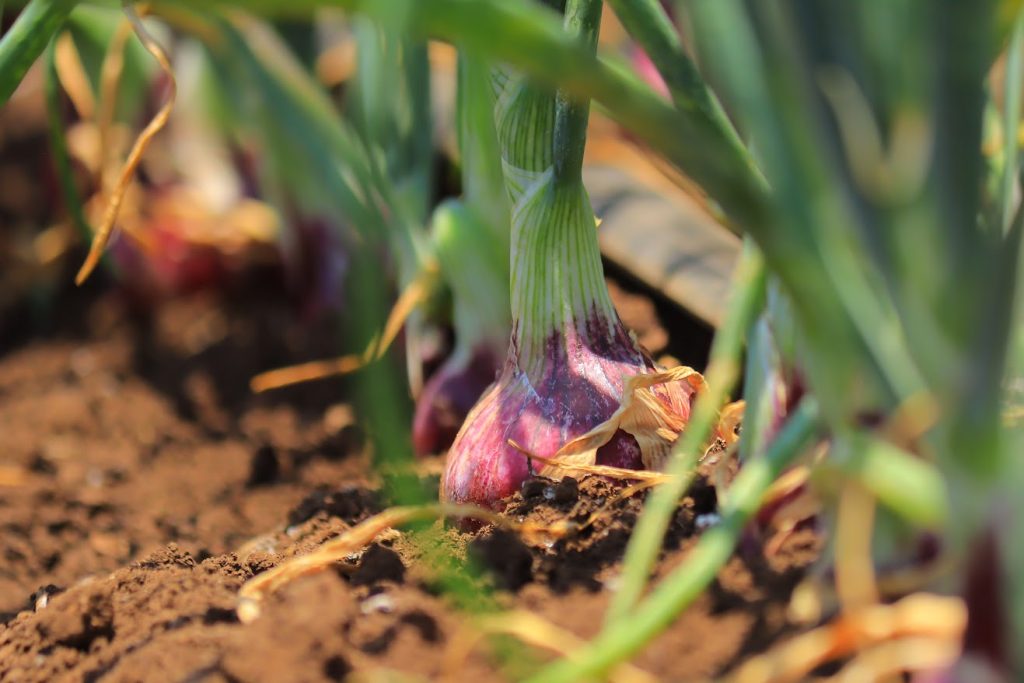
This import dependency creates a golden opportunity for Kenyan farmers. By strategically timing your harvest to coincide with import gaps (particularly January–February),onion farming in Kenya can capture premium prices that far exceed production costs.
Choosing the Right Onion Varieties for Kenyan Conditions:
Variety selection is perhaps the most critical decision in onion farming in Kenya. The wrong variety can mean the difference between a bumper harvest and total crop failure. Here are the top varieties recommended by Onion Doctor:
1. Red Creole:
- Type: Open-pollinated, traditional favorite
- Maturity: 130–150 days after transplanting
- Yield potential: 10,000–15,000 kg per acre
- Characteristics: Deep red color, flat-round bulbs, very pungent
- Storage: Excellent—can store 4–6 months
- Best for: Farmers targeting local markets and long-term storage
2. Bombay Red:
- Type: Open-pollinated, drought-tolerant
- Maturity: 135–150 days after transplanting
- Yield potential: 16,000–20,000 kg per acre
- Characteristics: Globe-shaped, deep purple-red, very pungent
- Best for: Dry and warmer regions, cooking applications
3. Jambar F1:
- Type: Hybrid (F1)
- Maturity: 90–120 days after transplanting
- Yield potential: Up to 18,000 kg per acre
- Characteristics: Uniform large bulbs, dark red, disease-resistant
- Resistance: Purple blotch, fusarium wilt
- Best for: Commercial farmers seeking maximum yield and premium prices
4. Red Pinoy F1:
- Type: Hybrid (F1)
- Maturity: 90 days after transplanting
- Yield potential: Up to 15,000 kg per acre
- Characteristics: Deep red, attractive bulbs, strong pungency
- Storage: Up to 6 months at room temperature
- Resistance: Downy mildew, purple blotch
- Best for: Export markets and long-distance transportation
5. Texas Grano:
- Type: Open-pollinated (white/yellow bulb)
- Maturity: 110–120 days
- Yield potential: Up to 10,000 kg per acre
- Characteristics: Large round bulbs (up to 15 cm diameter), sweet flavor
- Storage: Moderate
- Best for: Salad markets, consumers preferring mild onion taste
6. Neptune F1:
- Type: Hybrid (F1)
- Maturity: 110–120 days
- Yield potential: 20,000 kg per acre
- Characteristics: Firm, shining red bulbs, good pungency
- Storage: 5–6 months
- Resistance: Pink root
- Best for: Premium fresh market and export
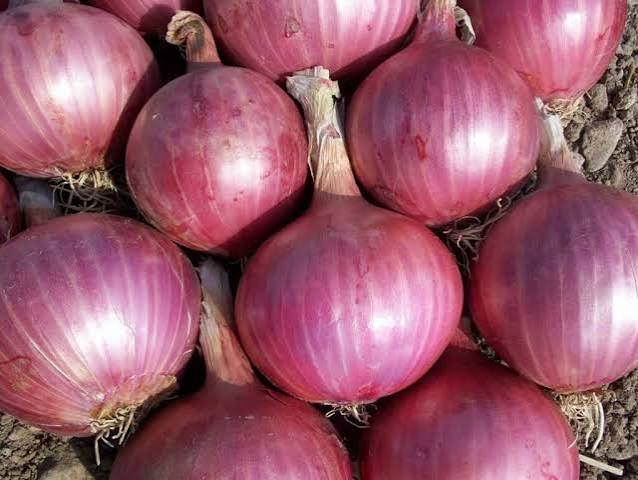
Step-by-Step Guide to Onion Farming in Kenya:
Step 1: Site Selection and Soil Testing:
Successful onion farming in Kenya begins with choosing the right location. Onions require:
- Well-drained, deep soils (avoid waterlogged clay soils)
- Soil pH: 6.0–7.0 (slightly acidic to neutral)
- Full sun exposure (minimum 6 hours daily)
- Altitude: 0–1,900 meters above sea level
- Rainfall: 500–700 mm annually (or reliable irrigation)
- Temperature: 15–30°C
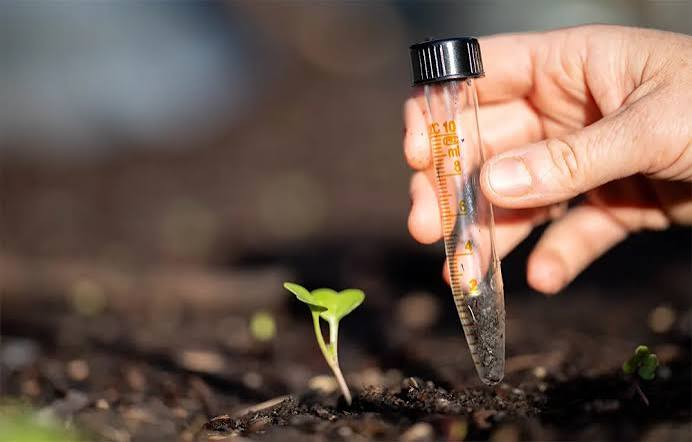
Onion Doctor’s Soil Health Testing Service: Before planting, Onion Doctor conducts comprehensive soil tests to identify nutrient deficiencies and recommend precise fertilizer programs. This scientific approach to onion farming in Kenya can increase yields by up to 100% while reducing input waste
Step 2: Land Preparation:
Proper land preparation is non-negotiable for profitable onion farming in Kenya:
- Plough thoroughly 2–3 weeks before transplanting to break soil lumps
- Harrow 1–2 times to achieve fine tilth
- Incorporate well-decomposed manure to improve soil structure
- Prepare raised beds for drainage
- Remove all weeds and debris from previous crops
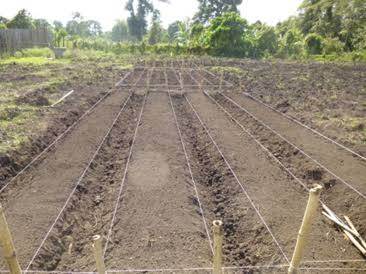
Onions are heavy feeders, so soil fertility directly impacts bulb size. For onion farming in Kenya, raised beds are particularly important during rainy seasons to prevent waterlogging and root rot.
Step 3: Nursery Establishment:
All commercial onion farming in Kenya uses transplanted seedlings raised in nurseries:
Nursery Setup:
- Plot size: 1.2m wide beds of conventional length
- Mix soil with well-decomposed farmyard manure
- Create shallow drills 1–2 cm deep, spaced 15–20 cm apart
- Sow seeds thinly and cover lightly with soil or fine manure
- Seed requirement: 1–1.5 kg per acre (depending on variety)
Nursery Management:
- Germination occurs in 5–7 days
- Maintain damp (not waterlogged) conditions for 6 weeks
- Irrigate in morning hours
- At week 6: Trim seedlings and apply fungicide to prevent downy mildew
- Ready for transplanting: When seedlings have 3–5 well-formed leaves (pencil thickness)
Onion Doctor’s Advantage: Instead of struggling with nursery management, Onion Doctor provides certified, disease-free seedlings that are ready for transplanting. This eliminates the risk of poor germination and seedling diseases that plague many onion farming in Kenya operations.
Step 4: Transplanting:
Transplanting is a critical phase in onion farming in Kenya:
- Optimal spacing: 10 cm between plants, 30 cm between rows
- Plant population: 150,000–200,000 plants per acre
- Timing: Early morning or late afternoon to reduce transplant shock
Key Success Factors:
- Ensure seedlings are well-watered before lifting
- Plant at the same depth as in the nursery
- Firm soil around roots to eliminate air pockets
- Irrigate immediately after transplanting
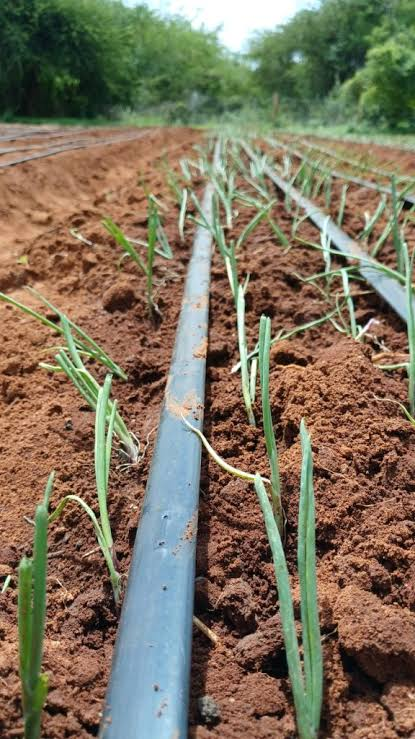
Step 5: Fertilizer and Nutrition Management:
Onions are among the most nutrient-demanding crops in onion farming in Kenya. A comprehensive nutrition program includes:
Basal Application (At Planting):
- DAP
- Well-decomposed manure
Top-Dressing Schedule:
- Week 2–3: CAN (Calcium Ammonium Nitrate) to boost vegetative growth
- Week 4–6: NPK fertilizer for balanced nutrition
- Bulbing stage: Reduce nitrogen, increase potassium for bulb development
Onion Doctor’s Precision Farming Approach: Through soil testing and customized fertilizer recommendations, Onion Doctor ensures your onion farming in Kenya operation receives exactly the nutrients needed more, no less. This precision reduces costs by up to 30% while maximizing bulb size and yield.
Step 6: Irrigation Management:
Water is the lifeblood of onion farming in Kenya.Irrigation Best Practices:
- Early growth: Frequent, light watering to establish roots
- Bulb development: Consistent moisture (never let soil completely dry)
- Maturity stage: Gradually reduce watering to prevent rotting and encourage curing
- Best method: Drip irrigation (avoids fungal diseases associated with overhead sprinklers)
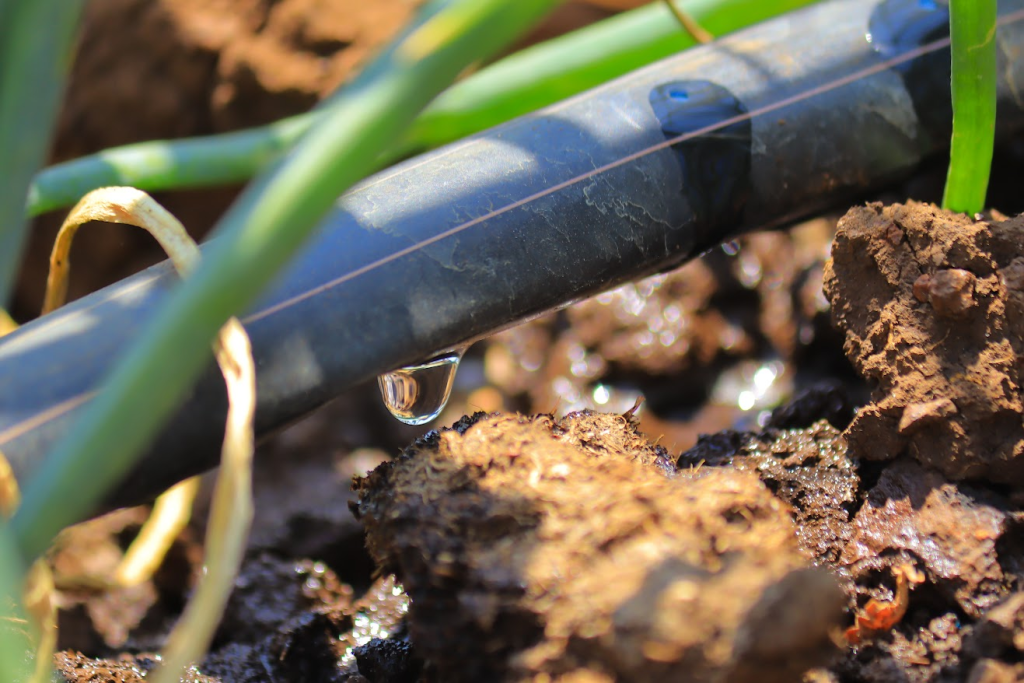
Onion Doctor’s Smart Drip Irrigation: Onion Doctor installs drip irrigation systems that deliver water directly to root zones. This technology reduces water usage by 40–60% compared to flood irrigation, essential for sustainable onion farming in Kenya, especially in arid regions.
Step 7: Weed Control:
Weeds are a major threat to onion farming in Kenya, particularly during the first 6 weeks when onions compete poorly for nutrients, water, and sunlight.
Weed Management Strategy:
- Pre-planting: Clear all weeds before transplanting
- Early post-emergence: Apply herbicides when weeds have 3–4 leaves
- Manual weeding: Be careful not to damage shallow onion roots
- Mulching: Apply organic mulch after bulb formation to suppress weeds and retain moisture
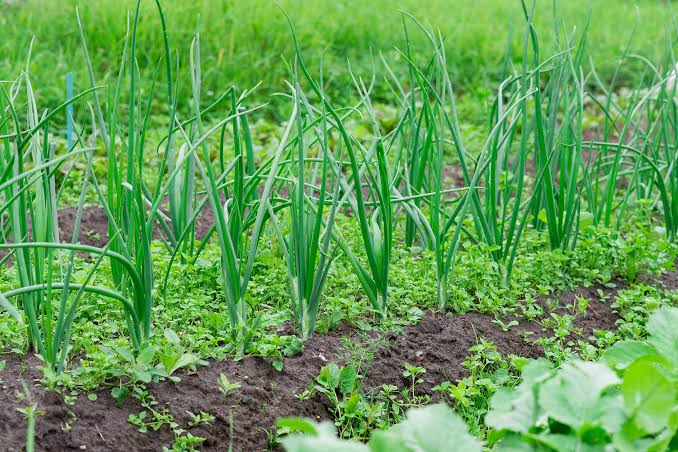
Critical Warning: Poor weed control can reduce yields by 50% or more. In onion farming in Kenya, early weed management is not optional it’s essential.
Step 8: Pest and Disease Management:
Pests and diseases represent the biggest risk to profitable onion farming in Kenya. An integrated pest management (IPM) approach is essential.
Major Pests in Onion Farming in Kenya:
| Pest | Damage | Control Measures |
|---|---|---|
| Thrips | Silvery streaks on leaves, 30–50% yield loss | Pesticide, biological controls (Beauveria bassiana) |
| Cutworms | Seedling destruction at soil level | Pesticide, physical barriers |
| Onion maggots | Root damage, plant wilting | Soil drenches, crop rotation |
| Leaf miners | Tunneling in leaves, reduced photosynthesis | Insecticides, weed control |
Major Diseases in Onion Farming in Kenya:
| Disease | Symptoms | Control Measures |
|---|---|---|
| Downy mildew | Pale green/yellow patches, fuzzy growth on undersides | Fungicides, resistant varieties, proper spacing |
| Purple blotch | Purple lesions on leaves, leaf death | fungicide rotation |
| Bacterial soft rot | Water-soaked, foul-smelling bulbs | Crop rotation, proper curing, avoid injury |
| Neck rot | Decay at neck, spreading to bulb | Fungicide, proper drying after harvest |
| Pink/White root rot | Discolored roots, stunted growth | Resistant varieties (Neptune F1), soil fumigation |
Onion Doctor’s Disease Monitoring: Onion Doctor monitors humidity, temperature, and disease pressure in real-time. This early warning system allows farmers to apply preventive treatments before diseases devastate their onion farming in Kenya investment.
Harvesting and Post-Harvest Handling: The Profit-Making Difference:
When to Harvest:
In onion farming in Kenya, timing your harvest correctly can increase profits by 30–50%. Onions are ready when:
- Tops turn brown or yellow and fall over naturally
- Neck tissue softens
- Plants have approximately 13 leaves
- Bulbs have formed a shiny, membranous cover
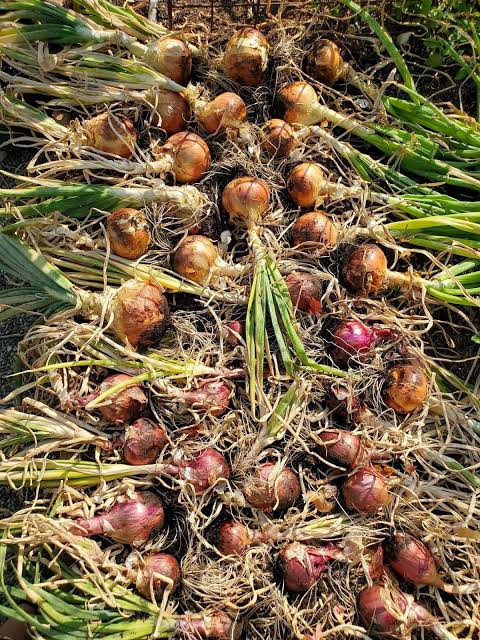
Pro Tip: Harvest during dry weather, ideally in the morning. Wet conditions during harvest increase disease risk and reduce storage life.
Curing: The Secret to Premium Pricing:
Curing is where average onion farming in Kenya operations separate from highly profitable ones. Proper curing:
- Dries outer scales and necks
- Extends storage life from weeks to months
- Prevents bacterial and fungal infections
- Dramatically improves market price
Curing Protocol:
- Field curing: Lay bulbs in rows with tops of one row covering bulbs of the next (prevents sunscald)
- Shade curing: Move to well-ventilated shade for 7–14 days
- Trim: Cut roots and necks after complete drying
- Sort: Grade by size, removing damaged or diseased bulbs
- Store: In well-ventilated, dry facilities
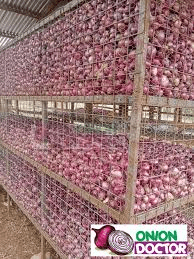
Onion Doctor’s Post-Harvest Support: Onion Doctor trains farmers in proper curing techniques and provides access to improved storage facilities. Their market linkage program ensures cured, high-quality onions reach premium buyers rather than discount brokers.
Common Mistakes to Avoid in Onion Farming in Kenya:
Even experienced farmers make costly errors. Here are the top mistakes to avoid:
- Using uncertified seed: Counterfeit seeds are a leading cause of crop failure. Always buy from Onion Doctor.
- Poor drainage: Waterlogged soil causes root rot and total crop loss.
- Inconsistent irrigation: Irregular watering leads to split bulbs and poor storage life.
- Neglecting thrips: By the time you see damage, yield loss is already severe.
- Skipping soil tests: Blind fertilizer application wastes money and damages soil health.
- Poor curing: Rushing to market with uncured onions results in heavy losses.
- No buyer lined up: Selling in a excess market destroys profitability.
- Wrong variety for your region: Not all varieties perform well in all agro-ecological zone
Are you in need of in-depth knowledge on onion and garlic production? If yes, we are a call away. Contact us for: Onion seedlings, Garlic seedlings, Germinated garlic cloves, Farm planning services, Soil testing, training on onion and garlic growing, Drip irrigation installation and maintenance, Agronomic support, Onion and Garlic value pack and Farm management. For free consultation, placing orders or booking a visit with an agronomist, please contact us via Call or what’s app +254703982228, Email: info@oniondoctor.co.ke You can also check out our social media handles for daily updates on TikTok: https://www.tiktok.com/@oniondoctorke0706252490?_r=1&_t=ZS-96UPUyx6ESL Instagram:https://www.instagram.com/oniondoctorke?igsh=MW5sZzJ6c3BnZ3Z0dw==Facebook:https://www.facebook.com/share/1HouRgLCwS/Twitter:https://x.com/OnionDoctorKe?s=20