
Onion farming in Kenya has experienced remarkable growth over the past decade, with farmers increasingly turning to modern agricultural technologies to maximize yields and profitability. Among these innovations, drip irrigation stands out as the most transformative solution for onion cultivation. Drip irrigation offers Kenyan onion farmers an efficient, water-saving, and yield-boosting method that addresses the unique challenges of growing onions in Kenya’s diverse agro-ecological zones. At Onion Doctor, we believe that mastering drip irrigation is the key to unlocking the full potential of your onion farm. This comprehensive guide will walk you through everything you need to know about drip irrigation from system design and installation to maintenance and optimization so you can grow healthier, more profitable onions year-round.
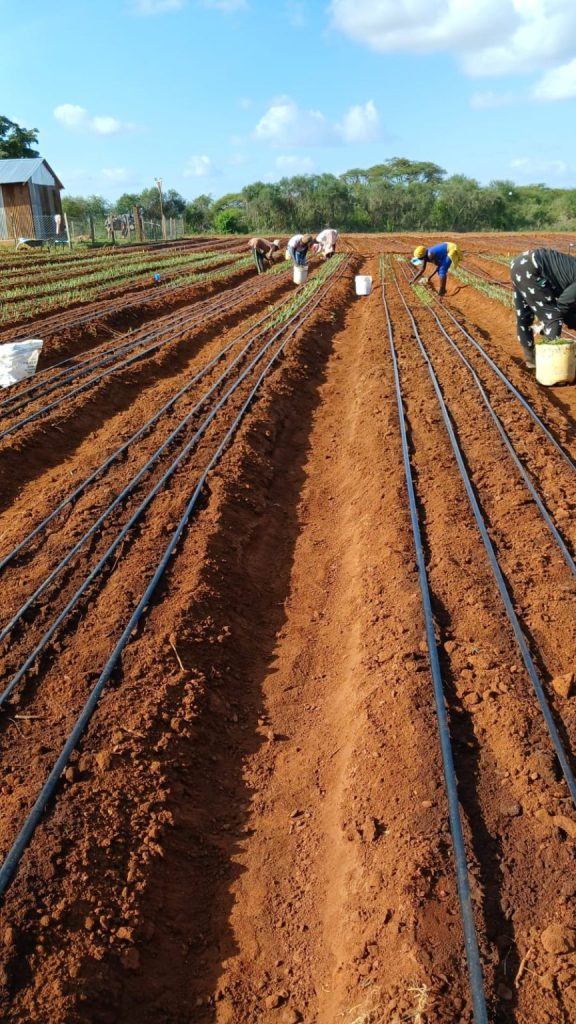
Chapter 1: Understanding Drip Irrigation and Its Importance for Onion Farming:
What is Drip Irrigation?
Drip irrigation is a micro-irrigation system that delivers water directly to the root zone of plants through a network of valves, pipes, tubing, and emitters. Unlike traditional flood or sprinkler irrigation, drip irrigation ensures that water is applied slowly and precisely where it is needed most at the base of each onion plant. For onion farmers in Kenya, drip irrigation is particularly valuable because onions have shallow root systems that require consistent, controlled moisture. Drip irrigation provides exactly that, reducing water waste while promoting optimal bulb development.
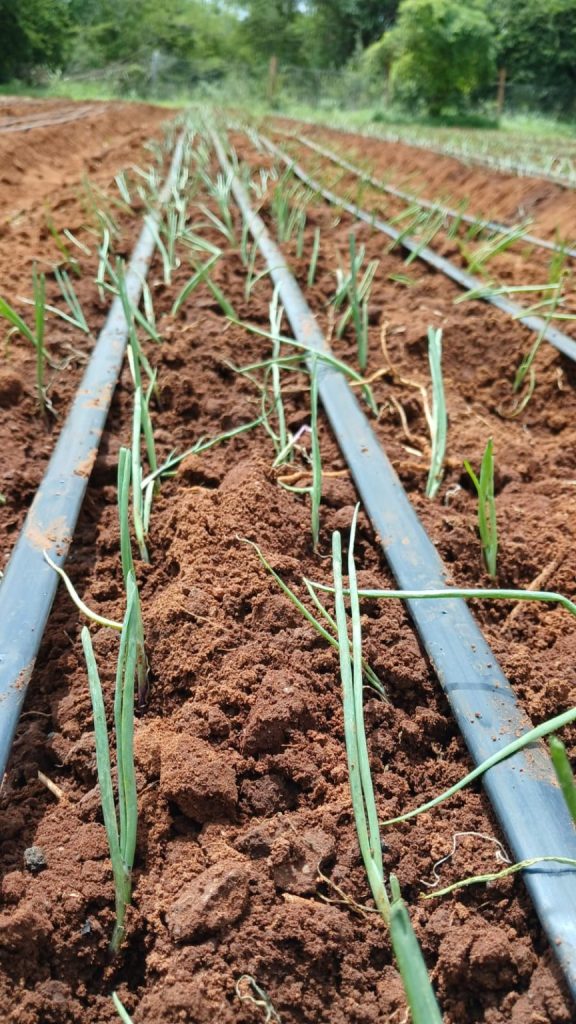
Why Drip Irrigation is Essential for Onion Farming in Kenya:
Kenya’s agricultural landscape is characterized by unpredictable rainfall patterns, prolonged dry seasons, and increasing water scarcity. Drip irrigation addresses these challenges head-on by:
- Water Conservation: Drip irrigation can reduce water usage by up to 60% compared to conventional irrigation methods. In water-scarce regions like Machakos, Kajiado, and parts of the Rift Valley, drip irrigation is not just an option it is a necessity.
- Improved Yield: Studies have shown that farms using drip irrigation achieve 20–40% higher onion yields than those relying on rain-fed or flood irrigation. Drip irrigation ensures that each onion plant receives the exact amount of water it needs, leading to uniform bulb size and better marketability.
- Weed and Disease Control: Because drip irrigation targets only the root zone, the spaces between onion rows remain dry. This significantly reduces weed growth and minimizes the spread of fungal diseases that thrive in wet foliage.
- Fertilizer Efficiency: Drip irrigation systems can be integrated with fertigation the application of fertilizers through the irrigation water. This means nutrients are delivered directly to the onion roots, improving uptake efficiency and reducing fertilizer costs.
Chapter 2: The Science Behind Drip Irrigation for Onions:
Onion Water Requirements and Drip Irrigation Scheduling:
Onions are highly sensitive to both drought and overwatering. During the early growth stages, onions require frequent, light watering to establish a strong root system. As the bulbs begin to form, consistent moisture is critical for uniform bulb expansion. Finally, during the maturation and curing phase, water application should be gradually reduced to promote proper skin development and storage quality.A well-designed drip irrigation system allows Kenyan farmers to precisely control water application at each growth stage. With drip irrigation, you can program watering schedules based on:
- Soil type: Sandy soils require more frequent drip irrigation cycles, while clay soils need longer intervals between watering.
- Weather conditions: Hot, windy days increase evapotranspiration rates, requiring adjustments to your drip irrigation schedule.
- Growth stage: Drip irrigation frequency and duration should be tailored to vegetative growth, bulb formation, and curing phases.
Soil Moisture and Drip Irrigation:
The effectiveness of drip irrigation depends heavily on understanding your farm’s soil characteristics. In Kenya, onion-growing regions feature a variety of soil types:
- Loamy soils (common in Nakuru and Narok): Ideal for drip irrigation, offering good water retention and drainage.
- Sandy soils (found in coastal regions like Kilifi and Kwale): Require drip irrigation with closely spaced emitters and higher flow rates.
- Clay soils (present in parts of Bungoma and Busia): Need drip irrigation with lower flow rates to prevent waterlogging and root rot.
Conducting a simple soil test on your farm will help you design a drip irrigation system that matches your soil’s water-holding capacity.
Chapter 3: Designing Your Drip Irrigation System for Onion Farming:
Key Components of a Drip Irrigation System:
A complete drip irrigation system for onion farming in Kenya consists of the following components:
1. Water Source:
Your drip irrigation system can draw water from a borehole, river, dam, or rainwater harvesting tank. The source must provide sufficient volume and pressure to operate the drip irrigation network effectively.
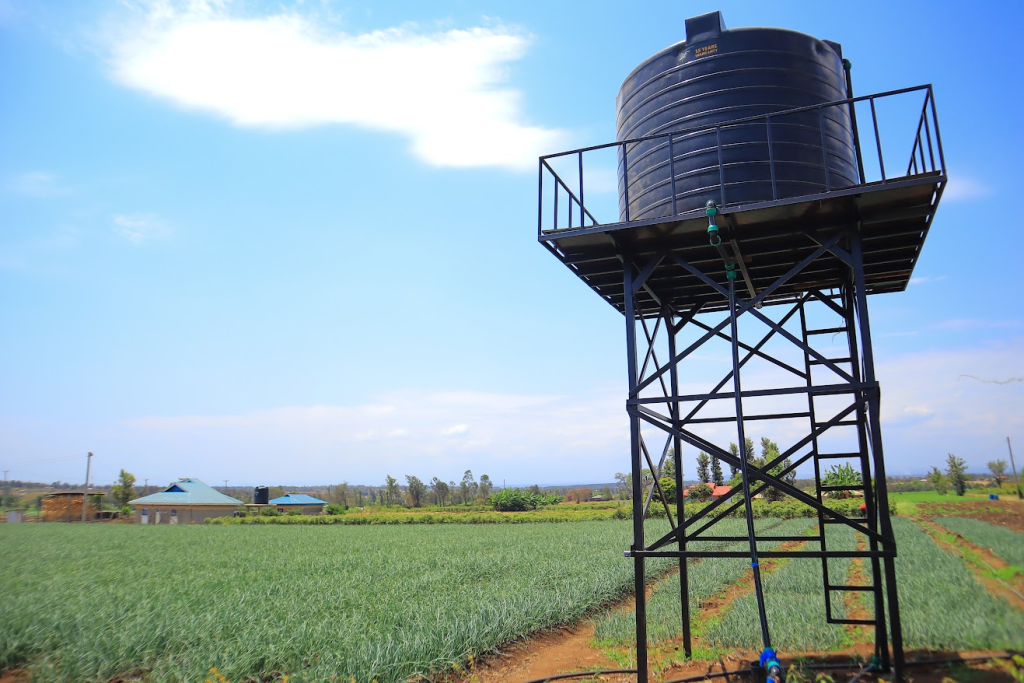
2. Pump and Filtration Unit:
A pump is essential for pressurizing water in your drip irrigation system. Equally important is the filtration unit, which removes debris, sand, and organic matter that could clog drip irrigation emitters.
3. Main and Sub-Main Lines:
These are the backbone of your drip irrigation system, transporting water from the pump to the field. In Kenya, HDPE (High-Density Polyethylene) pipes are commonly used for drip irrigation main lines due to their durability and UV resistance.
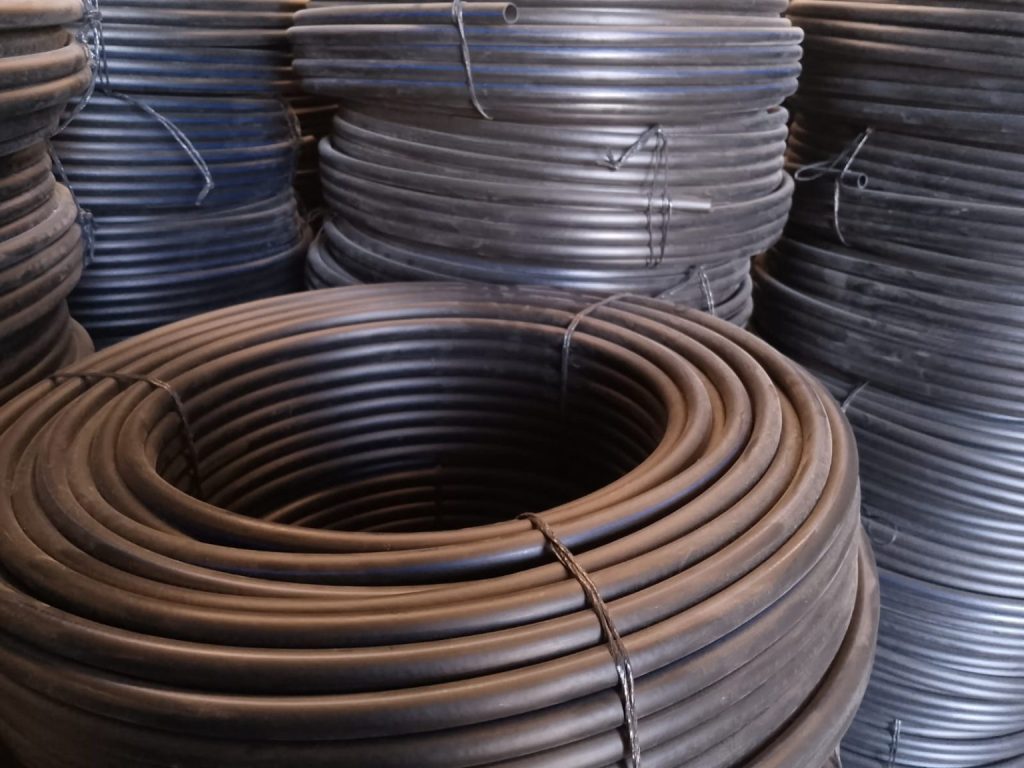
4. Drip Lines:
Drip lines are the tubes that run along your onion rows. They contain built-in emitters that release water at a controlled rate. For onion farming, drip irrigation lines with emitter spacing of 20–30 cm are typically recommended.
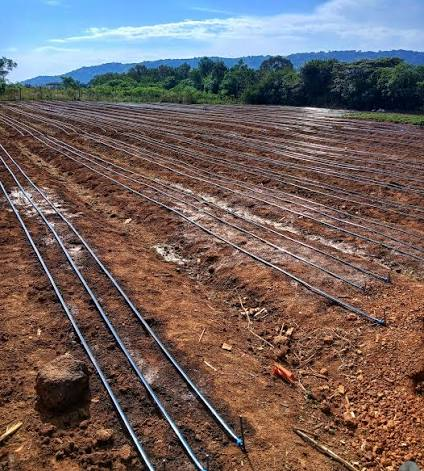
5. Emitters:
Emitters are the heart of any drip irrigation system. They regulate water flow to each onion plant. Common emitter flow rates for onion drip irrigation range from 1 to 4 liters per hour, depending on soil type and farm layout.
6. Control Valves and Pressure Regulators:
These components ensure that your drip irrigation system operates at the correct pressure and allow you to control water flow to different sections of your farm
Chapter 4: Installing Your Drip Irrigation System:
Step-by-Step Drip Irrigation Installation Guide:
Installing a drip irrigation system for your onion farm may seem daunting, but with proper planning, it is a straightforward process. Follow these steps:
Step 1: Site Survey and Planning:
Walk your farm and mark out the water source. Sketch a layout of your drip irrigation system, indicating the placement of main lines, sub-mains, and drip irrigation laterals.
Step 2: Prepare the Land:
Clear the field of debris, level the ground, and form raised onion beds. Raised beds improve drainage and make drip irrigation more effective by preventing water pooling.
Step 3: Install the Pump and Filtration System:
Position your pump near the water source and install the filtration unit. Test the pump to ensure it delivers adequate pressure for your drip irrigation system.
Step 4: Lay the Main and Sub-Main Lines:
Bury or surface-lay the main HDPE pipes according to your drip irrigation design. Connect sub-main lines that will branch off to individual onion beds.
Step 5: Install Drip Irrigation Laterals:
Roll out the drip irrigation tubing along each onion bed. Secure the drip lines with stakes or bury them slightly to prevent displacement by wind or animals.
Step 6: Connect Emitters and Test:
If your drip irrigation tubing does not have built-in emitters, install button or inline emitters at the appropriate spacing. Turn on the system and check that each drip irrigation emitter is functioning correctly.
Step 7: Flush the System:
Before using your drip irrigation system for the first time, flush all lines to remove any debris. This prevents clogging and ensures long-term drip irrigation performance.
Step 8: Install Control Valves and Timers:
Add control valves to manage water flow to different zones. For larger farms, consider installing an automatic timer or smart controller to automate your drip irrigation schedule
Monitoring and Adjusting Your Drip Irrigation System:
Regular monitoring is essential to maintain drip irrigation efficiency. Check your drip irrigation system at least twice a week for:
- Emitter clogging: Clean or replace blocked emitters immediately.
- Leaks: Repair any damaged drip irrigation tubing or connections.
- Pressure issues: Ensure the pump and pressure regulators are functioning correctly.
- Water distribution uniformity: Verify that all sections of your drip irrigation system are receiving equal water application.
Are you in need of in-depth knowledge on onion and garlic production? If yes, we are a call away. Contact us for: Onion seedlings, Garlic seedlings, Germinated garlic cloves, Farm planning services, Soil testing, training on onion and garlic growing, Drip irrigation installation and maintenance, Agronomic support, Onion and Garlic value pack and Farm management. For free consultation, placing orders or booking a visit with an agronomist, please contact us via Call or what’s app +254703982228, Email: info@oniondoctor.co.ke You can also check out our social media handles for daily updates on TikTok: https://www.tiktok.com/@oniondoctorke0706252490?_r=1&_t=ZS-96UPUyx6ESL Instagram:https://www.instagram.com/oniondoctorke?igsh=MW5sZzJ6c3BnZ3Z0dw==Facebook:https://www.facebook.com/share/1HouRgLCwS/Twitter:https://x.com/OnionDoctorKe?s=20